Severe and Recurrent Piles Treatment in Delhi
Have your piles come back? Or have they grown more painful? You are not alone. And you still have good options.
Severe and recurrent piles are not like a first, mild case. They need a closer look. They need a plan built to last. They need a surgeon who tells you the truth about why the last treatment may not have worked.
Dr. Kapil Agrawal is a Senior Consultant Laparoscopic, Robotic & Bariatric Surgeon at Apollo Hospitals Delhi NCR and founder of Habilite Clinics. With more than 23 years in practice, he has treated thousands of advanced and repeat piles cases. He also offers the full range of laser piles surgery in Delhi for patients at every stage.
This page explains why piles turn severe, why they keep coming back, the best severe and recurrent piles surgery options, real costs in Delhi, and what recovery looks like.
Internationally Trained Expert
Discharge within 24 hours
Cashless Insurance Facility
Book Consultation
Schedule a consultation for Mini Gastric Bypass Surgery with Dr. Kapil Agrawal
What Do We Mean by "Severe" or "Recurrent" Piles?
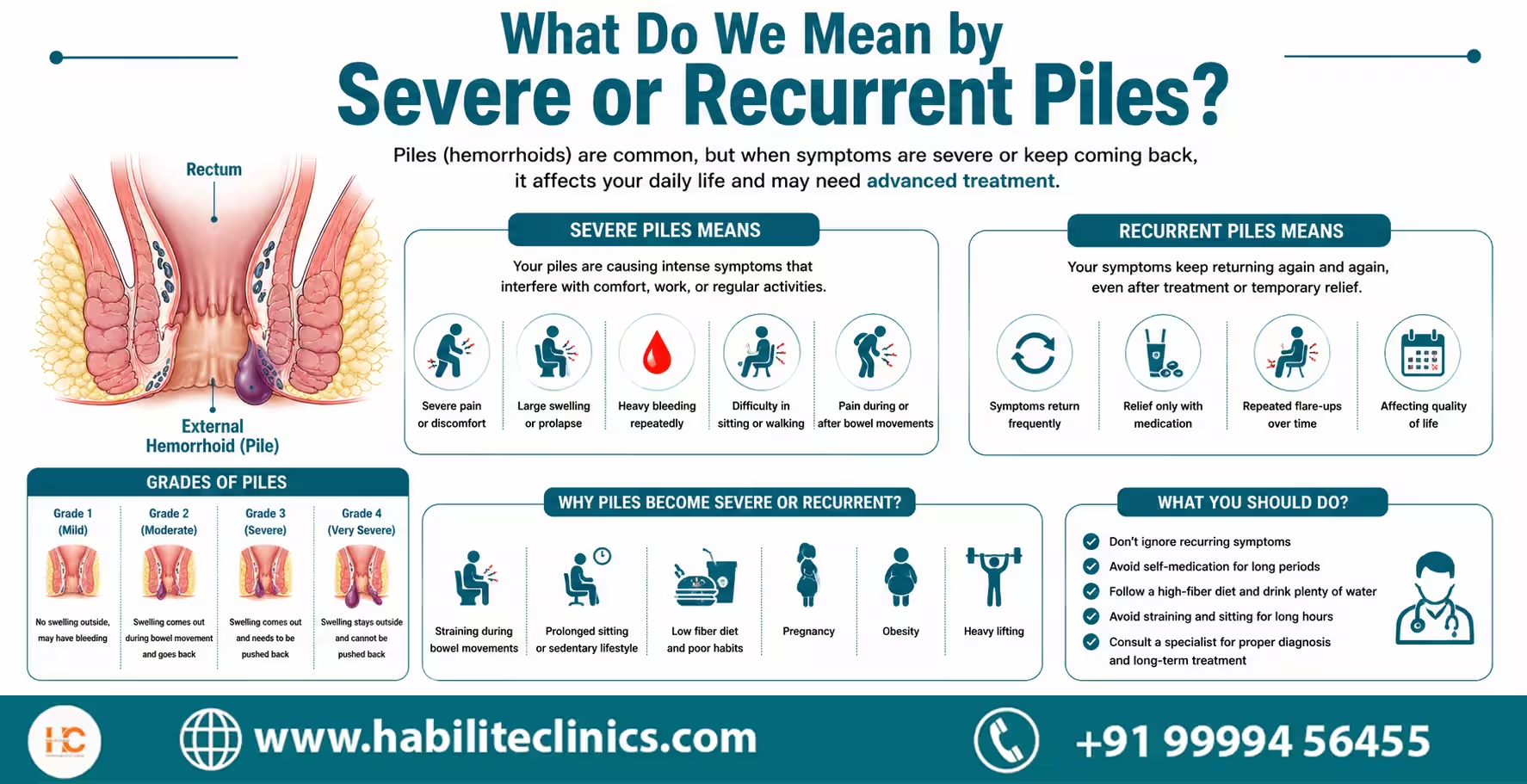
Doctors grade piles from Grade 1 to Grade 4. The grade depends on how much they bulge out. "Severe" piles usually means Grade 3 or Grade 4. These are large piles. They prolapse, or bulge out, and may not go back in on their own. They often come with external piles. They often come with bleeding or a clotted lump.
"Recurrent" piles means the problem has come back after an earlier treatment. That treatment could have been banding, sclerotherapy, laser, or stapler surgery. It could even have been open surgery. Recurrence is common. It needs its own fresh plan. It should not just mean repeating what was tried before.
- Severe piles: Grade 3 or 4 disease with prolapse, external piles, bleeding, or clots
- Recurrent piles: symptoms returning weeks, months, or years after a prior procedure
- Both need a deeper look than a first, mild case — not the same plan as Grade 1 piles treatment
- The right next step depends on why the last treatment did not last
For a complete understanding of all four grades and how they compare, visit our Piles – A Complete Guide.
Why Do Piles Become Severe or Keep Coming Back?
Recurrence is rarely random. In our experience, it usually comes down to one of four things:
- The first treatment had a higher recurrence rate — banding and sclerotherapy work well for Grade 1 or 2 piles but are not built to cure larger, prolapsing disease. Stapled hemorrhoidopexy heals faster but comes back more often than full surgical removal.
- The grade got worse over time — a Grade 2 pile treated with banding can progress to Grade 3 or 4 disease over a year or two.
- Risk factors were never fixed — chronic constipation, straining, low-fibre diet, heavy lifting, long sitting, pregnancy, and extra weight can cause new piles even after a perfect operation.
- Mixed or combined disease — some patients have both internal and external piles or skin tags. Treat only the internal part, and the rest stays free to flare up again.
Severe and Recurrent Piles Symptoms
The symptoms overlap with ordinary piles. But they tend to be more constant. They are more painful. They are harder to ignore. Watch for:
- A lump that no longer goes back in on its own, or that you must push back in by hand
- Bleeding that happens often, is heavier than before, or shows up every time
- Sudden, hard, very tender swelling — this can mean a clotted external pile
- Mucus discharge, soiling, or trouble keeping the area clean
- Symptoms coming back weeks, months, or years after an earlier piles procedure
- Tiredness or breathlessness from long-term blood loss
Does this sound familiar? Get examined. Don't wait it out. Severe and recurrent cases rarely settle on their own. If you're experiencing active bleeding right now, our guide on how to stop piles bleeding covers immediate steps you can take before your appointment.
How We Diagnose Severe and Recurrent Piles
Recurrence can have several causes. So we look deeper than for a first episode. At Habilite Clinics, this usually includes:
- A full history of every past piles treatment, including the method used and when symptoms came back
- A focused exam to confirm the grade and location, and to check for external or clotted piles
- Proctoscopy or anoscopy, to see the internal piles directly
- A colonoscopy in select patients with bleeding, especially over age 45 or with a family history of bowel disease
That last point matters most. Bleeding should always be checked properly. It should never just get blamed on piles, especially if you have other risk factors. We follow this rule as standard practice. It is not an optional extra.
Most patients are surprised at how short and manageable this process is. A proper examination gives you certainty — and certainty is worth a lot when it comes to your health.
Treatment Options for Severe and Recurrent Piles
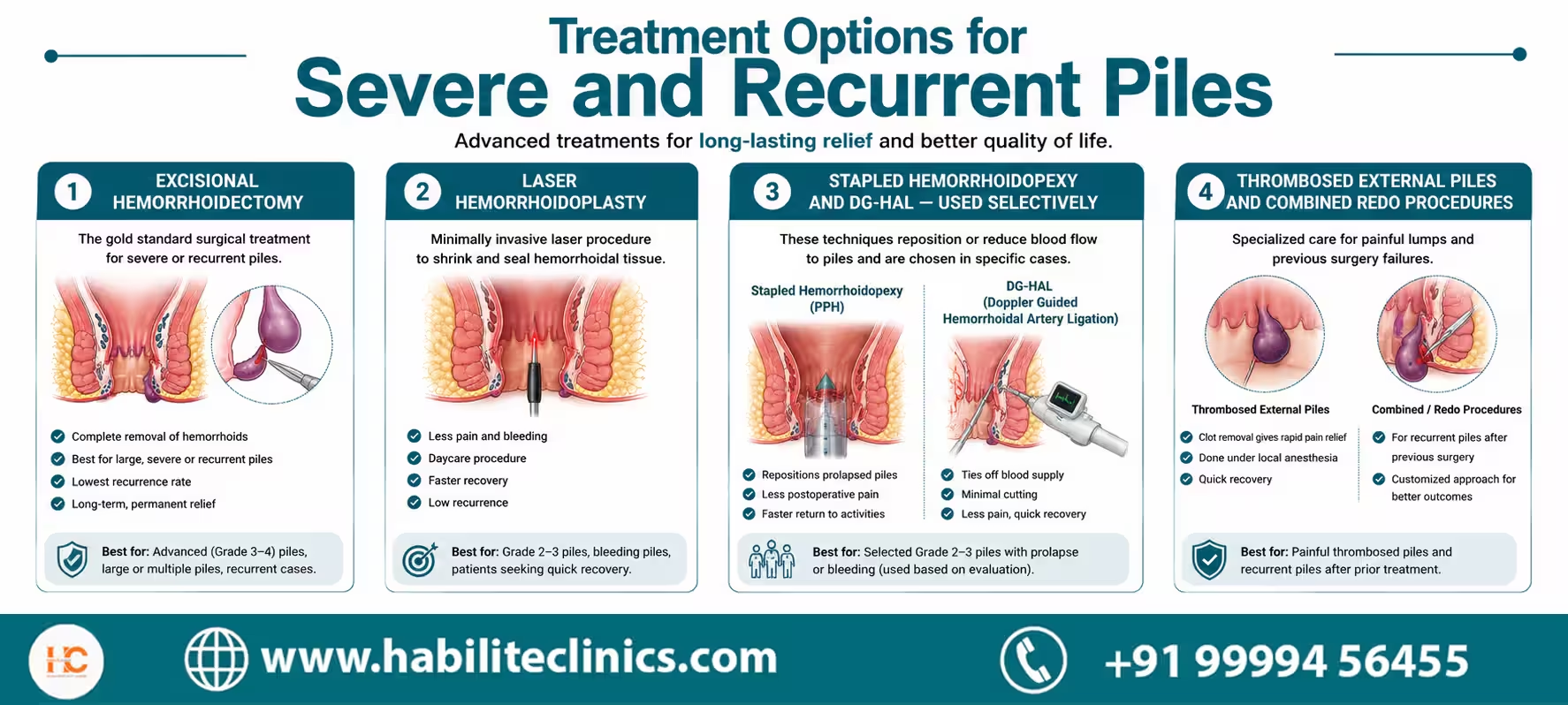
Banding and sclerotherapy still work well for early-grade disease. But once piles grow large, prolapse, mix internal with external disease, or have already come back, surgery usually gives the best lasting relief. The 2024 ASCRS guidelines favour full removal surgery for Grade 4 disease, combined disease, and when earlier treatment failed.
There is no single best option for everyone. The right surgery depends on your grade, whether you have external disease, why your last treatment did not last, and what matters most to you: comfort now, or results that last. Dr. Agrawal walks through these trade-offs honestly. He does not push whichever method is marketed hardest.
1. Excisional Hemorrhoidectomy — The Gold Standard for Lasting Relief
This is the most complete surgery for recurrent piles. The swollen tissue is removed fully. It is not just repositioned or shrunk. That is why it has the lowest long-term recurrence in published trials. Large studies have compared it directly against stapler surgery. For patients who already had one recurrence, this lasting result usually matters most. Recovery takes longer than laser or stapler, and the first one or two weeks feel more uncomfortable — but modern pain control makes this far easier than its old reputation suggests.
2. Laser Hemorrhoidoplasty — For Selected Recurrent Grade 2–3 Cases
Sometimes recurrence stays limited to internal Grade 2 or 3 disease with no major external component. In that case, laser is still a good, stitch-free option. It needs no overnight stay and gives a quick return to work. It is not right for large external piles or heavy prolapse. And if laser already failed once, repeating it rarely changes the result.
3. Stapled Hemorrhoidopexy and DG-HAL — Used Selectively
Stapler surgery can still suit some patients with all-round prolapse and the right anatomy. DG-HAL ties off the blood vessels feeding the piles under Doppler guidance, sparing the sphincter muscle with little to no wound. But we are upfront about the evidence: large trials, including the UK eTHoS study, show stapler surgery and DG-HAL come back more often than excisional surgery in the long run. If you already had one recurrence, we usually avoid repeating a method with a known higher failure rate — unless there is a clear, specific reason it remains the better fit.
4. Thrombosed External Piles and Combined Redo Procedures
A sudden, very painful, hard lump near the anus often means a clotted external pile. Seen within 48 to 72 hours, quick clot removal under local anaesthesia brings fast relief. Some patients have mixed internal and external disease, or piles that came back after an earlier stapler or laser procedure. These cases often need a combined or redo plan — we may remove the external piles and treat the internal piles in the same sitting. Dr. Agrawal plans each case on its own. He does not apply one fixed template to a case that already proved it needs more.
For advanced Grade 3 or Grade 4 piles, excisional hemorrhoidectomy typically offers the lowest long-term recurrence. Laser and stapler recover faster but come back more often. Banding and sclerotherapy suit Grade 1–2 only and carry the highest recurrence if used on advanced or recurrent disease.
What Happens If Severe or Recurrent Piles Are Left Untreated?
Severe piles rarely improve on their own. Left untreated, they can cause ongoing bleeding and tiredness from blood loss. The prolapse can become permanent. You may need to push it back in by hand every time. A clot can form suddenly, with sharp pain. Skin irritation and infection can follow. Daily life can suffer too, from pain, itching, and embarrassment. The longer advanced disease waits, the harder the eventual treatment tends to be.
- Ongoing bleeding that can lead to anaemia over time
- Permanent prolapse that will not go back in on its own
- Sudden clot formation with severe, sharp pain
- Skin irritation, soiling, and infection around the anus
- Progression to more complex surgery if treatment is delayed
See a piles specialist soon if you notice a lump that will not go back in, bleeding that is frequent or heavy, sudden severe anal pain, or any symptom returning after past treatment. Any first-time rectal bleeding past age 45 also needs a quick check. Early care keeps your options wider and your treatment simpler.
A Quick Word From Dr. Agrawal
"Most patients who come to me with recurrent piles were treated correctly the first time. Either the disease simply got worse, or the chosen method had a known recurrence rate. Nobody explained that rate to them. My job is to find out which one it was. Then we plan the next step. The patients who come back to me with recurrence are often the ones who felt better at week two. They quietly dropped the fibre, the fluids, and the follow-up. Surgery fixes today's piles. Diet and habit changes stop tomorrow's."
Recovery and Prevention Tips You Can Start Today
Surgery treats the piles you have today. What you do afterwards decides whether new ones form. For excisional hemorrhoidectomy — the most common choice for severe and recurrent cases — recovery typically looks like this: pain peaks in days 1–3, eases by days 4–7, and most patients return to full activity within 3–4 weeks. Laser, stapler, and DG-HAL recover faster in one to two weeks, but carry a higher chance of needing treatment again.
- Take warm sitz baths two to three times a day for the first one to two weeks after surgery
- Keep stools soft with fibre, fluids, and any stool softener your surgeon prescribes — never strain
- Eat 25–35 grams of fibre a day from vegetables, fruit, whole grains, and isabgol if needed
- Walk gently from day one; skip heavy lifting or hard exercise until cleared
- Go to your follow-up visits, even once you feel completely fine
- Don't linger on the toilet or strain — if nothing happens in a few minutes, get up and try later
- Stay active and manage your weight — long hours of sitting raise pressure on rectal veins
Recurrent surgery Costs in Delhi typically range from ₹45,000 for laser surgery to ₹1,50,000 for a complex or redo case, depending on the method, hospital, and complexity. At Habilite Clinics, you get a clear written estimate first — no hidden charges, cashless insurance, and EMI options available.
For a broader set of daily habits that protect you long-term, our guide on how to prevent piles at home is worth bookmarking.
Mini Gastric Bypass Surgery Cost in Delhi
Get accurate cost estimate for your treatment
Why Choose Dr. Kapil Agrawal
Dr. Kapil Agrawal is a Senior Consultant Laparoscopic, Robotic & Bariatric Surgeon at Apollo Hospitals, Delhi NCR, with over 23 years of experience and more than 7,000 minimally invasive procedures to his name. He holds an MRCS from the Royal College of Surgeons, London, and an MMed from Singapore.
What sets Dr. Agrawal apart for severe and recurrent piles care:
- Real experience with redo and combined cases, not just first-time, simple piles
- Honest, evidence-based advice — you hear the real trade-offs of every option, not just the most comfortable-sounding one
- Thorough diagnosis: Every patient gets a full history of prior treatments and a proper examination to rule out other causes of bleeding
- Access to the full range of treatments — excisional hemorrhoidectomy, laser, stapler, DG-HAL, and combined redo procedures — at Habilite Clinics' two centers in Lajpat Nagar and Hauz Khas, South Delhi
- Cashless facility with all major insurers, plus EMI options and direct access to the clinical team after surgery
- Structured post-operative follow-up at no extra cost, with a personal diet and lifestyle plan built to prevent the very recurrence that brought many patients to us
Habilite Clinics' Free Post-operative Care
We provide comprehensive free post-operative care to ensure your smooth recovery and optimal results. Our dedicated team is committed to your well-being throughout your healing journey.
Comprehensive Care
Complete post-operative support and monitoring
Expert Guidance
24/7 access to our medical team
Dedicated Support
Personalized care coordinator for each patient
Regular Follow-ups
Scheduled check-ups to ensure optimal recovery
What's Included in Our Free Post-operative Care:
- ✓Regular follow-up consultations with Dr. Kapil Agrawal
- ✓24/7 emergency support and guidance
- ✓Nutritional counseling and diet plans
- ✓Wound care and dressing assistance
- ✓Medication management and adjustments
- ✓Progress monitoring and recovery assessment
Chat with Expert for Free
Get instant answers to your questions from our medical experts via WhatsApp
Frequently Asked Questions
Common questions about severe and recurrent piles treatment
Yes. No piles treatment cures the tendency to form piles, not even surgery. Recurrence rates differ by method. Excisional hemorrhoidectomy has the lowest long-term recurrence. Banding, sclerotherapy, stapler surgery, and DG-HAL come back more often. This risk grows if diet and lifestyle stay unmanaged.
Severe piles usually means Grade 3 or Grade 4 internal haemorrhoids. These piles prolapse, or bulge out. They either need a hand to push back in, or they stay out all the time. They often come with external piles, bleeding, or a clot.
Recurrence usually links to one of a few things. The first method may have carried a higher recurrence rate. The grade may have grown worse over time. Risk factors like constipation or long sitting may have gone unmanaged. Or you may have had mixed internal-external disease that did not get fully treated the first time.
There is no single best surgery for everyone. But excisional hemorrhoidectomy is widely seen as the most lasting choice for recurrent or severe disease. It removes the tissue fully, instead of moving or shrinking it. The right choice still depends on your case. Talk it through with a specialist.
For truly severe or repeat disease, surgery usually gives the best lasting relief. Office-based options can still help with milder parts in select patients. But they rarely work alone once disease has advanced.
Redo surgery is harder to do. Scar tissue and changed anatomy make the area trickier. This is why a surgeon experienced with recurrent cases should do it. With the right skill, it stays a safe, well-proven procedure.
Excisional hemorrhoidectomy usually needs three to four weeks for full recovery. Most people return to light work within a week. Laser, stapler, and DG-HAL heal faster, in one to two weeks. But they come back more often than excisional surgery.
Costs usually run from about ₹35,000 for laser surgery to ₹1,50,000 for a complex or redo case. The exact figure depends on the method, the hospital, and your case. Habilite Clinics gives a written estimate first, and works with all major cashless insurers.
Yes. Most health plans cover piles surgery. This includes a repeat or redo procedure when it is medically needed. Habilite Clinics offers cashless care at top Delhi hospitals, plus EMI options.
Lifestyle changes will not reverse Grade 3–4 disease that already exists. But they cut the chance of recurrence after treatment in a real way. A high-fibre diet, good hydration, no straining, and staying active are the biggest factors you control.
Untreated severe piles tend to get worse over time. There is a real risk of ongoing bleeding, permanent prolapse, a sudden clot, and a steady drop in daily comfort. Earlier treatment is usually simpler and easier than treatment delayed by months or years.
It can be, but only for internal Grade 2–3 disease, with no major external piles. If laser was your earlier treatment and the piles came back, a different method like excisional surgery usually works better. The same applies if you have large external piles.
There is no fixed limit. But each redo procedure gets technically harder, due to scar tissue. This is exactly why the most lasting option, not the fastest or most comfortable one, matters more with each recurrence.
Ask why the last treatment came back. Ask the published recurrence rate for the method being proposed now. Ask if your case needs a combined or redo plan. And ask what aftercare plan will lower the chance of it happening again.
You can book a private consultation at Habilite Clinics, South Delhi. Call +91 99994 56455 or +91 99100 24564, or use the Habilite Clinics website. Your first visit includes a full check-up and an honest, written treatment plan.