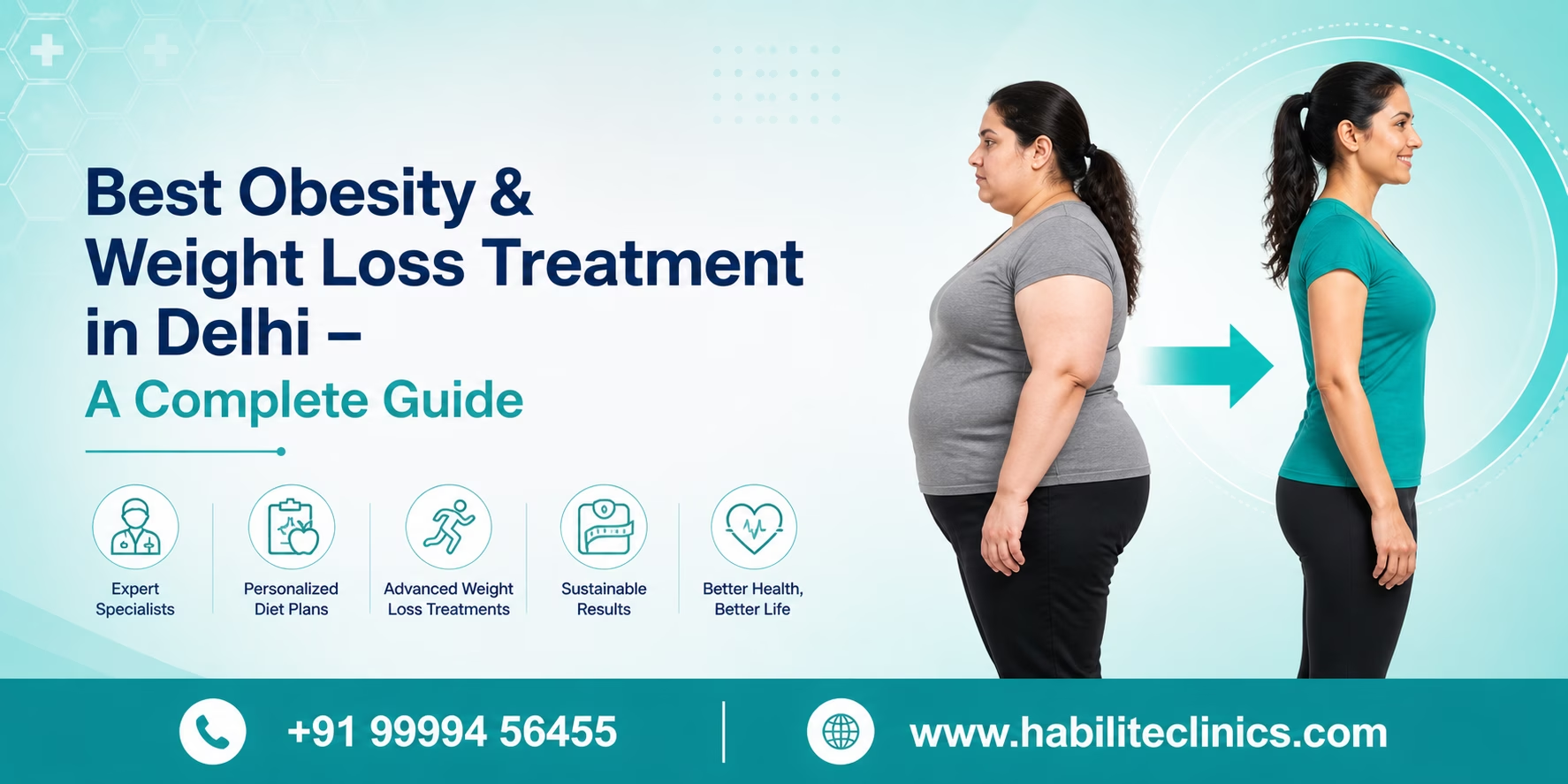
Best Obesity & Weight Loss Treatment in Delhi – A Complete Guide
Evaluate your metabolic risks, explore evidence-based weight loss therapies, and understand when injectables or bariatric surgery make sense.
Understanding Obesity — What It Really Means
Understanding Obesity: Causes, Types & Why It's More Than Just Weight
Obesity is a chronic, relapsing disease — not a matter of willpower. It develops from a complex interplay of genetics, hormones, metabolism, environment, and behaviour, and it raises the risk of over 200 health conditions including type 2 diabetes, hypertension, fatty liver disease, sleep apnea, infertility, joint disease, and several cancers.
India is at the centre of this global trend. The ICMR-INDIAB national study estimates that 254 million Indian adults have generalised obesity and 351 million have abdominal obesity — a quiet epidemic running well ahead of public awareness. What makes Indian bodies different is the now well-documented “Asian Indian phenotype”: higher visceral (belly) fat, more insulin resistance, and earlier onset of diabetes and heart disease at BMI levels that would still be considered “normal” on Western charts.
This is why a generic, Western weight-loss approach often under-treats Indian patients. At Habilite Clinics, every evaluation starts from Indian-specific thresholds and the patient's actual metabolic risk — not just the number on the scale.
Common causes
- Genetic and family predisposition
- Hormonal conditions — hypothyroidism, PCOS, Cushing's syndrome
- Insulin resistance and metabolic syndrome
- Sedentary lifestyle and desk-bound work culture
- Ultra-processed food, refined carbohydrates, and sugary beverages
- Chronic stress, poor sleep, and late-night eating patterns
- Certain medications (steroids, some antidepressants, antipsychotics)
- Post-pregnancy weight retention and menopausal hormonal shifts
Why obesity is not just “being overweight”
Obesity is now classified as a disease in its own right by major medical bodies, because it independently damages organ function over time — it isn't simply a risk factor sitting alongside other diseases. The 2025 India Obesity Commission consensus formalises this with a two-stage model specific to Indian patients (detailed in Section 2), distinguishing between someone carrying excess weight with no organ impact yet, and someone whose excess weight is already affecting their health.
Upload Labs & Body Composition Reports
Our clinicians decode HbA1c, fasting insulin, lipid profile, sleep study scores, and DEXA scans to personalise your weight loss path.
Upload Your Health Report for Personalised Coaching
PDF / JPG / PNG (max 5 MB). Share your lab tests, DEXA scans, or body composition analyses on WhatsApp for a tailored weight plan.
👉 Tap below to open chat with our team. Attach your report (📎) and send.
Share Report on WhatsAppNeed help? WhatsApp us at +91 99994 56455
What we interpret for you
Every lab tells a story. Share your numbers so we can craft actionable, doctor-reviewed recommendations.
- Visceral fat % and basal metabolic rate insights
- Insulin resistance score & fasting glucose trends
- Liver enzymes indicating fatty liver grade
- Vitamin D, B12, iron status influencing energy
- Hormonal panels (thyroid, cortisol, PCOS markers)
- Sleep apnea severity & cardiometabolic risk
BMI, Waist Circumference & the New Indian Obesity Staging
Why Standard (Western) BMI Doesn't Work for Indians
Asian Indians develop diabetes, hypertension, and fatty liver at significantly lower BMI levels than Western populations, due to higher body fat percentage and more visceral fat at the same BMI. This is why India uses lower, Asia-Pacific-specific cutoffs rather than the global WHO standard.
BMI Classification — India vs. Global Standard
| Category | WHO Global BMI | India / Asia-Pacific BMI |
|---|---|---|
| Underweight | < 18.5 | < 18.5 |
| Normal weight | 18.5 – 24.9 | 18.5 – 22.9 |
| Overweight | 25.0 – 29.9 | 23.0 – 24.9 |
| Obesity | ≥ 30.0 | ≥ 25.0 |
| Scarring | ≥ 40.0 | ≥ 32.5 (or ≥ 27.5 with comorbidities) |
"Severe-obesity thresholds align with the 2022 ASMBS/IFSO Asian-specific bariatric surgery criteria already used in our bariatric surgery content. Waist circumference ≥90 cm (men) / ≥80 cm (women) independently signals abdominal obesity even at a 'normal' BMI."
The 2025 Two-Stage Obesity Classification (India Obesity Commission)
A landmark 2025 Indian expert consensus moved beyond BMI-only diagnosis to a staging system that captures real organ impact:
Stage 1 Obesity
BMI > 23 kg/m² with increased body fat, but no measurable impact yet on organ function or daily activity. Early intervention at this stage — lifestyle change, sometimes medication — has the best long-term outcomes.
Stage 2 Obesity
BMI > 23 kg/m² plus excess waist circumference or waist-to-height ratio, AND at least one obesity-related complication or functional limitation (diabetes, hypertension, fatty liver, joint pain, sleep apnea, breathlessness, reduced mobility). This stage usually needs more active medical or surgical management.
Why Waist Circumference Matters as Much as BMI
Two people with the same BMI can carry very different health risk depending on where their fat is stored. Visceral (belly) fat — fat around the organs — is metabolically active and far more dangerous than fat under the skin. This is why a slim-looking person with a large waist (the “thin-fat” phenotype common in Indians) can still carry high metabolic risk — a pattern under-recognised in routine check-ups.
Best Weight Loss Solutions in India
Personalised Pathways You Can Explore
Whether you need a surgical reset or medication-assisted care, our multidisciplinary team in Delhi helps you select the safest, most effective route after evaluating labs, BMI, and comorbidities.
Bariatric Surgery
Gold-standard for severe obesity with diabetes or sleep apnea when lifestyle care alone is not enough.
Gastric Balloon for Weight Loss
Non-surgical 6-12 month option that reduces appetite and jumpstarts disciplined eating habits.
Medical Weight Loss Program
Physician-led nutrition, behaviour therapy, and GLP-1/other medications tailored to your lab profile.
Weight Loss Injections
GLP-1 and metabolic injectables used under supervision to control hunger and insulin resistance.
How to Choose the Right Weight-Loss Option for You
The Decision Depends on 4 Things
- Your BMI and waist circumference (Indian-specific cutoffs)
- Whether you already have a comorbidity — diabetes, hypertension, fatty liver, sleep apnea, PCOS
- What you've already tried, and for how long (structured diet/exercise programs, medications)
- Your personal goals — how much weight, how fast, and how much medical supervision you want
Which Pathway Typically Fits Which Profile
| Profile | Usually Best Suited To | Why |
|---|---|---|
| BMI 23–27, no comorbidities, first attempt | Medical Weight Loss Program | Structured, reversible, builds sustainable habits first |
| BMI 27–32.5 with diabetes/PCOS/fatty liver | GLP-1 weight-loss injections, supervised | Targets insulin resistance and appetite hormones directly |
| BMI 27–32, wants non-surgical reset, struggles with portions | Gastric balloon (6–12 months) | Mechanically reduces stomach capacity without surgery |
| BMI ≥ 32.5 (or ≥ 27.5 with comorbidities), 6+ months of failed medical therapy | Bariatric / metabolic surgery | Gold-standard, durable weight loss with comorbidity resolution |
| BMI ≥ 40 / very high-risk, complex case | Robotic bariatric surgery | Maximum precision for complex anatomy or revision cases |
A Simple Way to Think About It
Lifestyle and medical therapy come first for most patients. Medications (GLP-1 injectables) are added when biology — not discipline — is the barrier. Surgery is considered when BMI crosses the severe-obesity threshold, or when comorbidities make continued excess weight dangerous and other approaches haven't worked. This isn't a ladder everyone must climb step by step: a patient with BMI 33 and uncontrolled diabetes may be a surgical candidate from day one. The right starting point is decided after evaluation, not assumed from weight alone.
Medical Weight Loss Programs — What They Actually Involve
What a Genuine Medical Weight Loss Program Looks Like
A credible medical weight loss program is physician-led and built around your lab work — not a generic diet chart. It typically combines structured nutrition therapy, behavioural coaching, activity planning, and, when indicated, GLP-1 or other prescription medication, with monthly tracking of weight, body composition, and metabolic markers.
Core components
- Baseline labs: HbA1c, fasting insulin, lipid profile, liver function, thyroid panel, vitamin D/B12
- Body composition analysis (not just weight) — fat %, visceral fat rating, muscle mass, basal metabolic rate
- Personalised calorie and macronutrient targets based on labs and activity level, set by a dietician
- Behavioural and stress-eating support
- Medication review — GLP-1 or other anti-obesity medication if clinically indicated
- Scheduled follow-ups with weight, lab, and body-composition re-checks
GLP-1 and Weight-Loss Injections — The Current Landscape (2026)
GLP-1 receptor agonists have become the most talked-about advance in medical weight management worldwide, and the Indian market has shifted meaningfully in the last year.
| Medication | Typical Weight Loss | India Status (2026) |
|---|---|---|
| Tirzepatide (Mounjaro) | Up to ~20–22% of body weight in trials | Launched in India (Eli Lilly), branded pricing |
| Semaglutide (Wegovy/Ozempic) | ~15–21% of body weight in trials | Branded version available; generic semaglutide launched in India, March 2026 |
| Older GLP-1s (liraglutide, dulaglutide) | Lower than newer agents | Available, largely superseded by newer molecules |
"These are population trial averages, not individual guarantees. Real-world weight loss is typically somewhat lower than trial results and depends on dose, adherence, and lifestyle support alongside the medication."
The 2026 ADA Standards of Care update reinforces that these medications must be prescribed with a comprehensive obesity evaluation, used alongside behavioural and lifestyle therapy, and selected through a person-centred, shared decision-making process — not handed out as a standalone quick fix.
Important honest caveats
- Effects are not always sustained after stopping the medication without continued lifestyle support
- Common side effects are gastrointestinal — nausea, reflux, constipation — usually dose-related and manageable
- Long-term safety data on muscle mass loss and gallbladder effects is still being studied; supervised use matters
- These medications are not suitable for everyone — a physician evaluation is required, not self-purchase
Bariatric & Metabolic Surgery — Latest Options
When Surgery Becomes the Right Conversation
Bariatric surgery is the most effective, durable treatment for severe obesity and its related diseases when lifestyle and medical therapy haven't achieved lasting results. It is gold-standard care — not a last resort to be ashamed of — and modern techniques make it safer and faster to recover from than most patients expect.
Surgical outcomes in bariatric procedures are closely tied to the experience and case volume of the operating surgeon — patients consistently achieve better weight loss and fewer complications when treated by a specialist with dedicated bariatric training. If you are evaluating your options, understanding what separates a generalist from a dedicated weight-loss surgeon is an important first step. Read our detailed guide on choosing the best bariatric surgeon in Delhi to understand the credentials, technique experience, and hospital affiliations that matter most for your outcome.
Bariatric Surgery Options Compared
| Procedure | How It Works | Best For | Recovery |
|---|---|---|---|
| Sleeve Gastrectomy | Reduces stomach to a narrow sleeve, lowering capacity and hunger hormone | Most common first-line option; strong, durable results | 1–2 weeks |
| Gastric Bypass (RYGB) | Creates a small pouch and reroutes intestine | Severe obesity with diabetes or reflux | 2–3 weeks |
| Mini Gastric Bypass | Simpler single-connection bypass | Faster procedure, strong metabolic effect | 1–2 weeks |
| Robotic Bariatric Surgery | Sleeve or bypass performed via robotic platform | Complex anatomy, revision surgery, very high BMI | 1–2 weeks |
What's New in Bariatric Surgery (2025–2026)
- Robotic-assisted sleeve and bypass surgery — enhanced 3D visualisation and precision for complex or revisional cases
- Endoscopic Sleeve Gastroplasty (ESG) — a non-surgical, scarless option that reduces stomach size using an endoscope, suited to select moderate-obesity patients
- Refined single-anastomosis techniques (e.g. SADI-S, OAGB variants) for patients needing a stronger metabolic effect with a simpler operative course
- Greater use of Enhanced Recovery After Surgery (ERAS) protocols, shortening hospital stay and pain after standard procedures
"Note on robotic surgery: large multi-centre data through 2026 shows robotic sleeve gastrectomy has not consistently shown lower complication rates than laparoscopic sleeve gastrectomy, while robotic gastric bypass does show some advantages (e.g. lower bleeding risk). The honest, patient-first position is that the best technique is the one matched to the individual case — not robotic-by-default. This nuance itself is a trust-building USP versus competitors who market 'robotic' as categorically superior in all cases."
Expected Results
Most patients lose 10–15% of body weight within 3 months and 60–70% of excess weight by 12–18 months when they follow the post-surgical program. Many obesity-related conditions — type 2 diabetes, hypertension, sleep apnea, fatty liver — improve significantly or resolve within the first year.
Bariatric Readiness Checklist
Is Bariatric Surgery the Right Step For You?
Answer honestly. We follow global eligibility criteria plus individualised medical assessment before advising surgery.
Is your BMI ≥40 or ≥35 with diabetes, sleep apnea, or fatty liver?
Have medical weight-loss programs failed after 6+ months?
Do you require high insulin doses or multiple diabetes drugs?
Has a doctor advised bariatric/ metabolic surgery previously?
Is your quality of life or mobility severely limited?
Interpretation:
Two or more “yes” answers suggest you qualify for bariatric evaluation. A single yes still warrants metabolic therapy with close monitoring.
Need a medical opinion?
👉 Share your labs & history for a surgical candidacy review.
We interpret medical reports, imaging, and prior attempts before suggesting injectable therapy or surgery.
Prefer email? contact@habiliteclinics.com
Non-Surgical Options — Gastric Balloon & Endoscopic Therapies
For patients who aren't ready for surgery, or whose BMI doesn't yet meet surgical criteria, endoscopic options offer a middle path:
- Intragastric Balloon — a soft, saline-filled balloon placed endoscopically for 6–12 months, reducing stomach capacity and appetite without incisions
- Endoscopic Sleeve Gastroplasty (ESG) — sutures the stomach into a smaller sleeve shape endoscopically; longer-lasting than a balloon, still reversible and scarless
- Newer swallowable/pill-based balloon systems are emerging globally and are expected to widen access to non-surgical options over the next few years
These work best as a structured reset combined with dietician-led coaching — not as standalone fixes.
The Role of the Dietician and the Physician
Why Weight Loss Needs Both, Not Either
Medication or surgery changes appetite and metabolism. They do not, by themselves, teach someone how to eat, rebuild muscle, or sustain the change for life. That is the dietician's and physician's combined job — before, during, and long after any procedure or prescription.
Role of the Physician / Surgeon
- Diagnoses the true driver of weight gain — hormonal, metabolic, behavioural, or structural
- Orders and interprets labs, body composition, and (where indicated) sleep studies
- Decides whether medical therapy, endoscopic treatment, or surgery is the safest and most effective option
- Performs surgery when indicated, and manages medical complications and comorbidities throughout
- Owns the long-term follow-up — not just the procedure day
Role of the Dietician
- Translates lab results into a personalised, practical meal plan — not a generic chart
- Builds pre-surgical nutrition optimisation plans where needed
- Guides the staged post-surgical diet (liquid → pureed → soft → solid) safely
- Prevents the most common long-term failure mode after any weight-loss intervention: nutrient deficiency and muscle loss
- Provides ongoing behavioural and habit coaching between physician visits
How Habilite Clinics Helps You Achieve & Sustain Weight Loss
Our Approach — 4 Pillars
1. Indian-Specific Evaluation, Not a Generic Chart
Every patient is assessed against Asian-Indian BMI and waist-circumference thresholds and the 2025 two-stage obesity model — not Western cutoffs that under-diagnose Indian patients.
2. Lab-Led, Not Guesswork-Led
HbA1c, fasting insulin, lipid profile, liver enzymes, vitamin D/B12, and hormonal panels are reviewed before any plan is finalised, so the program targets the actual metabolic problem — not just the visible weight.
3. One Team, One Plan
Surgeon, physician, and dietician work around a shared patient record, so nutrition, medication, and (where relevant) surgical planning stay coordinated instead of fragmented across separate clinics.
4. Structured, Long-Term Tracking — Not a One-Time Consultation
Patients are tracked on a defined schedule rather than left to self-monitor:
- Baseline: weight, BMI, waist circumference, body composition (fat %, visceral fat, muscle mass), full metabolic labs
- Monthly: weight trend, adherence review, medication/dose review where applicable, dietician check-in
- Quarterly: repeat labs and body composition scan to confirm the plan is working metabolically, not just on the scale
- Post-procedure (surgical/endoscopic patients): structured follow-up at 1 week, 1 month, 3 months, 6 months, and 1 year
- WhatsApp-based support between visits for questions, symptom checks, and accountability nudges
What Makes Habilite Clinics Different
- 23+ years of surgical experience, 7,000+ procedures, Senior Consultant at Apollo Hospitals — surgical credibility behind every non-surgical recommendation too
- Evaluation against the latest 2025 Indian obesity staging, not outdated BMI-only criteria
- Full spectrum of options under one roof — medical program, GLP-1 therapy, gastric balloon/ESG, and bariatric surgery — so the recommendation isn't biased toward whichever single treatment the clinic happens to offer
- Combined physician + dietician care model with shared tracking, not siloed appointments
- Transparent, realistic expectation-setting — including honest limits of medication and the real evidence on robotic vs. laparoscopic outcomes — instead of overselling any one option
- Cashless insurance and zero-interest EMI options for surgical pathways
Read more about the experience, credentials, and surgical approach of Dr. Kapil Agrawal, Senior Consultant at Apollo Hospitals and founder of Habilite Clinics.
People also ask
Obesity & Weight Loss FAQs
Expand common questions about BMI, medical therapy, injections, and bariatric surgery answered by Dr. Kapil Agrawal.
For Indians, a BMI of 23–24.9 is considered overweight and 25 or above is considered obese — lower than the global WHO cutoffs of 25 and 30. This is because Indians develop diabetes, hypertension, and fatty liver at lower BMI levels than Western populations. Waist circumference above 90 cm (men) or 80 cm (women) is an additional warning sign even at a lower BMI.
There is no shortcut that is both fast and safe for everyone. The most reliable approach combines medical nutrition therapy, strength-based exercise, sleep and stress management, and, where clinically indicated, GLP-1 medication or bariatric surgery under specialist supervision. Rapid, unsupervised weight loss usually leads to muscle loss and rebound weight gain.
Mild to moderate obesity can often be reversed with a structured medical program — nutrition therapy, activity, behavioural change, and medication where needed. Severe obesity (BMI ≥ 32.5, or ≥ 27.5 with comorbidities) with associated diseases usually responds best to bariatric surgery, since lifestyle and medication alone rarely produce durable results at that stage.
GLP-1 receptor agonists (such as semaglutide and tirzepatide) are injectable medications that reduce appetite and improve insulin sensitivity. In clinical trials, tirzepatide has shown weight loss of up to roughly 20–22% of body weight and semaglutide up to roughly 15–21%, though real-world results are typically more modest and depend on dose, duration, and lifestyle support. They require physician supervision and are not a standalone solution.
Modern laparoscopic and robotic bariatric surgery is considered safe when performed by an experienced surgical team, with complication rates comparable to common procedures like gallbladder removal. Over 96% of bariatric surgeries worldwide are now done using minimally invasive techniques, with same-day mobilisation and short hospital stays.
Most patients lose 10–15% of their body weight within 3 months and 60–70% of excess weight by 12–18 months, provided they follow the post-surgical nutrition and activity program. Results vary by procedure type and individual metabolism.
A gastric balloon is a temporary, non-surgical device placed endoscopically for 6–12 months to reduce appetite and stomach capacity, with no incisions and a shorter commitment. Bariatric surgery permanently alters stomach size or digestion and is suited to higher BMI or more severe comorbidities, offering more durable long-term results.
No. Medical weight loss programs are appropriate from Stage 1 obesity onward (BMI > 23 with increased body fat), and are often most effective when started early, before comorbidities like diabetes or fatty liver develop.
Some weight regain is possible with both approaches if lifestyle habits are not maintained. Structured, dietician-supported follow-up significantly reduces this risk. After bariatric surgery, regain is less common than after stopping medication alone, because the anatomical change persists even if habits slip temporarily.
A typical baseline workup includes HbA1c and fasting glucose, fasting insulin, a complete lipid profile, liver function tests, thyroid panel, vitamin D and B12, and body composition analysis. Additional tests (sleep study, hormonal panel for PCOS) are added based on symptoms.
Untreated obesity raises long-term risk of type 2 diabetes, hypertension, heart disease, fatty liver progressing to cirrhosis, sleep apnea, joint degeneration, infertility, and certain cancers. Risk rises with both the degree of excess weight and the number of years it persists, which is why earlier evaluation generally leads to better outcomes.
Not necessarily. While many patients try lifestyle and medical therapy first, current guidelines also support surgery as an appropriate option for patients who meet BMI and comorbidity criteria, particularly when conditions like uncontrolled diabetes make delaying treatment risky.
Ask the surgeon
Have a question about obesity treatment?
Ask Dr. Kapil Agrawal directly. Share your health story, and our team will revert with personalised guidance.
Success stories
Patients Who Trusted Our Obesity Program
Real transformations from medical weight loss, injectable therapy, and bariatric surgery with full-spectrum support.

35 kg loss after metabolic surgery
Corporate professional shares how structured coaching, sleeve gastrectomy, and accountability transformed her health.

Reversing diabetes with bariatric care
Patient narrates life after gastric bypass, glucose normalisation, and return to daily workouts within weeks.

International patient experience
A Middle East patient explains concierge travel, pre-op prep, and remote follow-up with Dr. Kapil's team.

From diets to durable weight loss
Discover how biotech entrepreneur combined GLP-1 therapy, bariatric surgery, and lifestyle mentorship.
Featured blogs
Obesity, Bariatric & Lifestyle Resources
Dive deeper into non-surgical weight loss, modern bariatric techniques, and long-term maintenance strategies from our blog.
What is Bariatric Surgery? Types, Benefits, Risks & Recovery Explained
Bariatric surgery or weight loss surgery has emerged as a boon for patients who are extremely obese or suffering from obesity related illnesses like diabetes, hypertension, asthma, excessive snoring or joint problems. The surgery is performed by laparoscopic or robotic approach and consists of different types of procedures each having its own indications, benefits and mechanism of action.
Bariatric Surgery Myths and Misconceptions Burst by Best Bariatric Surgeon in Delhi
Obesity is a growing health concern linked to diabetes, heart issues, infertility, and more. While weight loss demands lifestyle changes, many struggle despite efforts. Bariatric surgery offers a proven medical solution—but common Bariatric Surgery Myths often create fear.
Difference Between Traditional Dieting and Bariatric Surgery
For decades, weight loss conversations have revolved around the next “miracle diet.” Keto, intermittent fasting, detox juices, low-carb, low-fat—the list is endless. Most of us know someone who tried these diets and saw results. But almost always, the story ends the same way: the weight comes back.
How to lose weight fast without surgery
Learn 6 effective tips to lose weight fast without surgery, including healthy diet, exercise, hydration, sleep, stress management, and sustainable lifestyle changes.
What is the Role of Exercise After Bariatric Surgery?
Exercise plays a vital role in the management and maintenance of weight loss following bariatric surgery. In fact, early starting of exercise post bariatric surgery improves your circulation, prevents clot formation, enhanced wound healing and improves digestion. Dr. Kapil Agrawal, one of the best bariatric surgeons in Delhi, India answers few of the common questions regarding the importance of exercise following bariatric surgery.
Which is the Best Bariatric Surgery for Me
Weight Loss Surgery is a life-changing procedure for people who have been struggling with obesity for years. If you want to lose more than 20 kg, bariatric surgery or weight loss surgery is the only and best solution for long-term and sustained weight loss.
Benefits of Gastric Sleeve Surgery for Weight Loss
Gastric sleeve surgery for weight loss is also called sleeve gastrectomy. It is a type of weight loss surgery, which helps people by reducing the size of their stomach. This weight loss surgery involves removing a portion of the abdomen.
Top 9 Tips to Prepare for a Bariatric Surgery
Getting surgery is not as it may sound. The person needs to be mentally prepared for getting surgery. It is vital to get mentally prepared for bariatric surgery if you want to gain a healthier weight.
How to Boost Metabolism For Weight Loss
Metabolism plays a very important role in deciding our obesity levels. It simply implies how fast your body can burn calories. Some people are born with a high metabolic rate, so even consumption of high calories doesn't add to their weight whereas patients with a low rate genetically are more obese.
Struggling With Obesity? — What to Eat & Avoid
Follow the traffic-light approach: remove inflammatory foods, add high-volume meals, and hydrate consistently.
Foods to Reframe
- Ultra-processed snacks
- Sugary beverages
- Refined carbs
- Trans-fat desserts
- Late-night heavy meals
Plate More of These
- Lean protein bowls
- Fermented foods
- Rainbow vegetables
- Whole grains & millets
- Omega-3 rich fats
- 2-3 L water
Weekly WhatsApp Coaching
📲 Get Diet Reminders & Workout Nudges
Enter your number to receive doctor-approved meal plans, hydration reminders, and accountability messages directly on WhatsApp.