Sanjay Kumar
Verified Google Review
“My 70-year-old mother underwent laparoscopic rectopexy. The surgery and recovery were smoother than we imagined. Thank you Dr. Kapil for the confident counselling and post-op support.”
Internationally trained Dr. Kapil Agrawal offers STARR, Delorme, Altemeier, laparoscopic and robotic rectopexy for personalised, painless and recurrence-free rectal prolapse treatment with 24–36 hour discharge and dedicated female coordinators.
Schedule a consultation for Rectal Prolapse Surgery with Dr. Kapil Agrawal
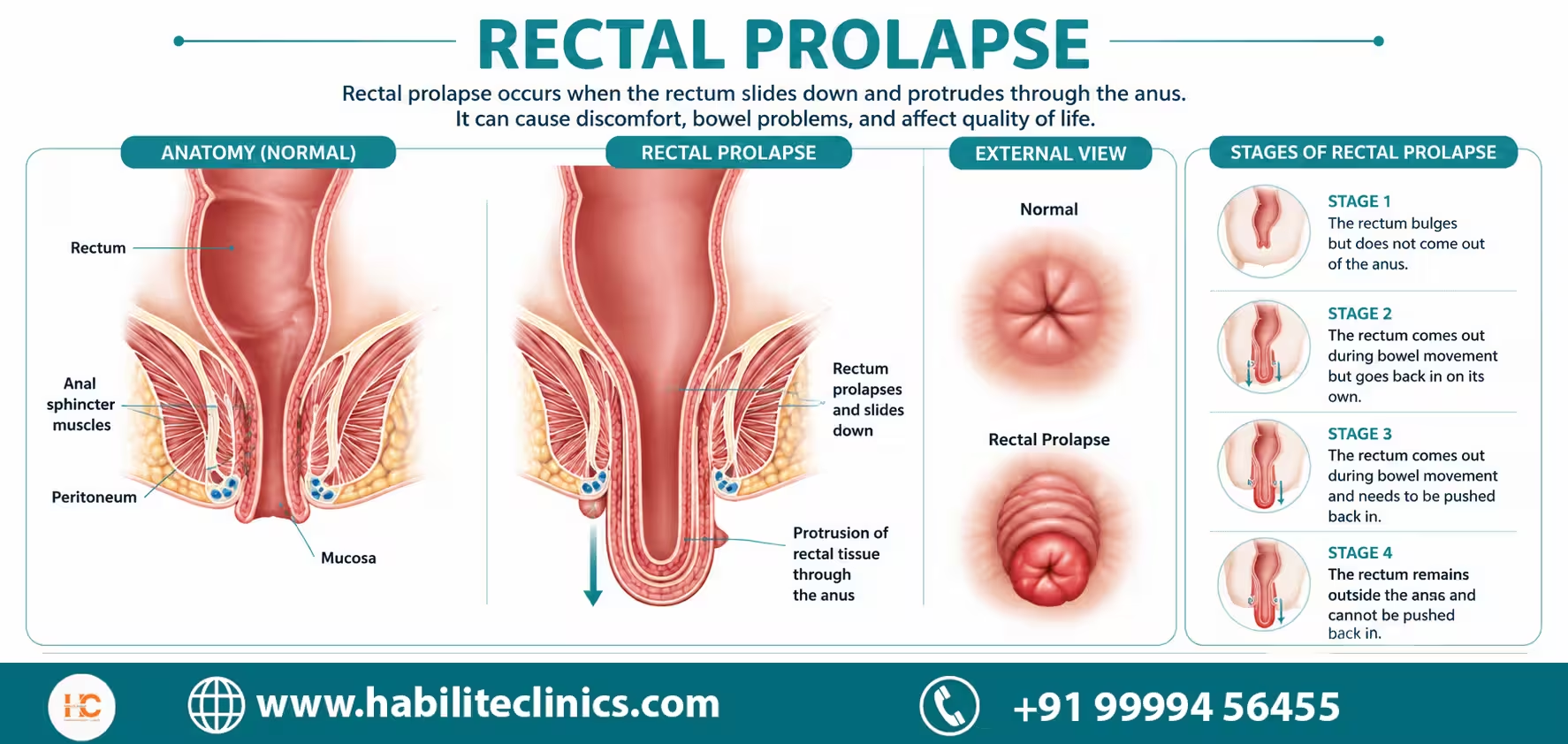
Persistent pain or difficulty passing stool is sometimes mistaken for an anal fissure, so an accurate examination is essential before treatment is planned. Rectal prolapse occurs when the last part of the intestine weakens and slips out through the anus. It begins as an internal intussusception but may progress to a full-thickness prolapse with concentric rings. Apart from social embarrassment, untreated prolapse causes infections, ulcers, constipation and even incontinence. Early assessment ensures we choose the least invasive, most durable treatment plan.
Only the inner mucosal lining protrudes (<2 cm). Patients complain of constipation, incomplete evacuation or mucus discharge.
The entire rectal wall with blood vessels collapses outside (3–5 cm). It produces concentric folds, pain, bleeding and faecal leakage.
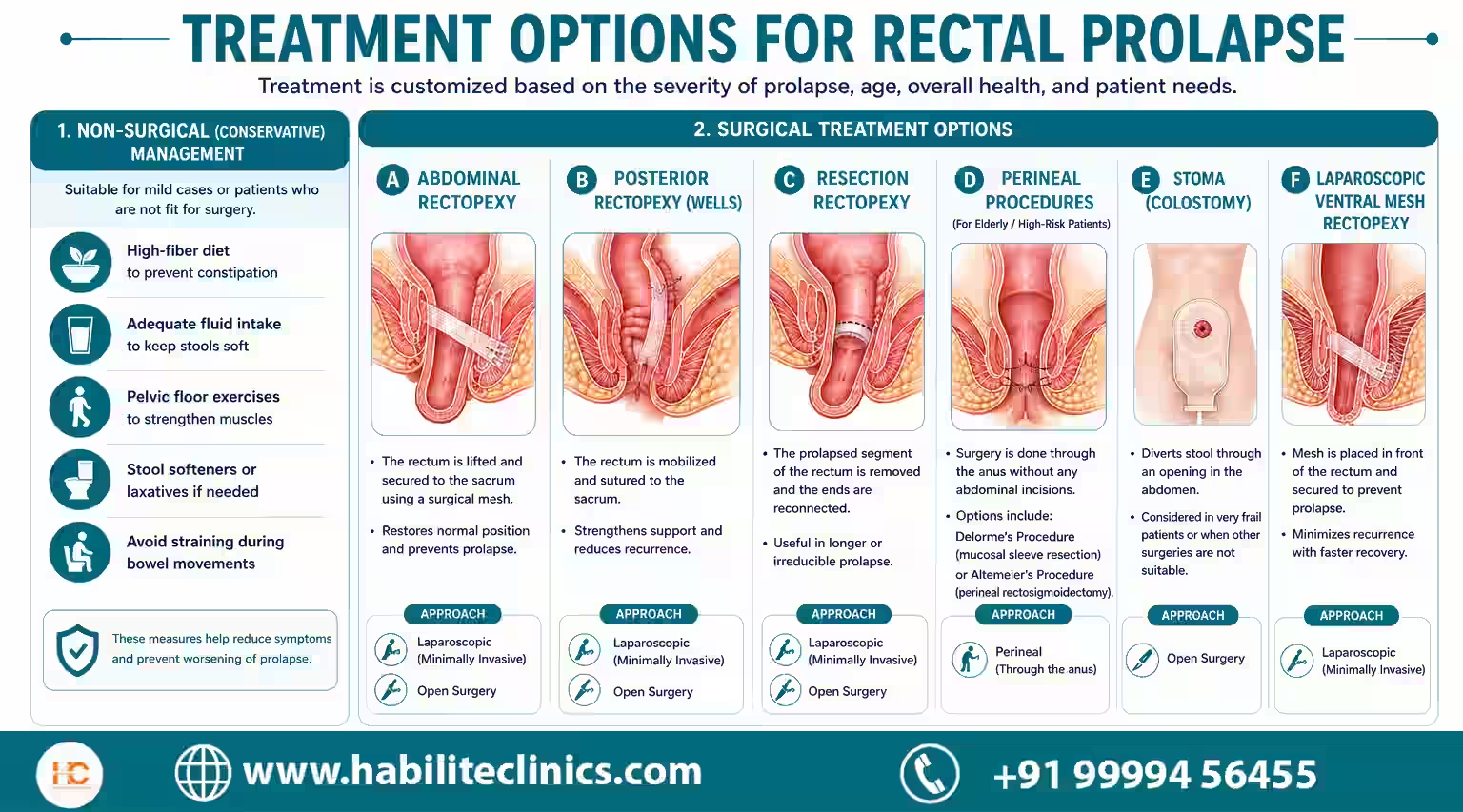
Performed through the anal canal with specialised staplers, ideal for internal prolapse and obstructed defecation. No abdominal incisions, same-day mobility and rapid pain-free recovery.
Perineal approaches (mucosal sleeve resection or perineal proctosigmoidectomy) recommended for elderly or high-risk patients unfit for general anaesthesia. Minimal pain and short stay.
Gold-standard for full thickness prolapse. The rectum is mobilised, lifted and fixed to the sacrum with sutures or mesh via 3 tiny incisions for excellent functional outcomes and <2% recurrence.
Recommended when severe constipation accompanies prolapse. Removing redundant bowel improves transit while the rectum is secured to prevent relapse.
Enhanced recovery protocols, DVT prophylaxis and early ambulation.
High-fibre, probiotic-rich diet chart with hydration targets to prevent constipation.
Physiotherapist-led Kegel and breathing exercises with progress tracking via WhatsApp.
Video reviews at week 1, 4 and 12 plus unlimited nurse helpline access.
Aftercare Milestones
A clear, physician-approved recovery roadmap guiding every patient through the first week after surgery.
24 Hours
24 Hours Hospital Stay if done through medical insurance. For non-insurance patients, discharged within 2 Hours.
24 Hours
24 Hours Hospital Stay if done through medical insurance. For non-insurance patients, discharged within 2 Hours.
24–36 Hours
Return to work and normal activities with full recovery.
24–36 Hours
Return to work and normal activities with full recovery.
48 Hours
Resume regular diet as per customised plan.
48 Hours
Resume regular diet as per customised plan.
Get accurate cost estimate for your treatment
Sanjay Kumar
Verified Google Review
“My 70-year-old mother underwent laparoscopic rectopexy. The surgery and recovery were smoother than we imagined. Thank you Dr. Kapil for the confident counselling and post-op support.”
Om Prakash Gupta
Verified Google Review
“Due to cardiac issues I was offered the STARR procedure. No cuts, no dressings and I went home the next day. Constipation and prolapse issues disappeared.”
Rajni
Verified Google Review
“Multiple pregnancies left me embarrassed about the prolapse. Dr. Kapil’s female coordinators made me comfortable, and the laparoscopic surgery healed with barely visible scars.”
We provide comprehensive free post-operative care to ensure your smooth recovery and optimal results. Our dedicated team is committed to your well-being throughout your healing journey.
Complete post-operative support and monitoring
24/7 access to our medical team
Personalized care coordinator for each patient
Scheduled check-ups to ensure optimal recovery
Dietary changes, pelvic floor therapy, and treating constipation may slow early prolapse, but most patients eventually need surgery for lasting relief.
Procedure selection depends on age, fitness, bowel habits, and prolapse length. Options include STARR, Delorme, Altemeier, laparoscopic or robotic rectopexy with mesh.
Minimally invasive rectal prolapse procedures typically require a 24–36 hour stay with early mobilisation and home-based recovery protocols.
Yes. The Habilite Clinics insurance desk assists with cashless approvals, reimbursement files, and optional zero-interest EMIs.
Recurrence is rare when the right technique is chosen and mesh-supported laparoscopic or robotic rectopexy is performed by an experienced surgeon.
Patients walk within 24 hours, resume desk work in 7–10 days, and follow a customised diet plus pelvic floor rehabilitation supervised by our care team.
Medicines cannot reverse rectal prolapse. However, stool softeners, diet changes and pelvic floor therapy may slow progression till you are ready for surgery.
Mild mucosal prolapse may be observed with lifestyle changes, but full thickness prolapse, bleeding, incontinence or recurrent infections are definite indications for surgery.
For fit adults, laparoscopic or robotic rectopexy with mesh support offers the best long-term durability. STARR and perineal procedures are chosen for tailored scenarios.
Desk work generally resumes in 7–10 days, light exercise in 2 weeks and heavy lifting after 4–6 weeks depending on healing.
Yes, female care coordinators assist during counselling, consent and follow-up to maintain privacy and address pelvic floor concerns sensitively.
Evidence-based articles on symptoms, minimally invasive options and recovery diets.
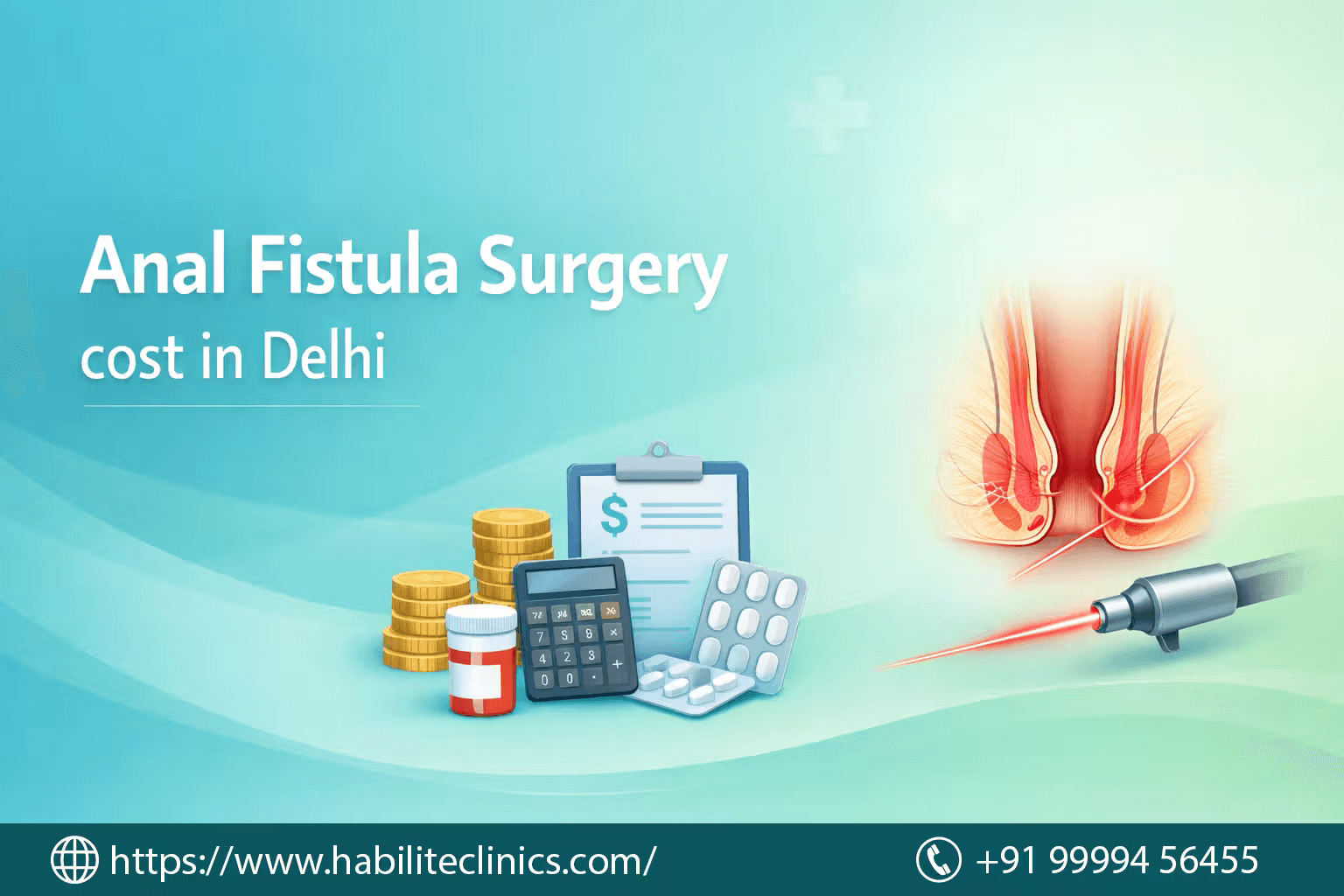
Laser fistula surgery (FiLaC) costs between ₹35,000 and ₹90,000 in Delhi. DLPL costs ₹30,000–₹90,000. Open surgery and LIFT range from ₹35,000 to ₹110,000. Laser surgery is not a single technique. FiLaC and DLPL are different procedures with different indications. Which one is right for you depends on the anatomy of your fistula. Sphincter preservation is non-negotiable. Any fistula surgery that divides a significant sphincter muscle risks incontinence. At Habilite Clinics, our treatment decisions are built around protecting your continence while achieving reliable healing. Health insurance covers fistula surgery in most cases, but policy wording matters. Laser surgery coverage and day-care procedure coverage vary by insurer. consistently heal faster and have lower recurrence rates.

Preventing piles at home requires a combination of healthy habits and home remedies. By taking these steps, you can reduce your risk of developing piles and enjoy better overall health and well-being. If you do develop piles, it's important to seek medical advice promptly to avoid complications and manage symptoms effectively.
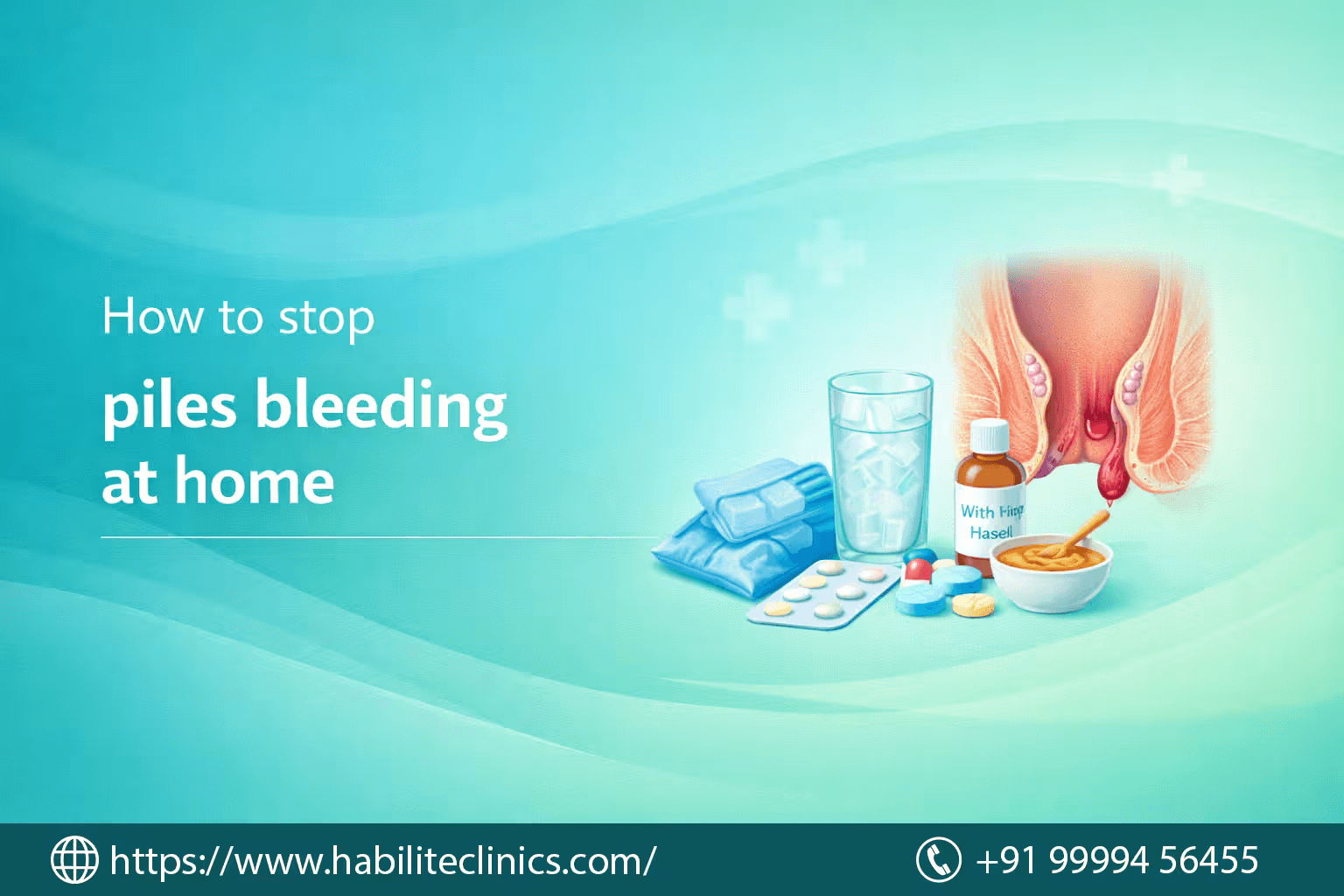
Bleeding piles or hemorrhages are swollen veins found near the rectum and anus.