Thrombosed External Piles Treatment in Delhi
One day you feel fine. The next morning, sitting down feels almost impossible. A hard, tender lump has shown up near your anus overnight. Even walking hurts. This sudden, sharp pain is often a thrombosed external pile.
We see this exact story almost every week at Habilite Clinics in Delhi NCR. Patients come in worried, often after a sleepless night. They all ask the same thing — is this serious, and what do I do now?
This is a complete guide to thrombosed external piles treatment, in plain words. We cover what causes a thrombosed external pile, how to spot one, when home care is enough, and when surgery is the better choice — with honest details on recovery time and cost.
Dr. Kapil Agrawal has treated thousands of patients with this exact problem over more than two decades. For other piles concerns, he also offers laser piles surgery in Delhi for internal and advanced cases.
Internationally Trained Expert
Discharge within 24 hours
Cashless Insurance Facility
Book Consultation
Schedule a consultation for Mini Gastric Bypass Surgery with Dr. Kapil Agrawal
What Is a Thrombosed External Pile?

An external pile sits just outside the anus, under the skin. Most of the time, it causes mild itching. You may barely notice it.
A thrombosed external pile is different. Blood inside this small vein clots and gets trapped. The vein swells up fast. The skin around it stretches tight. That stretching is what causes the sharp, steady pain.
Doctors call this external hemorrhoidal thrombosis. Patients describe it more simply — a painful, hard lump near the anus that came on fast.
This condition is not dangerous on its own. But the pain is often bad enough to disrupt sleep, work, and daily life. That is why patients want fast, clear answers.
Why Does a Pile Suddenly Form a Clot?
Doctors do not fully know why a clot forms in one pile and not another. But certain triggers do raise the risk. Common triggers we see in our patients include:
- Straining hard during constipation or loose motions
- Sitting for long hours, such as flights, car rides, or desk jobs
- Lifting heavy weights or doing intense gym sessions
- Pregnancy and the strain of childbirth
- A low-fibre diet with little water intake
- A long bout of coughing, which raises pressure in the lower body
Many patients tell us nothing unusual happened before the lump appeared. That is normal too. Sometimes a clot just forms on its own.
Thrombosed External Piles Symptoms: How to Tell What You Have
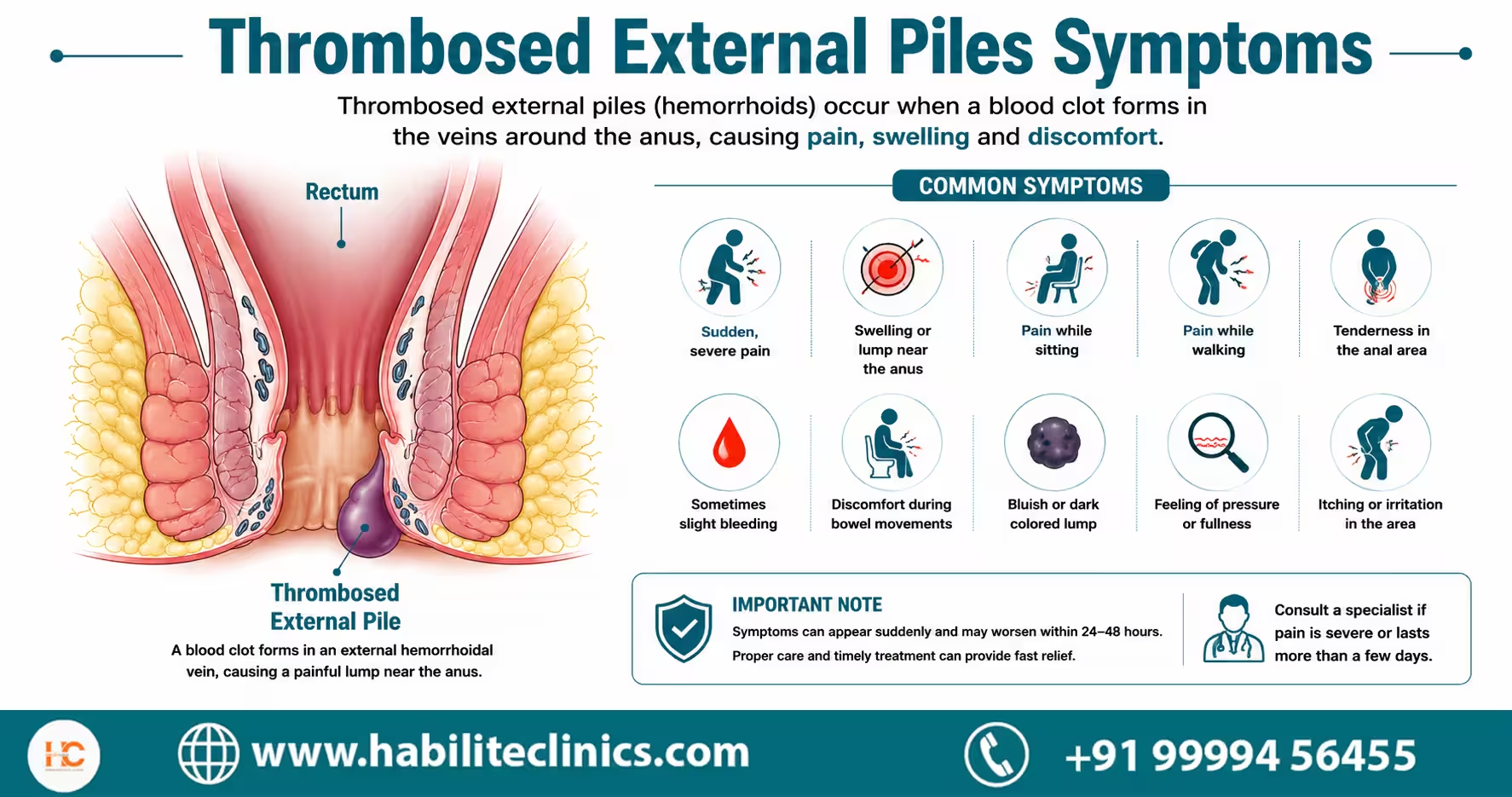
The symptoms of a thrombosed external pile are easy to spot. They come on fast, and feel very different from regular piles.
Watch for these signs:
- A firm, tender lump right at the edge of the anus
- A bluish, purple, or dark colour over the lump
- Pain that is sharp and steady, not just during bowel movements
- Pain that gets worse when you sit, walk, or pass stool
- Mild swelling around the lump
- Spotting of blood now and then, mainly if the lump bursts on its own
Pain from a thrombosed pile often peaks in the first one to three days. After that, it slowly eases over one to three weeks as your body soaks up the clot. A small skin tag may stay behind once it heals — this is harmless.
This pattern is different from a normal external pile, which tends to itch and feel mildly uncomfortable. It rarely causes sudden, severe pain like this.
Is This a Medical Emergency?
Most thrombosed external piles are painful, but not dangerous. Still, a few signs mean you should see a doctor right away:
- Heavy or steady bleeding that will not stop with light pressure
- Fever, spreading redness, or pus near the lump
- A lump that turns black, or looks like the skin is breaking down
- Pain that keeps getting worse, not better, after three or four days
- Trouble passing urine or stool because of the swelling
If none of these fit your case, you still do not have to bear the pain. A same-day check is the fastest way to get relief and rule out other problems. A perianal abscess or an anal fissure can feel much the same at first. If you're experiencing active bleeding, our guide on how to stop piles bleeding covers immediate steps before your appointment.
How We Diagnose a Thrombosed External Pile
A diagnosis is often quick. No scans are needed. We start with a simple look, since a thrombosed pile sits right at the edge of the anus.
- A gentle physical check confirms it almost every time.
- We also ask about your bowel habits, your diet, and any past piles.
- If there is odd bleeding, or you are over 45 with no clear cause, we may suggest a colonoscopy to rule out other causes of rectal bleeding.
For a complete understanding of all piles types, treatment comparisons, and a self-check tool, visit our Piles – A Complete Guide.
This is a precaution, not a sign that something worse is likely. Most patients are surprised at how short and manageable the diagnostic process is.
Best Treatment for Thrombosed External Piles
The right treatment mostly depends on two things: how many days has it been since the pain began, and how bad is that pain right now?
1. Home and Medical Care for Mild to Moderate Cases
If you are managing fairly well, or more than three or four days have passed, simple home care is often the best treatment for thrombosed external piles. The clot will dissolve on its own over time.
Steps that genuinely help include:
- Warm sitz baths for 10 to 15 minutes, two or three times a day
- A high-fibre diet, aiming for 25 to 30 grams a day from fruit, vegetables, and whole grains. For a full meal-by-meal Indian diet plan, read our guide on what to eat and avoid in piles.
- Drinking enough water through the day to keep stools soft
- A mild stool softener if needed, so you avoid straining
- Pain relief tablets, plus a short course of a numbing or mild steroid cream
- A cold pack on the spot for short spells, to ease swelling
Most patients feel a lot better within a week with this approach alone. The lump shrinks over the next two to three weeks.
2. When Is Surgery Needed for Thrombosed External Piles?
Surgery is not the first step for everyone. We tend to suggest it when:
- The pain is severe, and home care is not helping
- You came in within the first three to four days, when the pain is at its worst
- The clot is large, or there is more than one thrombosed pile
- This is not your first episode, and piles keep clotting again
The American Society of Colon and Rectal Surgeons updated its guidelines in 2024. They say early surgery can bring faster relief for some patients seen in this window. After four days, pain often starts to ease on its own, so surgery offers less benefit at that later stage.
3. Surgical Treatment for Thrombosed External Piles: Your Two Options
Clot Drainage (Incision and Evacuation)
This is a small step done under local numbing. A tiny cut is made over the lump and the trapped clot is gently squeezed out. It gives quick relief and takes only a few minutes. But the pile itself stays behind, so the same pile can swell or clot again later.
Surgical Excision: The Advanced Treatment for Thrombosed External Piles
Excision removes the clot, the whole pile, and the skin over it — not just the trapped blood. This is the more complete, advanced treatment for thrombosed external piles and what we often suggest at Habilite Clinics. Since the whole pile is gone, the chance of the same spot clotting again drops a lot.
For most patients, excision is the best surgical option for thrombosed external hemorrhoids — especially if this is not your first episode. Drainage alone still has its place for patients who need fast relief but want to skip a longer step.
4. What Happens on the Day of Surgery
This step is often done as day-care surgery. You walk in and walk out on the same day in most cases. Here is what to expect:
- Local numbing makes the spot fully numb — you feel pressure, not sharp pain
- The pile and clot come out through a small, precise cut
- The wound is left open, or closed lightly, depending on its size
- You rest for a short while under watch before going home
The whole step often takes 15 to 30 minutes. General anaesthesia is rarely needed.
5. Thrombosed External Piles Surgery Recovery Time
- Days 1 to 2: Mild to medium pain or swelling, managed with prescribed pain relief. Rest at home with legs slightly raised when seated.
- Days 3 to 7: Swelling drops a lot. Most patients return to desk work within two to three days.
- Week 2: Discomfort is mostly gone. Skip heavy lifting, hard workouts, or long bike rides this week.
- Weeks 3 to 4: The wound finishes closing up. Normal life, including the gym, can often start fully again.
A fibre-rich diet and regular sitz baths truly speed things up.
6. Cost of Thrombosed External Piles Surgery in Delhi
As a rough guide, a simple in-clinic clot drainage often costs ₹4,000 to ₹8,000. A full surgical excision, done as day-care surgery, often costs ₹10,000 to ₹30,000 depending on how complex your case is.
At Habilite Clinics, we believe in clear pricing with no hidden charges. You get a clear, itemised estimate at your visit before any step is booked. Cashless options work with most major insurance plans.
7. Thrombosed External Hemorrhoid Surgery Side Effects
Like any minor surgery, this step carries a small set of possible side effects. Most are mild and pass quickly:
- Pain or discomfort for the first few days, well managed with medicine
- Light spotting or minor bleeding for a day or two
- Mild swelling around the spot, which settles within a week
- A small, harmless skin tag where the pile used to sit
- Brief trouble passing urine right after the step, in rare cases
Serious problems such as infection are rare when the step is done with care and aftercare is followed well.
8. Caring for Yourself After Surgery
Helpful habits:
- Take warm sitz baths two to three times a day
- Eat fibre-rich foods and drink plenty of water
- Take the stool softener you are given, even if you feel fine
- Wear loose, breathable cotton underwear
- Pat the area dry gently after washing — do not rub it
Habits to avoid:
- Straining or spending long stretches on the toilet
- Sitting for hours with no short break to stand or walk
- Spicy food and alcohol for the first week
- Skipping your follow-up visit, even once the pain is gone
What Happens If You Ignore a Thrombosed Pile?
Most thrombosed piles settle on their own, even with no treatment at all. But ignoring bad symptoms for too long does carry some risk.
- A thrombosed pile can burst through the skin and bleed
- It can cause pain that drags on for weeks
- In rare cases, it can get infected
- The same spot has a higher chance of causing trouble again later
None of this is a reason to panic. It is simply a reason to get checked early — especially if the pain is severe or is not getting better.
A Quick Word From Dr. Agrawal
"Patients come to us in pain, and often a little shy too. My job is to make this quick, comfortable, and free of judgement. I also want to give them a plan that truly stops it from coming back. If you catch it early and the pain is bad, removing the clot can ease the pain almost right away. We do this under local numbing. If you wait too long, your body has already begun the healing work — so we just let it finish."
How to Treat Thrombosed External Piles Permanently
One surgery removes the pile that caused you trouble. But it does not change the habits that led to it. Long-term relief is really about cutting the pressure that makes piles form and clot again.
- Eat 25 to 30 grams of fibre daily, mainly from whole foods
- Drink two to three litres of water through the day
- Avoid long sitting spells on the toilet — especially with a phone in hand
- Go to the toilet as soon as you feel the urge, not later
- Treat constipation or loose stools early, rather than letting them drag on for weeks
- Get any pile that keeps coming back checked before it turns into a clot
For a broader set of daily habits that protect you long-term, our guide on how to prevent piles at home is worth bookmarking.
Mini Gastric Bypass Surgery Cost in Delhi
Get accurate cost estimate for your treatment
Why Choose Dr. Kapil Agrawal
Dr. Kapil Agrawal is a Senior Consultant Laparoscopic, Robotic & Bariatric Surgeon at Apollo Hospitals, Delhi NCR, with over 23 years of experience and more than 7,000 minimally invasive procedures to his name. He holds an MRCS from the Royal College of Surgeons, London, and an MMed from Singapore.
What sets Dr. Agrawal apart for thrombosed external piles care:
- Clear, jargon-free explanations: Every option is laid out in plain terms, with the pros, cons, and a realistic recovery timeline.
- Fast access when pain is urgent: Habilite Clinics is set up to check, and where needed treat, these cases quickly — patients are not left in pain for days while waiting for a slot.
- Honest surgical counselling: Dr. Agrawal walks patients through both clot drainage and excision, covering what each means for recovery and the odds of recurrence.
- Practical, India-specific advice: Dietary recommendations are built around real Indian meals and routines, not generic Western diet charts.
- Access to advanced options when needed: If internal piles are also present, Dr. Agrawal offers the full range of treatments — from conservative care to laser hemorrhoidoplasty — at Habilite Clinics' two centers in Lajpat Nagar and Hauz Khas, South Delhi.
- Long-term focus: The goal is always to prevent recurrence, not just treat the current clot.
To book a visit, call us at +91 99994 56455 or +91 99100 24564.
Habilite Clinics' Free Post-operative Care
We provide comprehensive free post-operative care to ensure your smooth recovery and optimal results. Our dedicated team is committed to your well-being throughout your healing journey.
Comprehensive Care
Complete post-operative support and monitoring
Expert Guidance
24/7 access to our medical team
Dedicated Support
Personalized care coordinator for each patient
Regular Follow-ups
Scheduled check-ups to ensure optimal recovery
What's Included in Our Free Post-operative Care:
- ✓Regular follow-up consultations with Dr. Kapil Agrawal
- ✓24/7 emergency support and guidance
- ✓Nutritional counseling and diet plans
- ✓Wound care and dressing assistance
- ✓Medication management and adjustments
- ✓Progress monitoring and recovery assessment
Chat with Expert for Free
Get instant answers to your questions from our medical experts via WhatsApp
Frequently Asked Questions
Common questions about thrombosed external piles treatment
A thrombosed external pile is an external pile with a blood clot trapped inside it. The clot causes a hard, painful, bluish lump near the anus. The pain is often sudden and severe.
It often looks like a firm, swollen lump at the edge of the anus. The colour can range from dark red to blue or purple. It feels tender to touch, and you can often see it without any internal exam.
Straining during constipation, sitting for long hours, heavy lifting, pregnancy, and a low-fibre diet are the most common triggers. In some cases, no clear cause is found at all.
A thrombosed pile is often firmer, more painful, and darker in colour than a normal swollen pile. The pain also tends to stay constant, not just during bowel movements.
Often not. But get urgent care if there is heavy bleeding. The same goes for fever, spreading redness, or pain that keeps getting worse after three to four days.
Yes. Many cases settle with home care alone. This includes sitz baths, fibre, water, and pain relief. This works mainly if a few days have already passed since the pain started.
Surgery is often suggested in a few cases. The pain is severe. You come in within the first three to four days. The clot is large. Or piles keep clotting again and again.
For early, severe cases, surgical excision under local numbing is often the best treatment for thrombosed external piles. It removes the clot and the pile together. For mild or later cases, home care alone often works well.
Drainage removes only the trapped blood, and gives quick relief. But the pile itself stays, so it can clot again. Excision removes the whole pile. So the same spot is far less likely to cause trouble again.
Most patients feel a major improvement within the first week. Most are back to normal activity within three to four weeks. Desk work can often resume in two to three days.
Cost depends on a few things. Is it simple drainage, or full excision? What type of numbing is used? Are other piles treated at the same time? We share a clear, written estimate at your visit, with no hidden charges.
Mild pain, light spotting, and brief swelling are common. These often settle within a week. Serious problems are rare when the step is done with care, and aftercare is followed.
Expect some pain and soreness for the first two to three days. This eases with sitz baths, pain relief, and a fibre-rich diet. Most patients feel well enough to return to desk work within that week.
Focus on steady fibre intake, good hydration, and less time spent sitting or straining. Also, get any pile that keeps coming back checked early, before it turns into a clot.
A small, painless skin tag is common once the spot heals, whether or not surgery was done. It is harmless, and is mainly a look-related issue, not a medical one.