Best Grade 1 Piles Treatment in Delhi
If your doctor has told you that you have Grade 1 piles, take a breath — this is good news, not bad news. Grade 1 is the mildest and earliest stage of hemorrhoidal disease, and in most cases, it does not need surgery at all.
At Habilite Clinics in Delhi, Dr. Kapil Agrawal sees patients with Grade 1 piles every week. Many of them arrive worried, expecting an operation. After a proper examination, most leave with a simple, practical plan involving diet changes, medication, and sometimes a quick in-clinic procedure — no hospital stay, no cuts, no downtime.
If your piles are at a more advanced stage, Dr. Agrawal also offers laser piles surgery in Delhi for Grade 2, 3, and 4 cases — all with same-day discharge.
This page explains what Grade 1 piles actually means, how it's diagnosed, what treatment looks like at this stage, and when (if ever) you might need something more.
Internationally Trained Expert
Discharge within 24 hours
Cashless Insurance Facility
Book Consultation
Schedule a consultation for Mini Gastric Bypass Surgery with Dr. Kapil Agrawal
What Does Grade 1 Piles Mean?
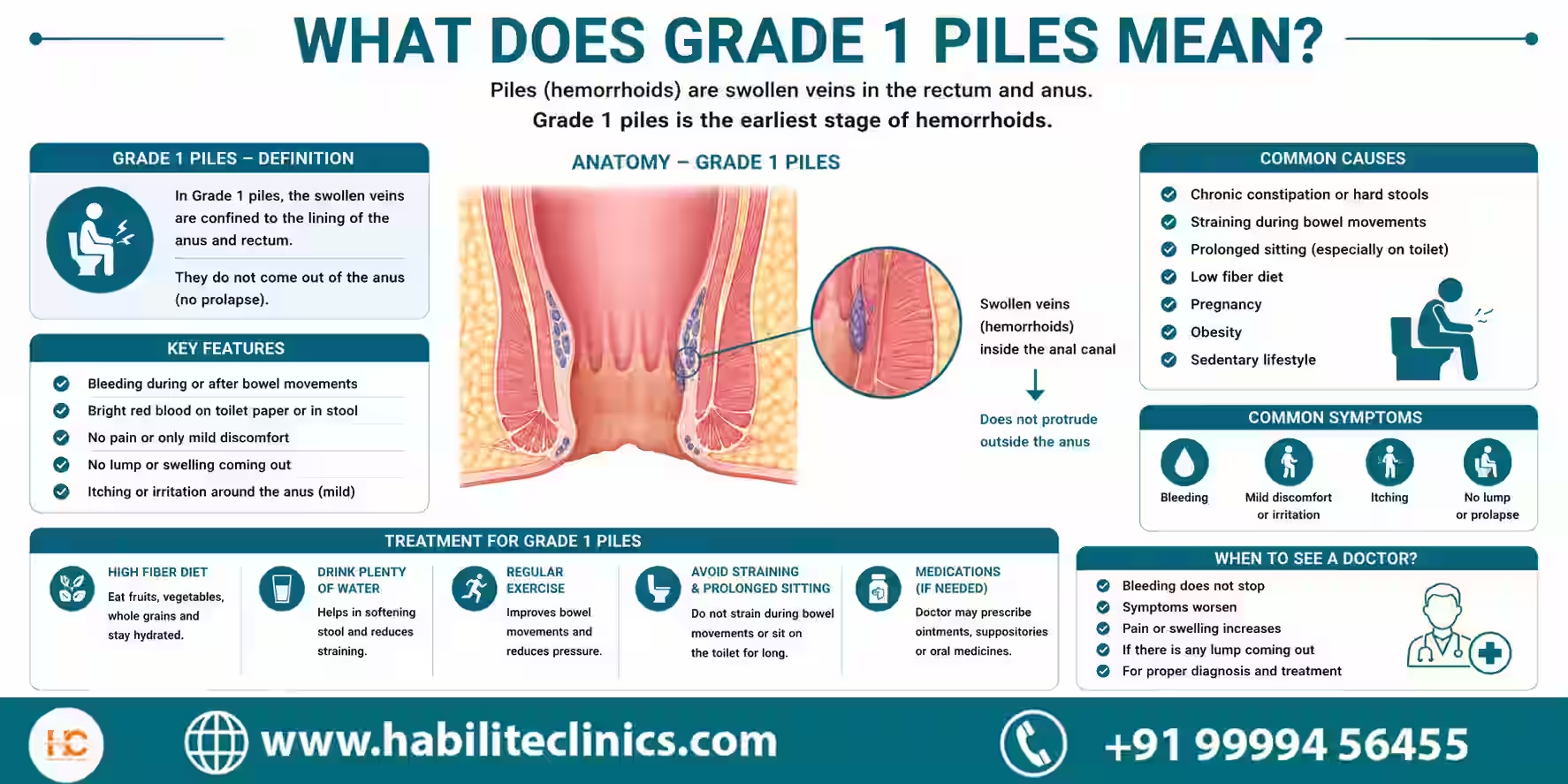
Piles, also called hemorrhoids, are swollen blood vessels inside the lower rectum. Doctors grade internal hemorrhoids from 1 to 4 based on how much they prolapse, or come out of the anus.
Grade 1 piles are the earliest stage. At this point:
- The hemorrhoids stay completely inside the rectum
- There is no visible bulge or lump outside the anus
- The most common symptom is painless bleeding, usually bright red, seen on toilet paper or in the toilet bowl after passing stool
- Some patients notice mild itching or a feeling of fullness, but many have no symptoms apart from occasional bleeding
Because there's no prolapse and usually little pain, Grade 1 piles are often discovered almost by accident — during a routine check-up, or when a patient comes in worried about bleeding and gets examined properly for the first time.
Why Bleeding Should Never Be Ignored, Even at Grade 1
Here's something Dr. Agrawal tells every patient: rectal bleeding should always be checked by a doctor, even if it seems minor and even if you're fairly sure it's "just piles."
The reason is simple. Bleeding from the back passage can also be caused by anal fissures, polyps, or in rare cases, colorectal cancer — particularly in patients over 45, or those with a family history of bowel cancer. A proper examination rules these out and confirms that what you're dealing with is, in fact, Grade 1 piles.
This is why self-diagnosing from a photo on the internet or a quick pharmacy visit isn't a good idea. If you're experiencing active bleeding right now, our guide on how to stop piles bleeding covers immediate steps you can take before your appointment. A five-minute clinical examination gives you certainty — and certainty is worth a lot when it comes to your health.
How Grade 1 Piles Are Diagnosed
At Habilite Clinics, the diagnostic process for suspected Grade 1 piles is quick and far less uncomfortable than most patients expect:
- A detailed history — Dr. Agrawal asks about your bowel habits, diet, bleeding pattern, and any family history of bowel disease.
- A digital rectal examination (DRE) — a brief, gloved finger examination to feel for any abnormal lumps or tenderness.
- Proctoscopy — a short, narrow instrument is gently used to look directly at the hemorrhoidal cushions inside the rectum. This is what confirms the grade.
For a complete understanding of all four grades, treatment comparisons, and a self-check tool, visit our Piles – A Complete Guide.
Most patients are surprised at how short and manageable this process is. There's no need for sedation or special preparation for a Grade 1 evaluation in most cases.
Treatment Options for Grade 1 Piles
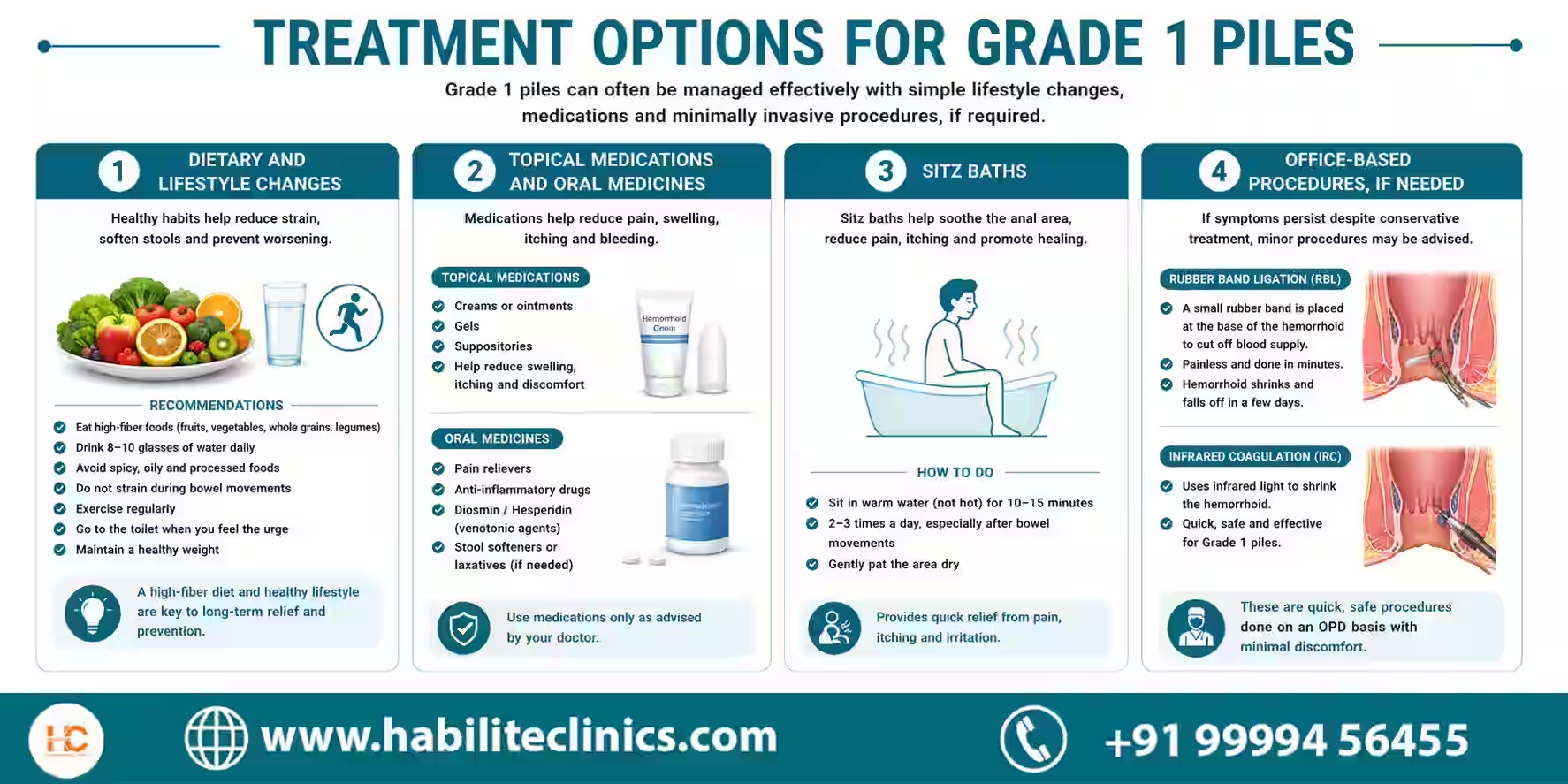
This is the part patients care about most, so let's be direct: Grade 1 piles almost never require surgery. Treatment focuses on stopping the bleeding, reducing swelling, and — most importantly — preventing the piles from progressing to Grade 2 or 3.
1. Dietary and Lifestyle Changes (the Foundation of Treatment)
According to the American Society of Colon and Rectal Surgeons (ASCRS), dietary modification with adequate fluid and fiber intake, along with counseling on bowel habits, forms the primary first-line therapy for symptomatic hemorrhoid disease. This isn't just a "nice to have" — it's the backbone of treatment.
In practical terms, for someone living in Delhi, this means:
- Adding fiber-rich foods to your daily diet — dal, chana, oats, whole wheat roti, papaya, guava, and leafy vegetables like palak and methi For a full meal-by-meal Indian diet plan, read our detailed guide on what to eat and avoid in piles.
- Drinking at least 2.5 to 3 litres of water daily
- Avoiding excessive tea, coffee, and fried or spicy street food, which can worsen constipation in some people
- Not straining or sitting on the toilet for long periods (avoid using your phone in the bathroom — it's a bigger contributor to piles than most people realize)
2. Topical Medications and Oral Medicines
Dr. Agrawal may prescribe a short course of:
- Topical creams or suppositories to reduce inflammation and soothe the area
- Stool softeners, especially if constipation is a contributing factor
- Oral flavonoid-based medications (such as diosmin-hesperidin combinations), which research has shown can help with bleeding and irritation in early-stage piles
3. Sitz Baths
A simple warm water sitz bath for 10–15 minutes, once or twice a day, can ease irritation and improve blood flow to the area. This is an easy, low-cost habit that genuinely helps.
4. Office-Based Procedures, If Needed
For patients whose bleeding doesn't settle with diet and medication alone, ASCRS guidelines note that office-based procedures such as banding, sclerotherapy, and infrared coagulation are strongly recommended for grade I and II hemorrhoids, with banding typically being the most effective option.
These are quick, walk-in procedures done in the clinic — no anesthesia, no admission, and you go home the same day. Dr. Agrawal performs sclerotherapy and banding when appropriate, but reserves them for cases where conservative measures genuinely aren't enough, rather than offering them as a default first step.
Rectal bleeding can sometimes be caused by an anal fissure rather than piles — if this is suspected during examination, Dr. Agrawal also provides anal fissure treatment as a separate, equally straightforward procedure.
What Happens If Grade 1 Piles Are Left Untreated?
Grade 1 piles don't usually go away completely on their own, especially if the underlying cause — constipation, prolonged sitting, low-fiber diet — isn't addressed. Left unmanaged, they can progress:
- Grade 2: The hemorrhoid starts to prolapse during bowel movements but goes back in on its own
- Grade 3: The hemorrhoid prolapses and needs to be pushed back manually
- Grade 4: The hemorrhoid stays permanently prolapsed outside the anus
The good news is that this progression is usually slow, and almost entirely preventable with the right habits started early. This is exactly why Dr. Agrawal puts so much emphasis on diet and lifestyle counseling at the Grade 1 stage — it's the stage where the most can be done with the least intervention.
A Quick Word From Dr. Agrawal
"In over two decades of treating piles, I've noticed something interesting — patients with Grade 1 piles often feel the most anxious, because they've heard horror stories about piles surgery from relatives or friends. But Grade 1 is actually the stage where we have the most options and the gentlest treatments available. My job at this stage isn't to operate — it's to help you understand your body, fix the habits that are causing the problem, and make sure it doesn't progress. Most of my Grade 1 patients never need a procedure at all."
Actionable Tips You Can Start Today
- Set a fixed time each day for a bowel movement, ideally after breakfast
- Keep a glass of water by your bedside and drink it first thing in the morning
- Add one extra serving of vegetables or fruit to your meals starting today
- If you notice bleeding more than once or twice, book an examination — don't wait for it to "go away on its own"
- Avoid sitting on the Indian-style toilet for long periods if you already have piles symptoms, as the squatting position increases pressure
For a broader set of daily habits that protect you long-term, our guide on how to prevent piles at home is worth bookmarking.
Mini Gastric Bypass Surgery Cost in Delhi
Get accurate cost estimate for your treatment
Why Choose Dr. Kapil Agrawal
Dr. Kapil Agrawal is a Senior Consultant Laparoscopic, Robotic & Bariatric Surgeon at Apollo Hospitals, Delhi NCR, with over 23 years of experience and more than 7,000 minimally invasive procedures to his name. He holds an MRCS from the Royal College of Surgeons, London, and an MMed from Singapore.
What sets Dr. Agrawal apart for early-stage piles care:
- A conservative-first philosophy: He doesn't push patients toward procedures or surgery when diet and medication can do the job. Many Grade 1 patients are reassured to find that "treatment" doesn't always mean "operation."
- Thorough diagnosis: Every patient gets a proper clinical examination to rule out other causes of bleeding before being labeled as "just piles."
- Practical, India-specific advice: Dietary recommendations are built around real Indian meals and routines, not generic Western diet charts.
- Access to advanced options when needed: If a patient's piles progress, Dr. Agrawal offers the full range of treatments — from sclerotherapy and banding to laser hemorrhoidoplasty and stapler procedures — at Habilite Clinics' two centers in Lajpat Nagar and Hauz Khas, South Delhi.
- Long-term focus: The goal is always to prevent recurrence and progression, not just treat the current symptom.
Habilite Clinics' Free Post-operative Care
We provide comprehensive free post-operative care to ensure your smooth recovery and optimal results. Our dedicated team is committed to your well-being throughout your healing journey.
Comprehensive Care
Complete post-operative support and monitoring
Expert Guidance
24/7 access to our medical team
Dedicated Support
Personalized care coordinator for each patient
Regular Follow-ups
Scheduled check-ups to ensure optimal recovery
What's Included in Our Free Post-operative Care:
- ✓Regular follow-up consultations with Dr. Kapil Agrawal
- ✓24/7 emergency support and guidance
- ✓Nutritional counseling and diet plans
- ✓Wound care and dressing assistance
- ✓Medication management and adjustments
- ✓Progress monitoring and recovery assessment
Chat with Expert for Free
Get instant answers to your questions from our medical experts via WhatsApp
Frequently Asked Questions
Common questions about Grade 1 piles treatment
Grade 1 piles are the earliest stage of internal hemorrhoids. The swollen tissue stays completely inside the rectum and does not bulge out. The main symptom is usually painless bleeding during or after passing stool.
Yes. Grade 1 piles almost never need surgery. Most cases improve with dietary changes, increased fiber and water intake, topical medications, and better bowel habits. Surgery is generally reserved for Grade 3 and 4 piles that do not respond to other treatments.
Bleeding from Grade 1 piles is usually not dangerous on its own, but any rectal bleeding should be examined by a doctor to rule out other causes, such as fissures or, rarely, more serious conditions. Do not assume it is “just piles” without a check-up.
Many patients notice improvement in bleeding and discomfort within 2 to 4 weeks of consistent dietary changes — more fiber, more water, and better toilet habits. However, the underlying tendency toward piles can remain, so these habits need to continue long-term.
It is less about avoiding specific foods and more about avoiding low-fiber, processed, and very spicy or fried foods in excess, along with too much tea or coffee, which can worsen constipation in some people. Focus on adding fiber rather than eliminating everything.
They can, especially if the original triggers — constipation, straining, prolonged sitting — are not addressed. That is why Dr. Agrawal focuses on long-term lifestyle changes rather than just treating the current bleeding episode.
Not always. A proctoscopy is usually sufficient to confirm Grade 1 piles. A colonoscopy may be recommended if you are over 45, have a family history of colorectal cancer, or have other symptoms like unexplained weight loss or a change in bowel habits.
Yes. Sclerotherapy is an injection-based treatment that can help reduce bleeding in Grade 1 and Grade 2 piles when diet and medication alone aren not enough. It is a quick, walk-in procedure with no need for hospital admission.
No. Piles (hemorrhoids) do not turn into cancer. However, the symptoms of piles — like rectal bleeding — can sometimes overlap with symptoms of other conditions, including colorectal cancer, which is why a proper examination is important rather than assuming it is piles.
Since Grade 1 piles treatment is typically non-surgical (diet, medication, and occasional office-based procedures), it may not always be covered under hospitalization-based insurance plans. It is best to discuss this directly with the clinic team, who can guide you based on your specific policy.
The key sign is prolapse — if you start noticing a small lump or swelling coming out during bowel movements that goes back in on its own afterward, this suggests progression to Grade 2. This is a good time to see your doctor again for reassessment.
Yes, pregnancy is a common cause of Grade 1 piles due to increased pressure on the rectal veins and hormonal changes affecting bowel movements. Most pregnancy-related Grade 1 piles improve after delivery with simple dietary measures, but should still be evaluated by a doctor.
The cost depends entirely on what is needed — for most Grade 1 cases involving only diet counseling and medication, costs are minimal. If an office-based procedure like sclerotherapy is required, costs are still significantly lower than surgical procedures. A consultation will give you a clear, individualized estimate.
Either can evaluate you initially, but seeing a colorectal/laparoscopic surgeon like Dr. Agrawal ensures that if your piles do need a procedure at any point — now or in the future — the same doctor who diagnosed you can manage the full treatment journey without referrals or delays.
Dr. Kapil Agrawal sees patients for Grade 1 piles treatment at Habilite Clinics locations in Lajpat Nagar and Hauz Khas, South Delhi, as well as at Apollo Hospitals, Delhi NCR.