
Best Way to Cure Piles in 3 Days: Symptoms, Causes & Doctor-Backed Treatment
Table of Contents
Key Takeaways
- Mild, early-stage (Grade I-II) piles can see real symptom relief within 2-3 days with fibre, hydration, sitz baths and topical care — but "relief" isn't the same as "cure."
- Grade III-IV or thrombosed piles won't resolve permanently with home remedies alone, however consistently they're followed.
- Warm sitz baths plus a cold compress give the fastest pain relief; high fibre intake and hydration address the root cause.
- Persistent bleeding, a lump that won't shrink, or no improvement after 3 days are signs to see a doctor rather than keep self-treating.
- Laser treatment, DG-HAL, rubber band ligation, sclerotherapy and stapler surgery are mostly day-care, minimally invasive options once home care isn't enough.
- Diet and lifestyle habits that bring relief are the same ones that prevent recurrence — they need to stay consistent, not just appear during a flare-up.
What Is Piles (Haemorrhoids)?
Piles, also called haemorrhoids, are swollen veins inside or around the rectum and anus. They are extremely common — most adults experience them at least once — and develop when veins in this area become engorged from straining, constipation, pregnancy, or prolonged sitting.
There are two types:
- Internal piles — form inside the rectum and are usually painless, though they can bleed.
- External piles — form under the skin around the anus and tend to be more painful, especially if a clot forms (thrombosed piles).
Common symptoms include itching, bleeding (typically bright red), a lump near the anus, and discomfort during or after bowel movements.
Pregnant readers should also see our dedicated guide on piles during pregnancy, since presentation and safe treatment differ.
Can Piles Really Be Cured in 3 Days?
Here's the honest answer: mild, early-stage (Grade I-II) piles often respond very well within 2-3 days to the right combination of diet, hydration, and topical care — symptoms like itching, mild bleeding, and discomfort can ease significantly in that window.
However, "cured" and "relieved" aren't the same thing. Grade III-IV piles, thrombosed external piles, or piles that keep bleeding will not resolve permanently with home care alone, however consistently it's followed. Using home remedies as a first response is reasonable; expecting them to fix advanced piles is not, and delaying proper treatment in those cases usually makes things worse.
If your symptoms haven't meaningfully improved within 3 days, or are getting worse, that's the signal to see a colorectal/laser surgeon rather than continue self-treating.
Many early-stage cases can be managed through piles treatment without surgery, but it's worth understanding when that approach stops being enough.
7 Ways to Get Fast Relief From Piles Symptoms
1. Increase Fibre Intake
A high-fibre diet softens stools and reduces straining, which is the single biggest driver of piles. Aim for fruits, vegetables, whole grains and legumes at every meal.
2. Stay Well Hydrated
Drink at least 2-3 litres of water a day. Dehydration hardens stool, which worsens straining and irritation.
3. Use Topical Relief Carefully
Over-the-counter creams containing hydrocortisone or witch hazel can reduce itching, swelling and pain. Use for short periods only — prolonged steroid cream use can thin the skin around the anus.
If bleeding rather than pain is your main symptom, our guide on how to stop piles bleeding at home covers targeted steps.
4. Warm Sitz Baths
Sitting in warm water for 10-15 minutes, 2-3 times a day, relaxes the anal sphincter and noticeably eases pain and swelling.
5. Don't Strain or Delay Bowel Movements
Go as soon as you feel the urge, and avoid sitting on the toilet longer than necessary. A stool softener can help if constipation is persistent.
6. Stay Active
Thirty minutes of walking or light activity daily improves bowel regularity and reduces pelvic pressure.
7. Avoid Prolonged Sitting or Standing
Both increase pressure on rectal veins. Take a short break to move every 30-45 minutes, especially at a desk job.
Home Remedies That Support Healing
Pairing these remedies with the right diet matters — see our full guide on foods to eat and avoid in piles for a complete eating plan.
These work alongside — not instead of — the measures above, and are best suited to mild, early-stage piles:
- Aloe vera gel — anti-inflammatory, can be applied directly to the area.
- Witch hazel — a natural astringent that reduces swelling; apply with a cotton pad.
- Cold compress — wrap ice in a cloth and apply for 10-15 minutes to numb pain and reduce swelling.
- Coconut oil — soothing and moisturising for itching and irritation.
- Psyllium husk (isabgol) — a soluble fibre supplement that softens stool; mix one teaspoon in water daily.
These remedies are not a substitute for medical evaluation, particularly if bleeding continues or a lump doesn't reduce in size.
When Home Remedies Aren't Enough: Medical Treatment Options
At Habilite Clinics, the approach always starts conservative — diet correction, medication for constipation and bleeding, and lifestyle changes are tried first wherever appropriate. For piles that don't respond to home care, laser treatment for piles offers a precise, minimally invasive option with fast recovery For piles that don't respond, several minimally invasive, mostly painless options are available depending on grade and symptoms:
- Rubber band ligation — a band is placed at the base of the pile, which then shrinks and falls off within a week. Suited to early Grade II-III piles.
- Sclerotherapy — a solution is injected to shrink the haemorrhoid; used for smaller Grade III piles.
- Laser treatment — a precise, day-care procedure with minimal pain and quick recovery, well suited to Grade II-III internal piles, especially when recurrent bleeding is the main issue.
- DG-HAL — a near-zero-complication procedure for recurrent bleeding piles.
- Stapler haemorrhoidopexy — typically used for Grade IV piles where prolapse needs to be corrected surgically.
Most of these are outpatient procedures, meaning you go home the same day. Which option is right depends on the grade of piles and individual case history, so an in-person or video evaluation is the only reliable way to decide.
How to Prevent Piles From Recurring
Piles that resolve once can come back if the underlying habits don't change. The same fibre, hydration, and activity habits used for relief also work for prevention:
- Keep fibre intake high and consistent, not just during flare-ups.
- Maintain a healthy body weight to reduce pelvic pressure.
- Avoid long periods of sitting or standing without breaks.
- Don't ignore the urge to go, and don't strain.
- Treat constipation early rather than waiting for symptoms to escalate.
For a longer-term plan, read our complete guide on how to prevent piles at home
When to See a Doctor
Book a consultation promptly if you notice any of the following:
- Bleeding that is heavy, persistent, or recurring over several bowel movements.
- A lump that doesn't reduce on its own or becomes increasingly painful (possible thrombosed pile).
- Symptoms that haven't improved after 3 days of consistent home care.
- Any change in bowel habits alongside bleeding, especially after age 40 — to rule out other causes.
- Severe pain, fever, or signs of infection.
Dr. Kapil Agrawal, Senior Consultant Laparoscopic, Robotic & Bariatric Surgeon at Apollo Hospitals and founder of Habilite Clinics, has performed 7,000+ minimally invasive procedures and offers same-week evaluation for piles at the Lajpat Nagar and Hauz Khas clinics.
Frequently Asked Questions
Piles, also known as haemorrhoids, are a common condition affecting millions of people worldwide. They are swollen veins in the rectum and anus that cause discomfort, itching, and sometimes bleeding. The good news is that piles can be cured within three days with proper treatment and lifestyle changes.
Mild, early-stage piles often see significant symptom relief within 2-3 days of consistent home care. Larger or recurring piles need proper medical evaluation and treatment — they won't resolve permanently with home remedies alone.
A warm sitz bath for 10-15 minutes combined with a cold compress immediately after gives the fastest relief from pain and swelling, usually within hours.
Small, early Grade I piles sometimes resolve on their own once constipation is corrected. Grade III and IV piles, or piles that bleed repeatedly, generally need medical or laser treatment.
Avoid spicy food, red and processed meat, refined/white-flour products, alcohol and caffeine — all of which can worsen constipation or irritation. A full eating plan is covered in our diet guide for piles.
Laser treatment is largely painless, performed as a day-care procedure with no cuts or stitches, and most patients return to normal activity within 2-3 days.
Bright red bleeding with a visible lump near the anus is typically piles. However, any rectal bleeding alongside a change in bowel habits, unexplained weight loss, or bleeding after age 40 should be evaluated by a doctor to rule out other conditions.
Yes — roughly 1 in 3 pregnant women develop piles, particularly in the second and third trimester, due to increased pelvic pressure and hormonal changes.
Untreated advanced piles can lead to chronic bleeding, anaemia, skin tags, and increasing prolapse that becomes harder to treat conservatively over time.
Cost depends on the grade and procedure recommended — non-surgical management costs less than laser or stapler surgery. A consultation is the most reliable way to get an accurate estimate for your case.
Recovery varies by procedure: laser and band ligation patients are typically back to normal activity within 2-3 days, while stapler surgery for advanced piles may need 5-7 days.
Dr. Kapil Agrawal
Senior Consultant at Apollo Group of Hospitals
About the Doctor
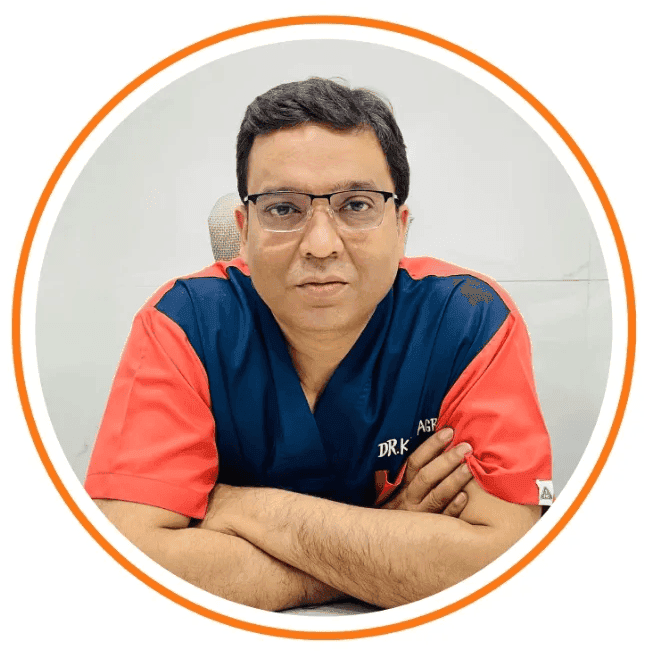
Dr. Kapil Agrawal
Senior Consultant - Laparoscopic & Robotic Surgeon
Dr. Kapil Agrawal is a leading and one of the best Robotic and Laparoscopic Surgeon in Delhi, India. He has an overall experience of 23 years and has been working as a Senior Consultant Surgeon at Apollo Group of Hospitals, New Delhi, India. He is performing advanced laparoscopic and robotic surgeries for various conditions, which include Gallbladder stones, Hernia, Appendicitis, Rectal prolapse, and pseudo-pancreatic cyst.
Qualifications
- •MBBS - Institute of Medical Sciences, BHU, Varanasi
- •MS (Surgery) - Institute of Medical Sciences, BHU, Varanasi
- •MRCS (London, U.K) - Royal College of Surgeons, London