Grade 3 Piles Treatment in Delhi
Medically reviewed by Dr. Kapil Agrawal — MRCS (London), MMed (Singapore) | Senior Consultant Laparoscopic, Robotic & Bariatric Surgeon, Apollo Hospitals, Delhi NCR | 23+ years, 7,000+ minimally invasive procedures. Updated June 2026.
If your piles slip out when you pass stool and you have to push them back in with your finger, you are most likely dealing with Grade 3 piles. That single sign tells us the problem has moved past the early stage.
This is the stage where most people finally decide to get help. And that is a good thing. Grade 3 hemorrhoids respond very well to treatment. With the methods we use today, most patients walk out the same day and are back to a desk job within two to three days. At Habilite Clinics, our team treats Grade 3 piles every week. Dr. Kapil Agrawal will walk you through what Grade 3 piles actually are, the treatment options that work, what they cost in Delhi, how long recovery takes, and how we help you choose the right one.
Internationally Trained Expert
Discharge within 24 hours
Cashless Insurance Facility
Book Consultation
Schedule a consultation for Mini Gastric Bypass Surgery with Dr. Kapil Agrawal
What Are Grade 3 Piles?
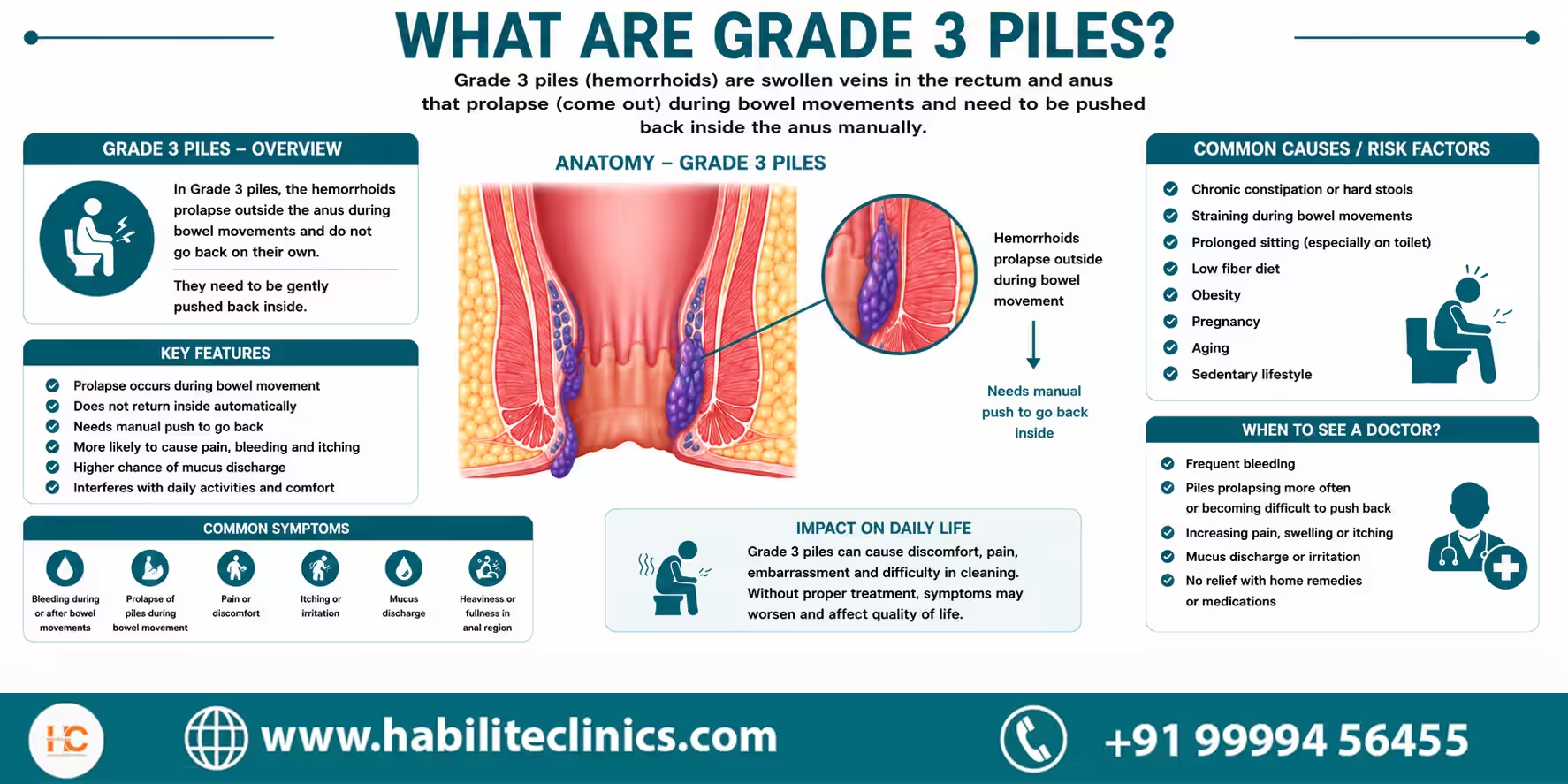
Piles, or hemorrhoids, are swollen blood vessels inside or around the back passage. Doctors grade internal piles from 1 to 4 using the Goligher system. The grade depends on how much the pile prolapses, meaning how far it slips out of the anus.
Grade 3 means the pile comes out when you strain or pass stool, and it does not go back on its own. You have to push it back in manually. That manual push-back is the defining feature of this grade — and the reason prolapsed hemorrhoids treatment is usually needed at this stage.
Here is how the four grades compare, so you can place where you are:
- Grade 1: Piles stay inside. May bleed, no prolapse. Usual treatment: diet, medicines, simple OPD procedures.
- Grade 2: Slip out on straining, go back on their own. Usual treatment: band ligation, laser, OPD procedures. Read more about Grade 2 piles treatment.
- Grade 3: Slip out and must be pushed back by hand. Usual treatment: laser, stapler, DG-HAL or surgery.
- Grade 4: Stay out all the time, cannot be pushed back. Usual treatment: surgery (often stapler or hemorrhoidectomy). Read more about Grade 4 piles treatment.
If you are not sure of your grade, a quick clinic check settles it in minutes.
Grade 3 Piles Symptoms
At this stage the symptoms are harder to ignore. Most patients notice a mix of these:
- A lump that comes out during a bowel movement and needs to be pushed back in
- Bright red bleeding while passing stool, sometimes more than before
- Mucus discharge that leaves the area moist and itchy
- A dragging or heavy feeling around the back passage
- Discomfort or pain after passing stool, especially when sitting
- Trouble keeping the area clean because the pile keeps slipping out
These are not just physical problems. Many patients tell us the constant worry affects their work, sleep and confidence. That is a valid reason to get treated.
Why Do Piles Reach Grade 3?
Piles get worse when the veins in the back passage stay under pressure for a long time. Common reasons in our patients include:
- Long-standing constipation and straining on the toilet
- A low-fibre diet with very little water
- Sitting on the toilet for too long, often scrolling on the phone
- Desk jobs with long hours of sitting
- Pregnancy and childbirth
- Heavy weight lifting at the gym or at work
- A family tendency towards weak vein walls
Grade 1 or Grade 2 piles often slip into Grade 3 over months or years. Treating it now means simpler care and a faster recovery.
How We Diagnose Grade 3 Piles
Diagnosis is quick. It usually does not need fancy tests. In the clinic we do a gentle exam, a finger check, and a proctoscopy. A proctoscopy uses a small scope to see the pile and confirm the grade.
If you also have a change in bowel habit, weight loss, or you are over 45, we may suggest a colonoscopy. This is not to scare you. It just rules out other causes of bleeding, so we treat the right problem.
"Bleeding from the back passage should never be assumed to be only piles. My first job is to confirm it really is hemorrhoids and nothing more serious. Once we are sure, the treatment becomes straightforward."
— Dr. Kapil Agrawal
Can Grade 3 Piles Be Treated Without Surgery?
Almost every patient asks this. The honest answer: diet and medicines can ease the symptoms, but they rarely fix a Grade 3 prolapse for good. The pile has already lost its support, so it keeps slipping out.
Fibre, more water, stool softeners and vein-toning medicines (called phlebotonics) can reduce bleeding and swelling. They are a useful first step. They also help settle things before a procedure. The 2024 ASCRS guidelines say a simple OPD step like rubber band ligation can be tried in small Grade 3 piles that do not improve with these measures. For more on non-surgical options, see our guide on piles treatment without surgery.
For most people, a short day-care procedure gives far better and longer relief than medicines alone. The aim is to treat it once, the right way, and move on.
Best Treatment Options for Grade 3 Piles
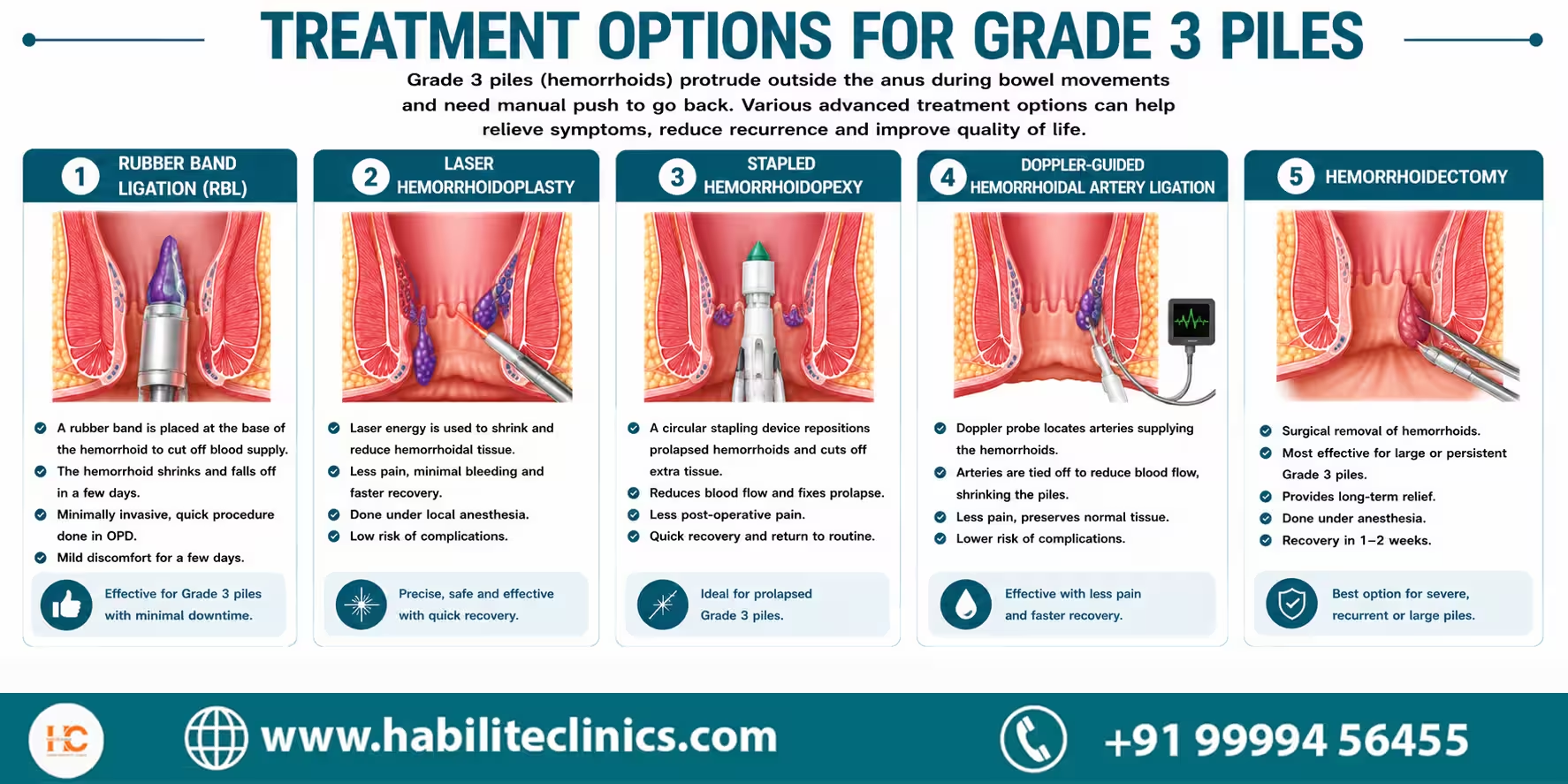
There is no single procedure that suits everyone. We match the method to your piles, not the other way round. Here are the main options we use, from least to most invasive.
1. Rubber Band Ligation (for selected cases)
A tiny rubber band is placed at the base of the pile. It cuts off the blood supply, and the pile dries up and drops off within a week. It is done in the OPD with no cuts. For small Grade 3 piles it can work, but at this grade the chance of the pile coming back is higher than with surgery.
2. Laser Hemorrhoidoplasty (LHP)
Laser is the most popular choice for uncomplicated Grade 3 piles, and for good reason. A thin laser fibre sends gentle energy inside the pile. This shrinks the swollen tissue and seals the blood vessels from within. The skin and muscle around it are left untouched. Laser treatment for grade 3 piles offers:
- No open cuts and no stitches
- Very little pain after the procedure
- Day-care — home the same day
- Back to desk work in two to three days
We use USFDA-approved diode laser systems with the correct fibre and wavelength. The quality of the machine and the experience of the surgeon both matter a lot for a lasting result.
3. Stapled Hemorrhoidopexy (MIPH / PPH)
A circular stapler lifts the slipped tissue back into place and cuts off its blood supply in one step. It works well for piles that come out in a large, ring shape. Recovery is quick and pain after surgery is usually low.
We use stapler surgery selectively. The 2024 ASCRS guidelines say stapling is not the routine first choice for ordinary internal piles. This is because it carries its own set of risks. So we use it only where it truly fits, such as a large, ring-shaped Grade 3 prolapse.
4. Doppler-Guided Hemorrhoidal Artery Ligation (DG-HAL / THD)
A small probe finds the arteries that feed the piles. These are tied off, so the piles shrink. It hurts less than open surgery. The catch is that piles can come back a bit more often, so it suits chosen patients, mainly those with heavy bleeding.
5. Hemorrhoidectomy (surgical removal)
This is the classic operation where the piles are removed directly. It gives the most complete result, and piles rarely come back. That is why guidelines back it strongly for advanced Grade 3 and Grade 4 piles, large external piles, or cases where other methods have failed. Surgery for grade 3 hemorrhoids in this form does mean more soreness and a slightly longer recovery. We keep you comfortable with a modern, multi-medicine pain plan.
What Is the Best Surgery for Grade 3 Hemorrhoids?
There is no one-size-fits-all answer, and any clinic that gives you one before examining you is overpromising. The best surgery depends on the size and number of piles, whether they are internal only or combined with external piles, how much they bleed, your recovery needs and your budget.
As a general guide: for most uncomplicated Grade 3 piles, laser gives the best balance of low pain, fast recovery and strong results. For large, circular prolapse, stapler surgery often fits better. For the most advanced or repeated cases, surgical removal gives the most definitive cure.
— Dr. Kapil Agrawal"I plan every Grade 3 case to the 2024 ASCRS guidelines, then I personalise. If the piles are mainly internal and bleeding, laser usually wins. If the prolapse is large and circular, I lean towards stapler. The goal is one effective treatment, not a patch that brings the patient back in a year."
Grade 3 Piles Treatment Cost in Delhi
Cost depends on the method, the hospital, the room you pick and whether you use insurance. These are real Delhi ranges for Grade 3 treatment:
Rubber band ligation costs about ₹10,000 to ₹20,000 with recovery in 1–2 days. Laser hemorrhoidoplasty costs about ₹35,000 to ₹85,000 with recovery in 2–3 days. DG-HAL / THD costs about ₹45,000 to ₹90,000 with recovery in 3–4 days. Stapled hemorrhoidopexy costs about ₹55,000 to ₹1,15,000 with recovery in 3–5 days. Hemorrhoidectomy costs about ₹30,000 to ₹70,000 with recovery in 1–2 weeks.
At Habilite Clinics, our laser piles packages start at ₹35,000. We offer fully cashless insurance at leading Delhi hospitals and zero-interest EMI options, and our team handles the paperwork for you. For a full breakdown, see our guide on the cost of laser piles surgery in Delhi.
Most health insurance plans cover Grade 3 piles surgery because it is medically necessary. Always confirm your room limit and any waiting period with your insurer first.
- Guideline-based, honest advice: Every plan follows the 2024 ASCRS guidelines, with the right procedure chosen for your case, not a default for everyone.
- Advanced day-care treatment: USFDA-approved laser, stapler and DG-HAL, with most patients home the same day.
- Cashless and EMI support: Cashless insurance at leading hospitals and zero-interest EMI, with paperwork handled for you.
- Care that continues after surgery: Clear recovery guidance and a team you can reach when you need it.
- Access to the full range of options at Habilite Clinics' two centers in Lajpat Nagar and Hauz Khas, South Delhi.
See our detailed piles laser surgery cost breakdown for a full cost comparison.
Mini Gastric Bypass Surgery Cost in Delhi
Get accurate cost estimate for your treatment
Grade 3 Piles Surgery Recovery Time
Recovery depends on the procedure. With laser, stapler or DG-HAL, most patients are pleasantly surprised by how smooth it is. Here is what a typical laser recovery looks like:
Day 0: Procedure done as day-care. Home within a few hours. Mild discomfort, managed with medicines. Days 1–2: Light meals, plenty of water, short walks. Many desk workers return to work now. Days 3–7: Back to most daily activities. Some mild discomfort during bowel movements is normal. Weeks 2–4: Full internal healing. You can resume gym and heavy work once cleared at follow-up.
Open hemorrhoidectomy takes longer, usually one to two weeks before you feel comfortable, with sitz baths and stool softeners helping along the way. We will tell you exactly what to expect for your specific procedure.
Success rates for Grade 3 treatment are high in skilled hands. Surgical removal is the most lasting, and works in more than 95 out of 100 cases. Laser and stapler also give strong results, with most studies showing 90 to 95 percent success. The biggest factor in success is picking the right method for the right pile.
What Happens If Grade 3 Piles Is Left Untreated
Untreated Grade 3 piles often progress to Grade 4, where the pile stays out permanently and cannot be pushed back. Ongoing bleeding can also lead to low blood count (anaemia). Early treatment is simpler and recovery is faster.
Risks and Complications
Grade 3 piles procedures are safe, but no surgery is risk-free. Possible issues, all uncommon and usually manageable, include minor bleeding or spotting for a few days, temporary difficulty passing urine right after surgery, mild pain during early bowel movements, and rarely, infection or recurrence over time. Sticking to your diet and not straining keeps these risks low.
Recovery Care and Diet After Grade 3 Piles Surgery
What you do at home shapes how smoothly you heal and whether piles stay away. Our simple, practical plan:
- Drink 2.5 to 3 litres of water a day to keep stools soft
- Eat fibre with every meal: dal, roti made from whole wheat, bhindi, lauki and a bowl of papaya or guava
- Add a spoon of isabgol (psyllium husk) at night if stools are hard
- Take warm sitz baths for 10 to 15 minutes, two or three times a day
- Walk a little every day to keep your bowels active
- Do not sit on the toilet for long or strain — leave the phone outside
- Avoid very spicy and oily food for the first couple of weeks
These habits are not just for recovery. Kept up long term, they are the best protection against piles returning. For more home prevention tips, see our dedicated guide.
When to See a Doctor Urgently
- Heavy or non-stop bleeding from the back passage
- A pile that will not go back in at all
- Severe pain, swelling or fever
- Feeling weak, dizzy or very tired from blood loss
Treating Grade 3 piles early also prevents progression to Grade 4, which is harder to manage. For milder bleeding episodes, you can also read our guide on how to manage piles bleeding at home.
Why Choose Dr. Kapil Agrawal for Grade 3 Piles Treatment
- Senior, qualified surgeon: Dr. Kapil Agrawal holds MRCS (London) and MMed (Singapore), with 23+ years of experience and 7,000+ minimally invasive procedures
- Apollo Hospitals consultant: Senior Consultant Laparoscopic, Robotic & Bariatric Surgeon at Apollo Hospitals, Delhi NCR
- Guideline-based, honest advice: Every plan follows the 2024 ASCRS guidelines, with the right procedure chosen for your case
- Advanced day-care treatment: USFDA-approved laser, stapler and DG-HAL, with most patients home the same day
- Cashless and EMI support at leading Delhi hospitals
Choosing the right surgeon matters more than choosing the procedure. Habilite Clinics has two South Delhi locations, in Lajpat Nagar and Hauz Khas. To learn more about our full range of options, visit our main piles treatment page, or book a consultation for a clear, personalised plan.
Patients choose Dr. Agrawal because each case gets an honest, expert opinion on the right Grade 3 hemorrhoids treatment — not a one-size-fits-all approach.
Habilite Clinics' Free Post-operative Care
We provide comprehensive free post-operative care to ensure your smooth recovery and optimal results. Our dedicated team is committed to your well-being throughout your healing journey.
Comprehensive Care
Complete post-operative support and monitoring
Expert Guidance
24/7 access to our medical team
Dedicated Support
Personalized care coordinator for each patient
Regular Follow-ups
Scheduled check-ups to ensure optimal recovery
What's Included in Our Free Post-operative Care:
- ✓Regular follow-up consultations with Dr. Kapil Agrawal
- ✓24/7 emergency support and guidance
- ✓Nutritional counseling and diet plans
- ✓Wound care and dressing assistance
- ✓Medication management and adjustments
- ✓Progress monitoring and recovery assessment
Chat with Expert for Free
Get instant answers to your questions from our medical experts via WhatsApp
Frequently Asked Questions
Common questions about Grade 3 piles treatment
Grade 3 piles are hemorrhoids that slip out of the anus when you strain or pass stool and do not go back on their own. You have to push them back in by hand. This is more advanced than Grade 2, where the piles return on their own.
No. Once piles reach Grade 3, the supporting tissue has weakened and the prolapse will not heal by itself. Diet and medicines can ease the symptoms, but a short procedure is usually needed for lasting relief.
There is no single best surgery for everyone. For most uncomplicated Grade 3 piles, laser hemorrhoidoplasty offers the best balance of low pain and quick recovery. Large, circular prolapse may suit stapler surgery, while advanced or repeated cases may need surgical removal. The right choice is made after an examination.
Yes, for most uncomplicated Grade 3 piles, laser is an excellent option. It has no open cuts, very little pain, same-day discharge and a return to desk work in two to three days. It is not suitable for every case, which is why a proper assessment matters.
In Delhi, laser treatment usually costs between ₹35,000 and ₹85,000, stapler surgery between ₹55,000 and ₹1,15,000, and surgical removal between ₹30,000 and ₹70,000. Habilite Clinics laser packages start at ₹35,000, with cashless insurance and EMI available.
After laser, stapler or DG-HAL, most patients return to desk work in two to five days, with full internal healing in two to four weeks. Open surgery takes a little longer, usually one to two weeks before you feel comfortable.
Modern procedures like laser cause very little pain. You are numb during the procedure, and afterwards any discomfort is mild and well controlled with medicines. Open surgery is more sore, but a multi-medicine pain plan keeps you comfortable.
Success rates are high. Surgical removal has the lowest recurrence, often above 95 percent. Laser and stapler procedures report success around 90 to 95 percent. Correct procedure selection by an experienced surgeon is the key factor.
Medicines, fibre and water can reduce bleeding and swelling, and selected small Grade 3 piles may respond to rubber band ligation in the OPD. But for most people, a day-care procedure gives far better and longer-lasting results than medicines alone.
Untreated Grade 3 piles often progress to Grade 4, where the pile stays out permanently and cannot be pushed back. Ongoing bleeding can also lead to low blood count (anaemia). Early treatment is simpler and recovery is faster.
Yes, most health insurance plans cover Grade 3 piles surgery because it is medically necessary. We provide cashless facilities at leading Delhi hospitals. Confirm your room limit and any waiting period with your insurer beforehand.
In Grade 2, the pile slips out on straining but goes back inside on its own. In Grade 3, the pile slips out and stays out until you push it back manually. Grade 3 is more advanced and usually needs a procedure rather than medicines alone.
Recurrence is uncommon after correctly chosen surgery, especially surgical removal. The best protection is long-term habits: a high-fibre diet, plenty of water, no straining and not sitting too long on the toilet.
See a doctor if you notice a lump you have to push back in, ongoing bleeding, mucus discharge, or discomfort that affects daily life. Seek urgent care for heavy bleeding, severe pain or a pile that will not go back in.