
Umbilical Hernia Surgery in Delhi — Dr. Kapil Agrawal
Noticing a bulge near your belly button can feel unsettling — especially when you are not sure what it means. Dr. Kapil Agrawal one of the best laparoscopic hernia surgeon in delhi guides you from understanding your condition to recovering safely. We combine world-class surgical expertise with the warmth of a clinic that cares about you as a person.
Book Consultation
Schedule a consultation for Umbilical Hernia Surgery with Dr. Kapil Agrawal
What Is an Umbilical Hernia?
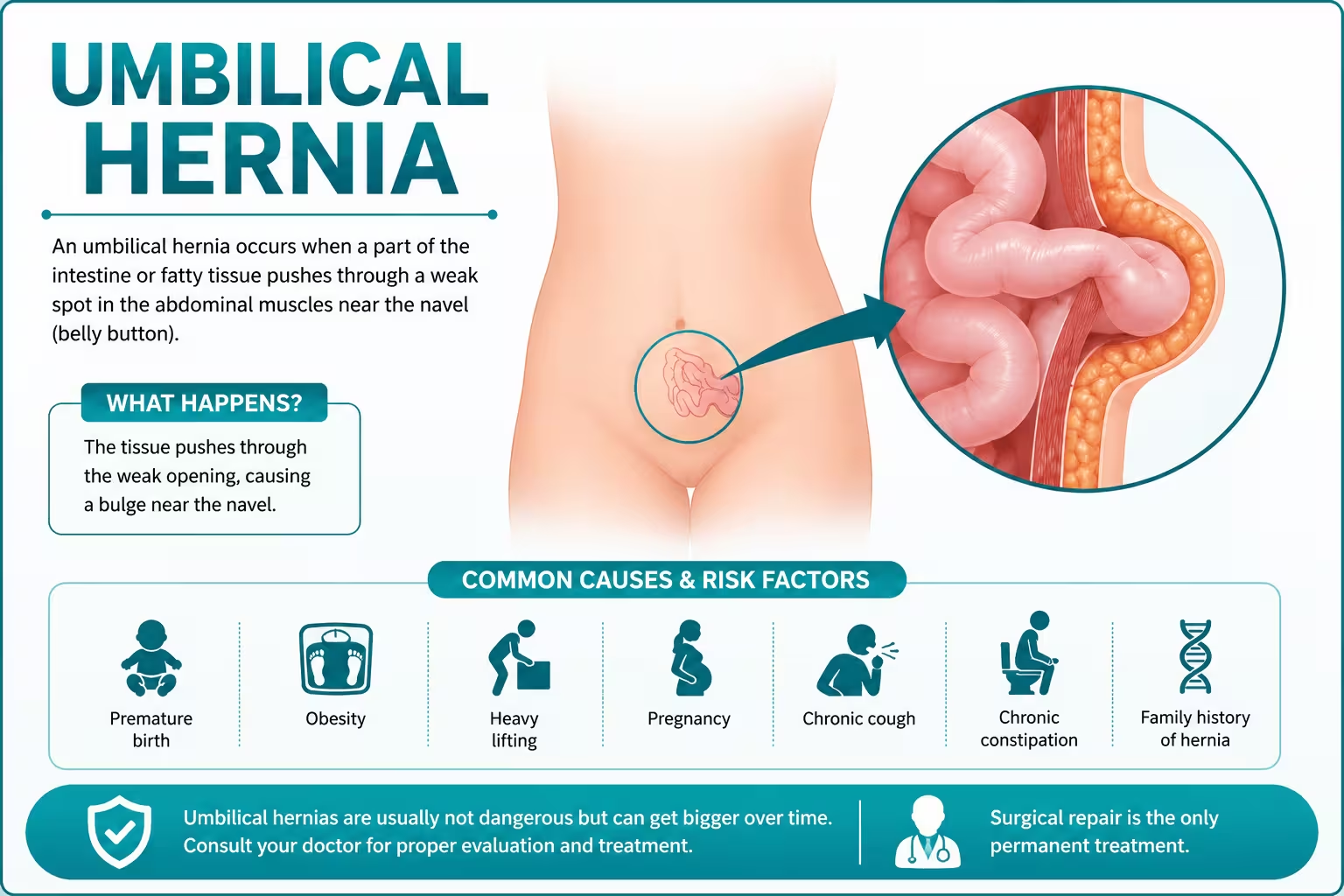
An umbilical hernia occurs when fatty tissue or intestine pushes through a weak spot in the abdominal wall near the belly button (navel). You may notice a soft bulge that is more obvious when you cough, sneeze, strain, or stand — and may seem smaller when you lie down and relax.
Umbilical hernias are common in both adults and children. Small hernias may seem harmless at first, but they do not heal on their own in adults and can progress to serious complications if left untreated.
If you or a family member has a bulge near the belly button — even if it is painless — we encourage you to speak with our team. Early evaluation can help avoid a medical emergency later.
Umbilical Hernia in Children and Infants
Many parents worry when they see a bulge near a newborn's belly button. Umbilical hernias are very common in babies — especially premature or low-birth-weight infants.
Why Does It Happen in Babies?
During pregnancy, the umbilical cord passes through an opening in the baby's abdominal muscles. Normally the umbilical ring closes after birth. If it does not close fully, intestine or fat can protrude — an umbilical hernia.
What Does It Look Like in a Baby?
It usually appears as a soft, painless bulge at or near the belly button. It may show more when the baby cries, strains, or passes stool, and look smaller when calm or lying down — typical of a reducible hernia.
Do All Children Need Surgery?
Not necessarily. Over 90% of infant umbilical hernias close on their own within 3 to 5 years. Hernias smaller than about 1 cm are especially likely to resolve. We use a conservative, watch-and-wait approach with regular check-ups, and recommend surgery only when needed.
Surgery for a child may be advised when:
- The hernia has not closed by age 4 to 5
- The defect is large (e.g. fascial defect greater than 1.5 cm) and has not improved by age 2
- There is pain, discomfort, or signs of incarceration
- The bulge is hard, fixed, red, or non-reducible — treat as an emergency
Important: Folk remedies such as taping a coin or tight binding do not work and can harm the skin. Always consult a qualified surgeon.
For a parent-focused breakdown of guidelines, risks, and non-mesh repair, read our detailed guide on hernia in children.
Symptoms to Watch for in Your Baby
- Soft bulge near the navel, worse with crying or straining
- Irritability or poor feeding — possible pain
- Redness, firmness, or discolouration around the bulge
- Fever or vomiting with a swollen abdomen — seek emergency care
If you are unsure whether your child's belly button looks normal, bring them in for a simple assessment. We will give you a clear, honest plan with minimal anxiety.
Umbilical Hernia in Adults — Why It Needs More Attention
Unlike in children, adult umbilical hernias almost never resolve on their own. Studies suggest roughly 65% eventually need surgical repair, and 3–5% can become emergencies. They often enlarge as the wall weakens; the longer they are ignored, the higher the risk of complications. We strongly support timely evaluation — even when the hernia feels small or painless.
Common Symptoms of Umbilical Hernia
Smaller hernias may be painless at first — which often leads to delay. A painless hernia today can become a painful emergency tomorrow.
Experiencing these symptoms? We will evaluate you promptly and explain your options with no pressure and full transparency.
What Causes Umbilical Hernia?
There is rarely a single cause. It develops when a weak area of the wall faces repeated pressure. Common contributing factors include:
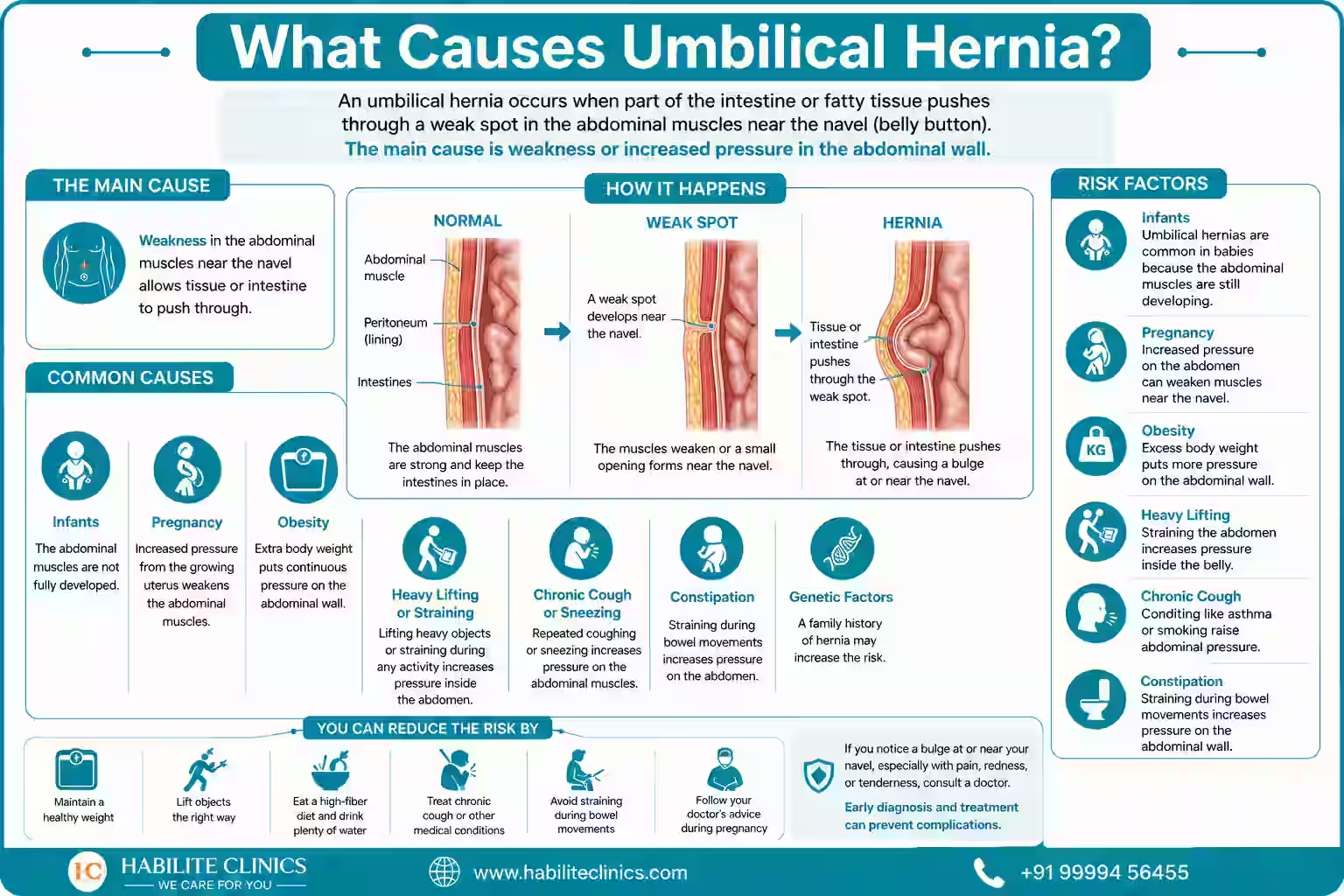
1. Congenital weakness
Some people are born with slightly weaker tissue near the navel; problems may show later with weight gain or strain.
2. Pregnancy
Stretch and pressure on the abdominal wall; multiple pregnancies increase risk.
3. Obesity
Higher intra-abdominal pressure strains the wall and affects recurrence risk. We often discuss hernia repair together with long-term weight management — see our bariatric surgery programme in Delhi
4. Chronic pressure
Ascites, chronic constipation, persistent cough, or urinary straining can contribute over time.
5. Previous abdominal surgery
Scar tissue can weaken the wall. A bulge at a prior scar is more precisely an incisional hernia — which we manage with dedicated expertise.
6. Heavy lifting or strenuous activity
Repeated heavy lifting without good technique can add to pressure on the wall.
Why You Must Not Ignore an Umbilical Hernia
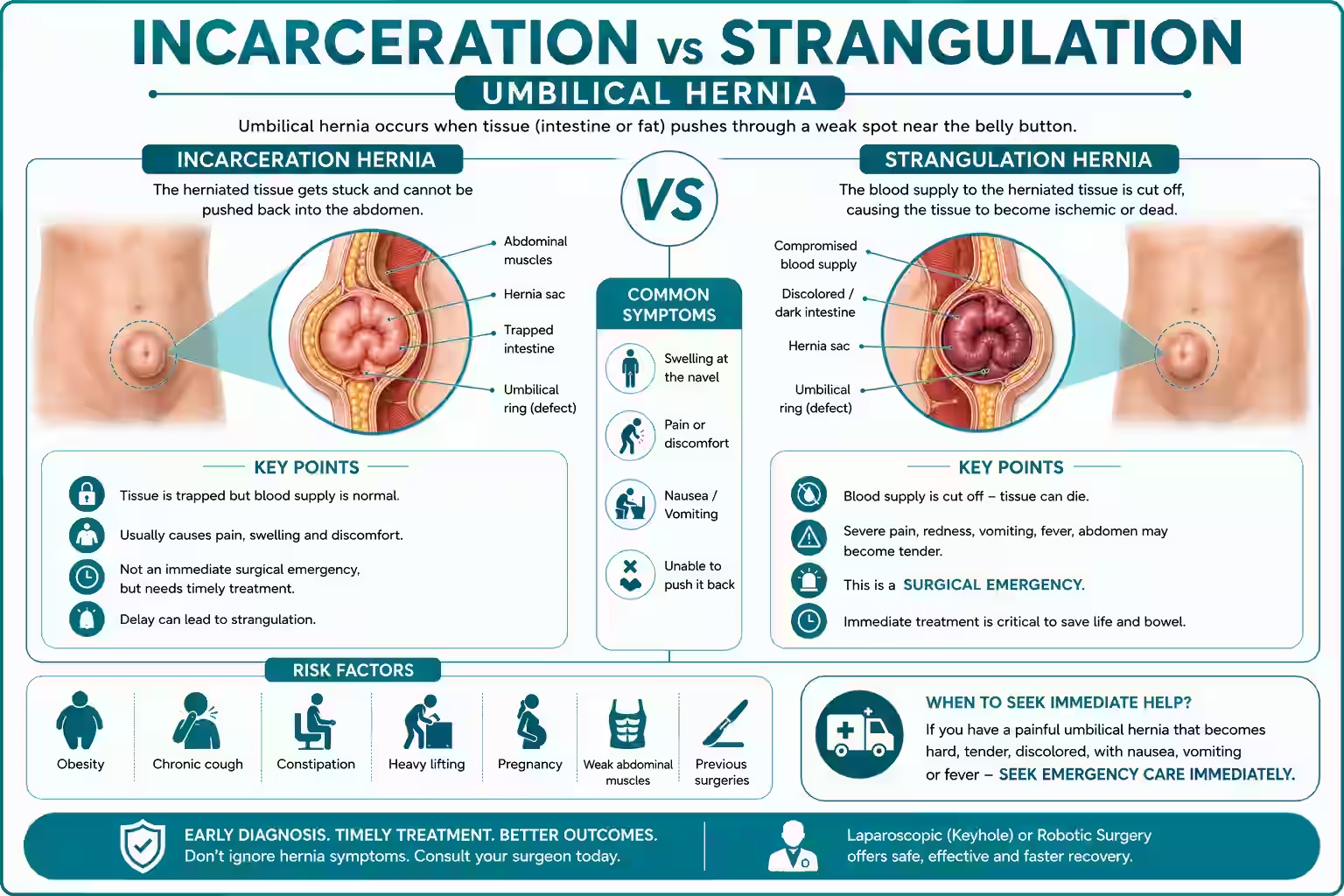
Delaying treatment can lead to two serious complications. For a plain-language overview of how hernias progress, read our complete guide to hernia — causes, types, and complications.
Incarceration
Tissue becomes trapped and cannot be pushed back. This causes significant pain and is an emergency that can worsen without prompt surgery.
Strangulation
Blood supply to trapped intestine is cut off. Strangulated tissue can begin to die within hours. This is life-threatening and needs immediate emergency surgery — with higher risk than planned elective repair. If you are weighing up whether to wait, this honest discussion of whether it is safe to delay hernia surgery explains how the risk changes over time.
Warning signs: sudden severe pain; hard fixed bulge; redness or darkening of skin; fever; nausea and vomiting. Call us or go to the nearest emergency department immediately.
Elective, planned repair is safer, more comfortable, and usually more cost-effective than waiting for an emergency. Our team aims to make the process as smooth as possible.
When Is Umbilical Hernia Surgery Recommended?
Each patient is assessed individually — we do not use a one-size-fits-all rule. Surgery is commonly considered when:
- Pain, discomfort, or limits on daily life
- Enlargement over time
- Signs of incarceration (cannot reduce the hernia)
- In children: no resolution by 4–5 years or complications
- Large hernia or high complication risk
- You want repair for quality of life
If you are unsure whether it is time to act, this guide on the signs you need hernia surgery can help you decide when to book a consultation.
Even small painless hernias in adults may warrant preventive discussion. At consultation, you receive a frank, evidence-based view based on size, location, and risk.
Umbilical Hernia Surgery Options at Habilite Clinics
We offer three established approaches. Dr. Kapil Agrawal , with advanced training in laparoscopic and robotic surgery, recommends the technique that fits your anatomy and goals. See also our overview of hernia surgery in Delhi We also treat the full range of abdominal wall hernias, including inguinal hernia and femoral hernia repair .
1. Laparoscopic Umbilical Hernia Repair (Keyhole Surgery)
Laparoscopic repair suits most umbilical hernias. Through 2–3 small incisions, a camera and instruments are used to repair from inside. High-quality mesh reinforces the wall and reduces recurrence risk.
Benefits:
- Minimal scarring
- Less post-operative pain than typical open surgery
- Lower wound infection risk
- Faster recovery — many discharged within 24 hours
- Light activities often within 1–2 weeks
IPOM and IPOM Plus — Explained
If you have read about IPOM and IPOM Plus, here is the difference in plain terms. Dr. Kapil Agrawal almost exclusively performs IPOM Plus for laparoscopic umbilical repair when it is appropriate.
What is IPOM?
Intraperitoneal onlay mesh — mesh is fixed inside the abdomen over the defect, but the fascial defect is left open. Like patching a hole without filling it first; evidence shows higher risks of seroma, mesh bulge, and recurrence than modern defect-closure techniques.
What is IPOM Plus?
The fascial defect is closed with sutures first, then mesh reinforces the repair from inside — structurally sound, with mesh as a second layer of support.
Why IPOM Plus?
- Lower recurrence — literature reports substantially higher early recurrence with standard IPOM vs IPOM Plus; meta-analyses suggest roughly ~49% reduction in recurrence with defect closure approaches.
- Fewer seromas — closing the defect reduces dead space; seroma rates can be up to ~50% lower than with standard IPOM in published comparisons.
- Minimal mesh bulging — the mesh has no gap to push through once the fascia is re-approximated.
- More natural wall mechanics — many patients describe better comfort and core feel than with an unrepaired fascial gap.
IPOM Plus suits most elective umbilical repairs for defects up to about 8–10 cm. Very large or complex recurrent cases may be better with robotic repair or posterior component separation — discussed individually at consultation.
Standard IPOM without closure may rarely still suit selected small defects or specific clinical situations; our default is IPOM Plus in line with current evidence.
Intraperitoneal mesh must be safe against bowel adhesions. We use premium composite mesh (e.g. polypropylene with an anti-adhesion barrier such as collagen or cellulose derivatives) designed for intraperitoneal use. To understand why mesh choice matters and how modern materials differ, see our complete guide to hernia mesh — types, advantages and cost.
2. Robotic-Assisted Umbilical Hernia Repair
Using the da Vinci system, robotic surgery offers magnified 3D vision and very controlled movements — valuable for recurrent, larger, or complex hernias, obesity-related anatomy, or when simultaneous abdominal wall reconstruction is needed.
If you are choosing between techniques, our comparison of robotic vs laparoscopic hernia surgery explains where each one wins.
3. Open Umbilical Hernia Repair
Open repair remains appropriate for selected large hernias or when minimally invasive surgery is not suitable. A single incision near the navel allows reduction of contents and reinforcement of the wall — with or without mesh, depending on defect size.
A bulge between the belly button and rib cage may be an epigastric hernia, not umbilical — we identify the exact type on examination.
No matter which approach is chosen, we explain everything in simple language before you consent. You will know what to expect.
Laparoscopic vs Robotic vs Open — Umbilical Hernia Surgery Comparison
Side-by-side overview to help you understand typical differences. Your consultation will determine the approach that is safest for your anatomy and goals.
| Parameter | Laparoscopic (IPOM Plus) | Robotic (da Vinci) | Open (Traditional) |
|---|---|---|---|
| Incision size | 2–3 cuts of 5–10 mm | 3–4 cuts of 8–12 mm | Single cut 3–5 cm near navel |
| Post-op pain | Mild | Mild | Moderate to high |
| Hospital stay | Day care / 24 hrs | 24–48 hrs | 2–4 days |
| Return to desk work | 5–7 days | 5–7 days | 10–14 days |
| Full recovery | 4–6 weeks | 4–6 weeks | 6–8 weeks |
| Recurrence risk | Very low (IPOM Plus) | Very low | Low to moderate |
| Wound infection risk | Very low (~5%) | Very low (~5%) | Higher (~15–22%) |
| Seroma formation | Low (defect closed) | Very low | Moderate |
| Scarring / cosmesis | Minimal — tiny marks | Minimal — tiny marks | Visible scar near navel |
| Mesh used | Premium composite mesh | Premium composite mesh | Polypropylene / no mesh |
| Suitable for obesity | Yes | Best option | Higher risk |
| Suitable for recurrent hernia | Yes | Preferred | Less ideal |
| Surgical precision | ★★★★☆ | ★★★★★ | ★★★☆☆ |
| Anaesthesia | General | General | General / spinal |
| Operative time | 45–75 mins | 60–90 mins | 30–60 mins |
| Approximate cost (Delhi) | ₹60,000 – ₹1,20,000 | ₹1,00,000 – ₹2,00,000 | ₹50,000 – ₹90,000 |
| Insurance coverage | Covered by most plans | Covered by most plans | Covered by most plans |
| Best suited for | Most patients, moderate hernias, day care candidates | Complex hernias, recurrent cases, obese patients | Very large defects, limited laparoscopic access, budget-sensitive |
| Dr. Kapil Agrawal's preference | Default choice | For complex cases | Selected cases only |
Why Patients Choose Dr. Kapil Agrawal and Habilite Clinics
Internationally trained (MRCS, London; MMed, Singapore), Dr. Kapil Agrawal brings precision and standards common to leading UK and Southeast Asian centres — here in Delhi. Read patient testimonials .
- 23+ years in laparoscopic, robotic, and bariatric surgery
- 7,000+ hernia and abdominal surgeries across Delhi NCR
- Senior Consultant at Apollo Hospitals
- Robotic systems for complex cases
- Premium composite mesh in laparoscopic repairs
- Cashless insurance with major insurers
- 24-hour discharge for many laparoscopic and robotic cases
- Free post-operative support: follow-ups, diet, wound advice, 24/7 emergency line
- Clinics in Lajpat Nagar and Hauz Khas
Your Treatment Journey at Habilite Clinics
Step 1 — Initial consultation
History, examination, and discussion of symptoms, lifestyle, and past medical issues.
Step 2 — Diagnosis and imaging
Ultrasound or CT when needed to define size, location, contents, and complications. Many cases are diagnosed clinically alone.
Step 3 — Personalised planning
Clear recommendation on approach, what the day involves, recovery, and time for your questions — no pressure.
Step 4 — Surgery day
General anaesthesia at a NABH-accredited facility; experienced anaesthesia and nursing teams. Most laparoscopic/robotic cases run about 45–90 minutes.
Step 5 — Aftercare
Discharge instructions, diet plan, follow-up schedule, and 24/7 access for concerns. Learn more about Habilite Clinics.
Recovery Timeline After Umbilical Hernia Surgery
- Day 1: Hospital discharge; light walking encouraged
- Days 2–3: Normal soft diet; avoid heavy or very spicy food
- Week 1–2: Desk work and gentle daily activities for many patients
- Week 3–4: Gradual activity increase; avoid heavy lifting
- Week 6: Full recovery for most; clearance for strenuous exercise when advised
Timelines vary by procedure and your health. Laparoscopic and robotic repair often recover faster than open surgery. You receive a personalised roadmap at consultation.
For a week-by-week view of what healing looks like, including diet and return-to-work timelines, read our complete hernia surgery recovery guide.
Umbilical Hernia Surgery Cost in Delhi
Cost depends on approach, complexity, facility, and insurance. We are committed to transparent pricing without hidden charges. For a wider comparison across all hernia types and surgical approaches, see our full breakdown of the cost of hernia surgery in Delhi.
- Laparoscopic (IPOM Plus): typically ₹60,000 – ₹1,20,000
- Robotic: typically ₹1,00,000 – ₹2,00,000 (often complex or recurrent cases)
- Open: typically ₹50,000 – ₹90,000
Most plans cover umbilical hernia surgery. We help with cashless processing. EMI options exist for self-pay. International visitors: see international patient services. For a personalised estimate, book a consultation or use our cost calculator below — we do not surprise you with undisclosed fees.
Umbilical Hernia Surgery Cost in Delhi
Get accurate cost estimate for your treatment
Habilite Clinics' Free Post-operative Care
We provide comprehensive free post-operative care to ensure your smooth recovery and optimal results. Our dedicated team is committed to your well-being throughout your healing journey.
Comprehensive Care
Complete post-operative support and monitoring
Expert Guidance
24/7 access to our medical team
Dedicated Support
Personalized care coordinator for each patient
Regular Follow-ups
Scheduled check-ups to ensure optimal recovery
What's Included in Our Free Post-operative Care:
- ✓Regular follow-up consultations with Dr. Kapil Agrawal
- ✓24/7 emergency support and guidance
- ✓Nutritional counseling and diet plans
- ✓Wound care and dressing assistance
- ✓Medication management and adjustments
- ✓Progress monitoring and recovery assessment
Book Your Consultation with Dr. Kapil Agrawal Today
Whether your hernia is small and painless or uncomfortable day to day, we offer clear diagnosis, honest advice, and a plan built around you — from newborns to adults who have waited years.
Book a consultationLajpat Nagar & Hauz Khas, Delhi · Apollo Hospitals · Cashless insurance · 24/7 post-operative support
Frequently Asked Questions
Umbilical hernia symptoms, children vs adults, IPOM Plus, recovery, insurance, and when to seek emergency care.
Related Umbilical Hernia Blogs
Expert insights, tips, and guides about umbilical hernia
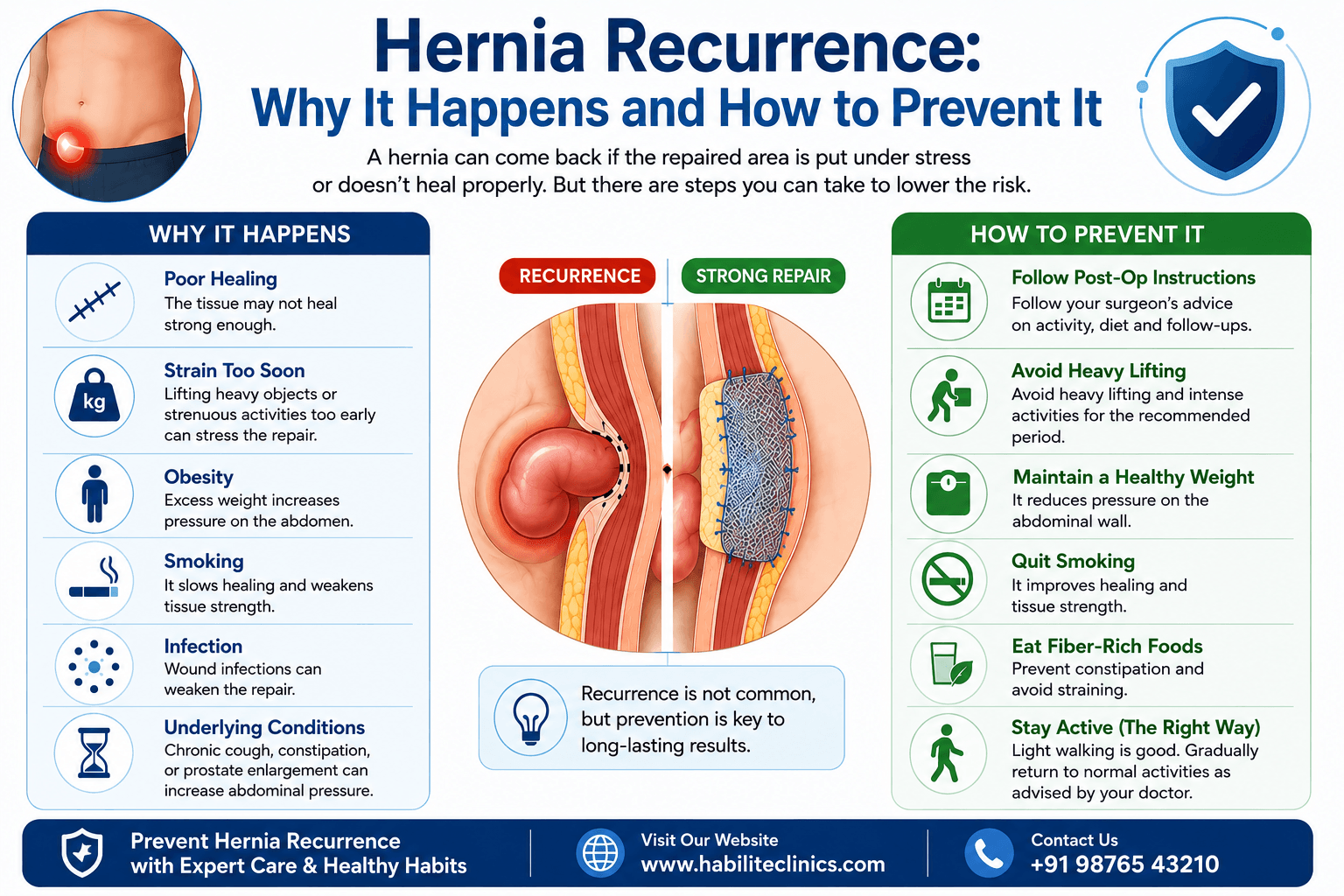
Hernia Recurrence: Why It Happens and How to Prevent It
You have been through a hernia surgery. The recovery was uncomfortable. You followed the doctor's advice. And now, months or even years later, you feel a familiar lump or twinge in exactly the same spot. A wave of worry washes over you.
Robotic vs Laparoscopic Hernia Surgery: Which Is Right for You?
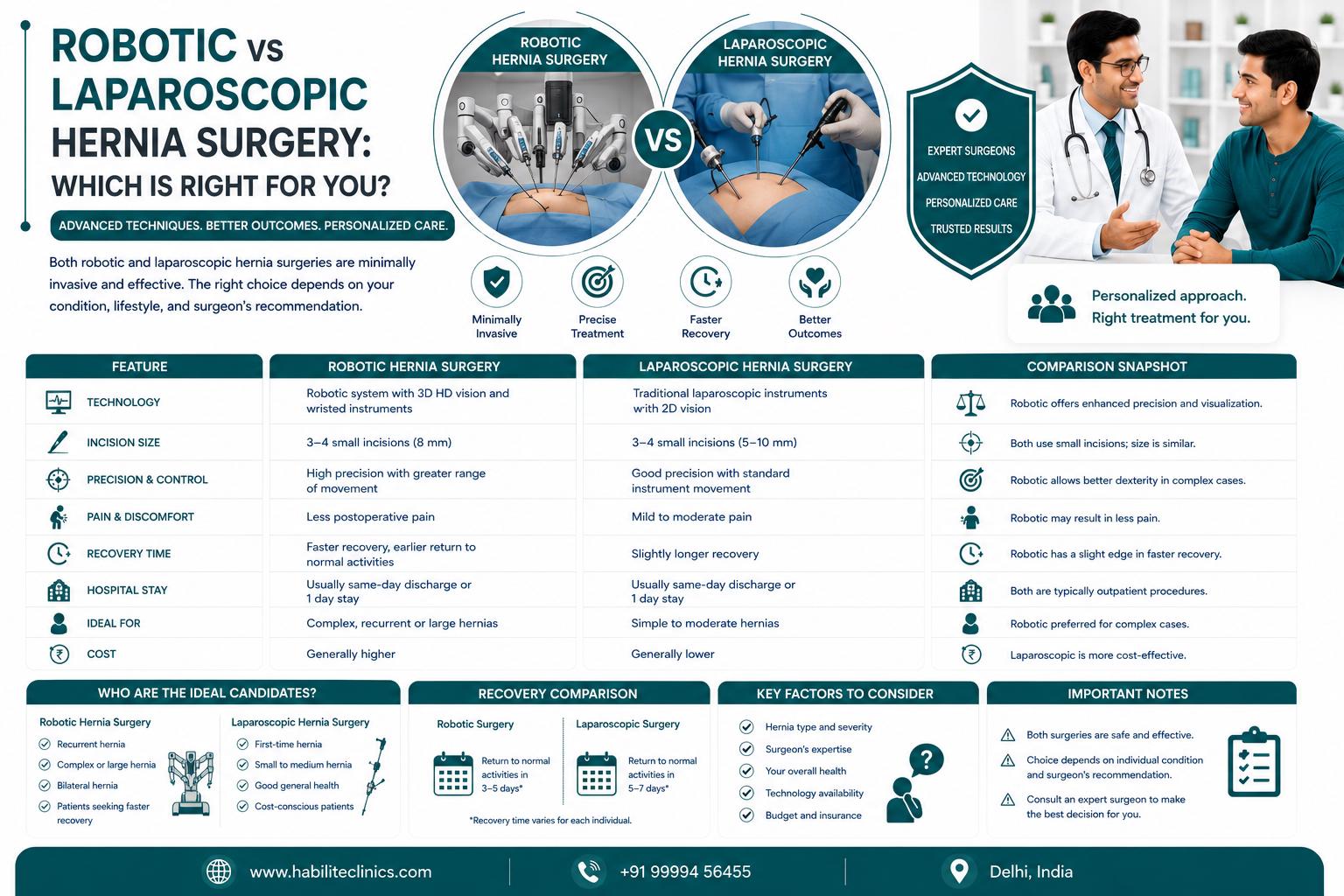
Both robotic and laparoscopic hernia surgeries are minimally invasive options with smaller cuts, less pain, and faster recovery than traditional open surgery. ✓ Robotic hernia surgery offers 3D high-definition vision, greater precision with 540-degree instrument rotation, and tremor filtration for complex cases. ✓ Laparoscopic surgery is more widely available, more affordable (₹40,000-50,000 less expensive), and equally effective for most standard hernias. ✓ Dr. Kapil Agrawal and our team at Habilite Clinics offer both techniques with 23+ years of surgical experience. ✓ The choice between robotic and laparoscopic depends on hernia type, complexity, prior surgeries, patient health, and cost considerations—not all patients need robotic surgery. ✓ Both procedures have been covered by health insurance in India since 2019 under IRDAI guidelines, making advanced minimally invasive surgery accessible to more patients.
Hernia Surgery Recovery: Your Complete Guide to Getting Back to Normal Life
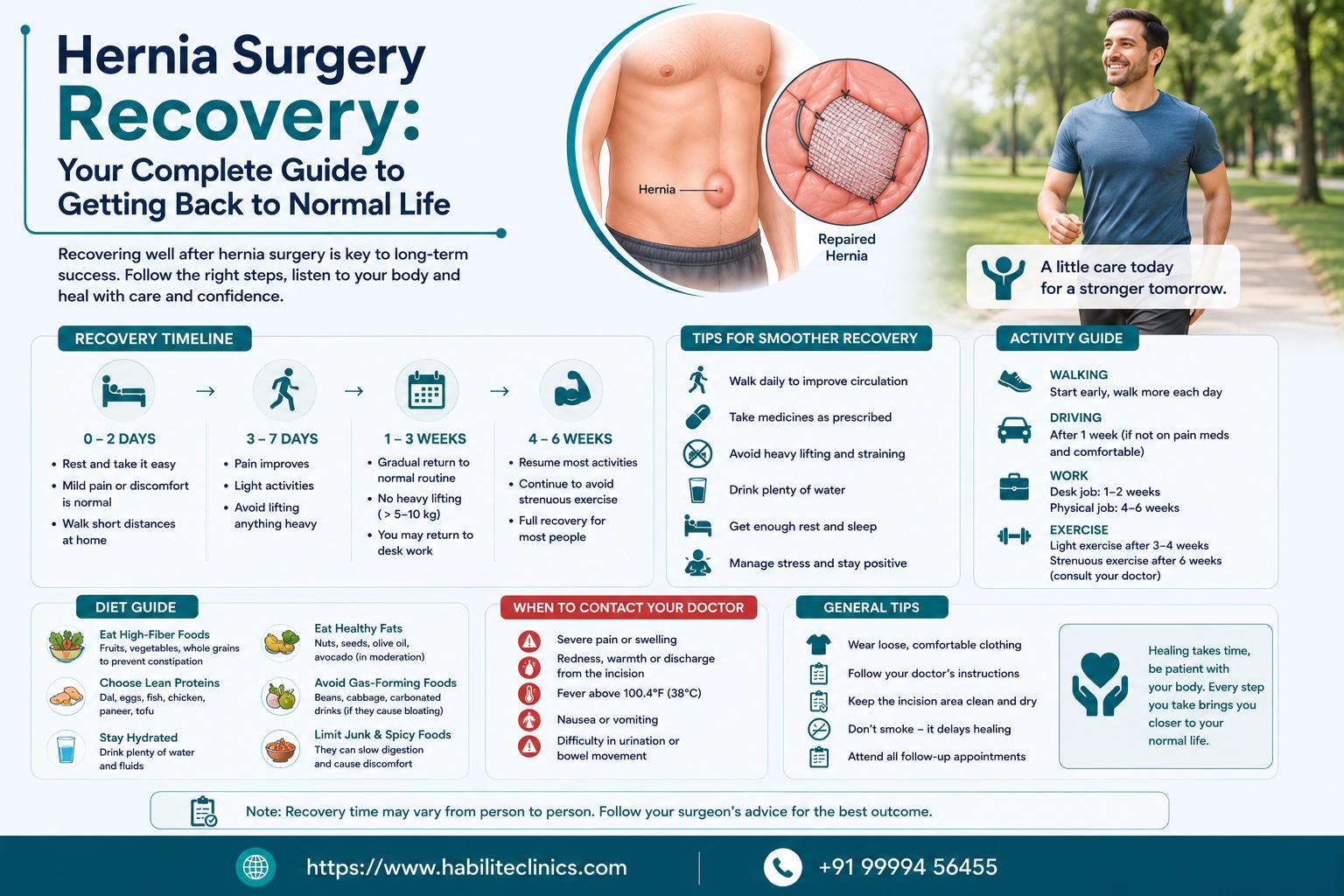
Recovery varies by surgery type: Laparoscopic hernia surgery recovery takes 1-2 weeks for light activities, while open surgery may need 4-6 weeks Early movement is essential: Walking within hours of surgery prevents blood clots and speeds healing. Complete bed rest is outdated and harmful You can eat normal food, use Indian toilets, and don't need months of rest after modern hernia surgery A protein-rich diet accelerates healing: Focus on eggs, dal, chicken, and fish to rebuild muscle strength after surgery Warning signs need immediate attention: Sudden severe pain, fever above 101°F, or inability to pass gas requires urgent medical care Return to work depends on your job: Desk jobs allow return in 1-2 weeks; manual labor jobs need 4-6 weeks recovery