
Best Epigastric Hernia Surgeon in Delhi - Dr. Kapil Agrawal
Epigastric hernia occurs in the upper abdomen between the navel and the chest when fatty tissue pushes through a weak area in the abdominal wall. Though often small, it can become painful and complex over time. Early evaluation prevents complications and ensures durable repair.
Book Consultation
Schedule a consultation for Epigastric Hernia Surgery with Dr. Kapil Agrawal
Is that lump on your upper stomach an Epigastric Hernia?
For a broader understanding of how abdominal wall hernias form, progress, and why they require surgical correction, read our complete guide to hernia.
Epigastric hernia may appear small in shape but it develops complications if left untreated. It occurs in the upper abdomen between the navel and the chest when fatty tissues push through a weak area in the abdominal wall. A person suffering from epigastric hernia is likely to feel discomfort or trapping between the chest and navel. While often mild to moderate in pain, it can become complex over time.
Common Signs and Symptoms of Epigastric Hernia
If you experience any of these symptoms, consult the best hernia doctor in Delhi at Habilite Clinics for an accurate diagnosis and treatment.
Why Choose Habilite Clinics for Epigastric Hernia Treatment?
Experienced Hernia Surgeons
Led by Dr. Kapil Agrawal with 23+ years of experience and a proven track record of successful hernia surgeries.
Advanced Technology
Latest minimally invasive laparoscopic and robotic techniques for reduced pain, small incisions, and faster recovery.
Patient-Centric Care
Personalized care from consultation to post-surgery follow-ups, addressing your specific needs.
Affordable Surgery Cost
High-quality hernia treatment at competitive prices with transparent estimates and insurance/EMI assistance.
Modern Facilities
State-of-the-art infrastructure and hygienic environment for a seamless treatment experience.
Benefits of Laparoscopic Surgery
Lower complications, minimal blood loss, shorter stay (often same-day discharge), quick recovery, tiny scars, and reduced recurrence.
Who Needs Epigastric Hernia Treatment?
For patients where obesity is a contributing factor to abdominal wall weakness, long-term weight management is part of the plan — our bariatric surgery programme in Delhi addresses this alongside hernia repair.
Not all hernias need immediate surgery, but medical checkup becomes necessary if you have significant pain between the chest and navel, increasing bulge size, discomfort on coughing or breathing, or frequent digestive issues after the bulge appears.
The major complication of ignoring an epigastric hernia is strangulation, where the blood supply to the tissue gets cut off. Do not wait if you notice these signs. Because epigastric hernias sit close to the navel, they are sometimes confused with an umbilical hernia repair, so an accurate clinical diagnosis is important before planning treatment.
Affordable Epigastric Hernia Surgery in Delhi
We offer transparent and competitive pricing. Costs vary by hernia severity, surgical method, and overall health. Typical packages include consultation, diagnostics as required, surgery and hospital charges, and post-operative care.
Our care does not end after surgery. We provide detailed recovery guidelines, follow-up consultations, and ongoing support to ensure complete healing.
For a detailed price breakdown by technique and mesh type, see our full guide on the cost of hernia surgery in Delhi.
Surgical Approaches for Epigastric Hernia
As part of our comprehensive hernia surgery in Delhi service, epigastric hernia repair is performed using the same minimally invasive standards applied across all abdominal wall hernia types.
1. Laparoscopic Surgery for Epigastric Hernia
Minimally invasive approach using small incisions and a laparoscope to diagnose and repair the hernia. Delivers less pain, tiny scars, reduced infection risk, and quicker return to normal activities.
2. Robotic Assisted Surgery for Epigastric Hernia
The most advanced technique for complex or recurrent hernias, offering enhanced visualisation and precision through robotic systems. Ideal for challenging upper abdominal defects.
If you are unsure which technique suits you, our guide on robotic vs laparoscopic hernia surgery explains how we choose the right approach for each patient.
3. Open Surgery for Epigastric Hernia
Traditional approach recommended for larger or complex hernias when minimally invasive options are unsuitable. Provides robust repair of the abdominal wall with high-quality mesh. Larger or recurrent upper-abdominal defects are managed using the same reconstruction principles we apply for incisional hernia cases, with tension-free mesh reinforcement.
Your Seamless Journey at Habilite Clinics
Initial Consultation
Comprehensive evaluation by our hernia specialists to understand your symptoms and medical history.
Diagnosis
Advanced imaging (ultrasound/CT) as needed for accurate assessment.
Personalized Treatment Plan
Tailored surgical recommendation based on hernia size, location, and complexity.
Surgery Day
Performed by an expert team using advanced laparoscopic or robotic systems.
Post-Surgery Care
Clear recovery guidance, follow-ups, and ongoing support for smooth healing.
Recovery & Aftercare
Recovery Time
Most patients can return to normal activities within 1-2 weeks after laparoscopic or robotic epigastric hernia repair. Discharge within 24 hours for minimally invasive procedures.
For a week-by-week roadmap, read our complete hernia surgery recovery guide covering diet, activity, and return-to-work timelines.
Follow-up Care
Structured follow-up visits, physiotherapy and activity guidance help ensure complete recovery and prevent recurrence.
Aftercare Milestones
Recovery & Aftercare Timeline
A clear, physician-approved recovery roadmap guiding every patient through the first week after surgery.
24 Hours
24 Hours Hospital Stay if done through medical insurance. For non-insurance patients, discharged within 2 Hours.
24 Hours
24 Hours Hospital Stay if done through medical insurance. For non-insurance patients, discharged within 2 Hours.
24–36 Hours
Return to work and normal activities with full recovery.
24–36 Hours
Return to work and normal activities with full recovery.
48 Hours
Resume regular diet as per customised plan.
48 Hours
Resume regular diet as per customised plan.
Epigastric Hernia Surgery Cost in Delhi
Get accurate cost estimate for your treatment
Habilite Clinics' Free Post-operative Care
We provide comprehensive free post-operative care to ensure your smooth recovery and optimal results. Our dedicated team is committed to your well-being throughout your healing journey.
Comprehensive Care
Complete post-operative support and monitoring
Expert Guidance
24/7 access to our medical team
Dedicated Support
Personalized care coordinator for each patient
Regular Follow-ups
Scheduled check-ups to ensure optimal recovery
What's Included in Our Free Post-operative Care:
- ✓Regular follow-up consultations with Dr. Kapil Agrawal
- ✓24/7 emergency support and guidance
- ✓Nutritional counseling and diet plans
- ✓Wound care and dressing assistance
- ✓Medication management and adjustments
- ✓Progress monitoring and recovery assessment
Chat with Expert for Free
Get instant answers to your questions from our medical experts via WhatsApp
Frequently Asked Questions
Everything you need to know about epigastric hernia symptoms, treatment options, recovery timelines, and insurance assistance.
Most patients recover within 1-2 weeks and can resume light activities shortly after the procedure.
With laparoscopic surgery, post-operative pain is minimal and manageable with medication.
Untreated hernias can grow larger and may lead to complications like strangulation, which requires emergency surgery.
Yes, laparoscopic hernia repair is a safe and effective method with a high success rate and low risk of complications.
Treatment is advised if you have pain between the chest and navel, increasing bulge size, discomfort on coughing or breathing, or recurrent digestive issues. Early treatment prevents strangulation and other complications.
Related Epigastric Hernia Blogs
Expert insights, tips, and guides about epigastric hernia
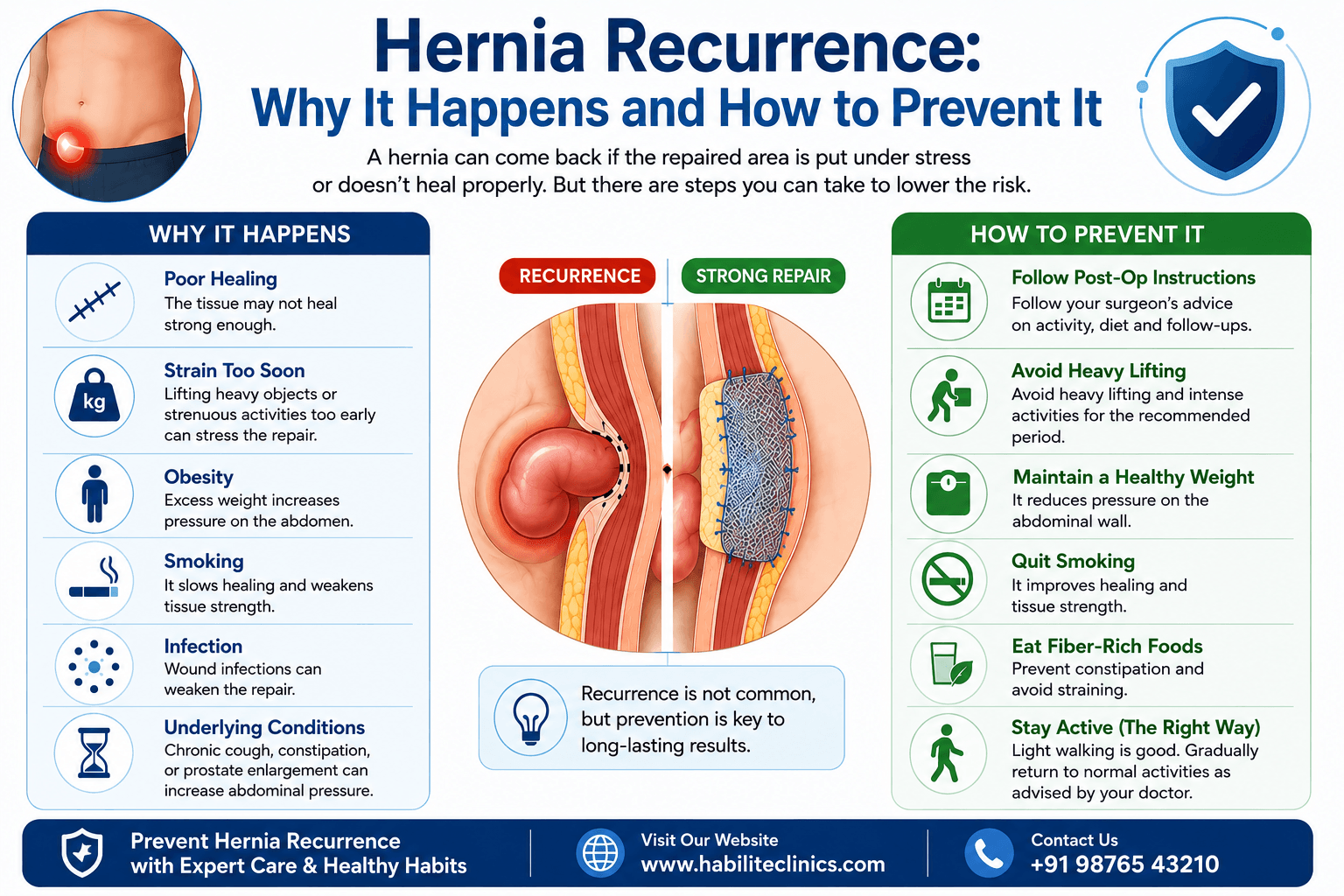
Hernia Recurrence: Why It Happens and How to Prevent It
You have been through a hernia surgery. The recovery was uncomfortable. You followed the doctor's advice. And now, months or even years later, you feel a familiar lump or twinge in exactly the same spot. A wave of worry washes over you.
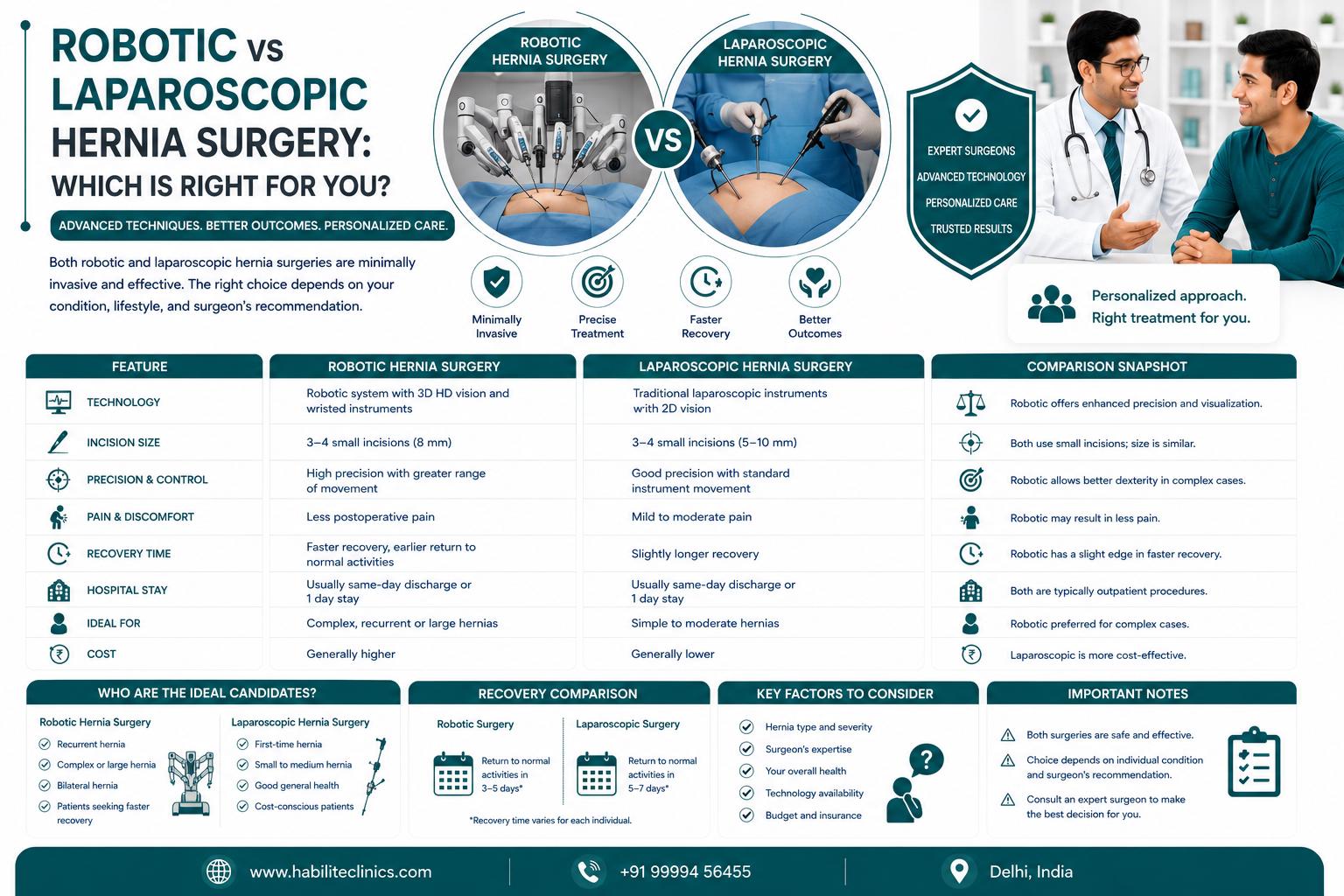
Robotic vs Laparoscopic Hernia Surgery: Which Is Right for You?
Both robotic and laparoscopic hernia surgeries are minimally invasive options with smaller cuts, less pain, and faster recovery than traditional open surgery. ✓ Robotic hernia surgery offers 3D high-definition vision, greater precision with 540-degree instrument rotation, and tremor filtration for complex cases. ✓ Laparoscopic surgery is more widely available, more affordable (₹40,000-50,000 less expensive), and equally effective for most standard hernias. ✓ Dr. Kapil Agrawal and our team at Habilite Clinics offer both techniques with 23+ years of surgical experience. ✓ The choice between robotic and laparoscopic depends on hernia type, complexity, prior surgeries, patient health, and cost considerations—not all patients need robotic surgery. ✓ Both procedures have been covered by health insurance in India since 2019 under IRDAI guidelines, making advanced minimally invasive surgery accessible to more patients.
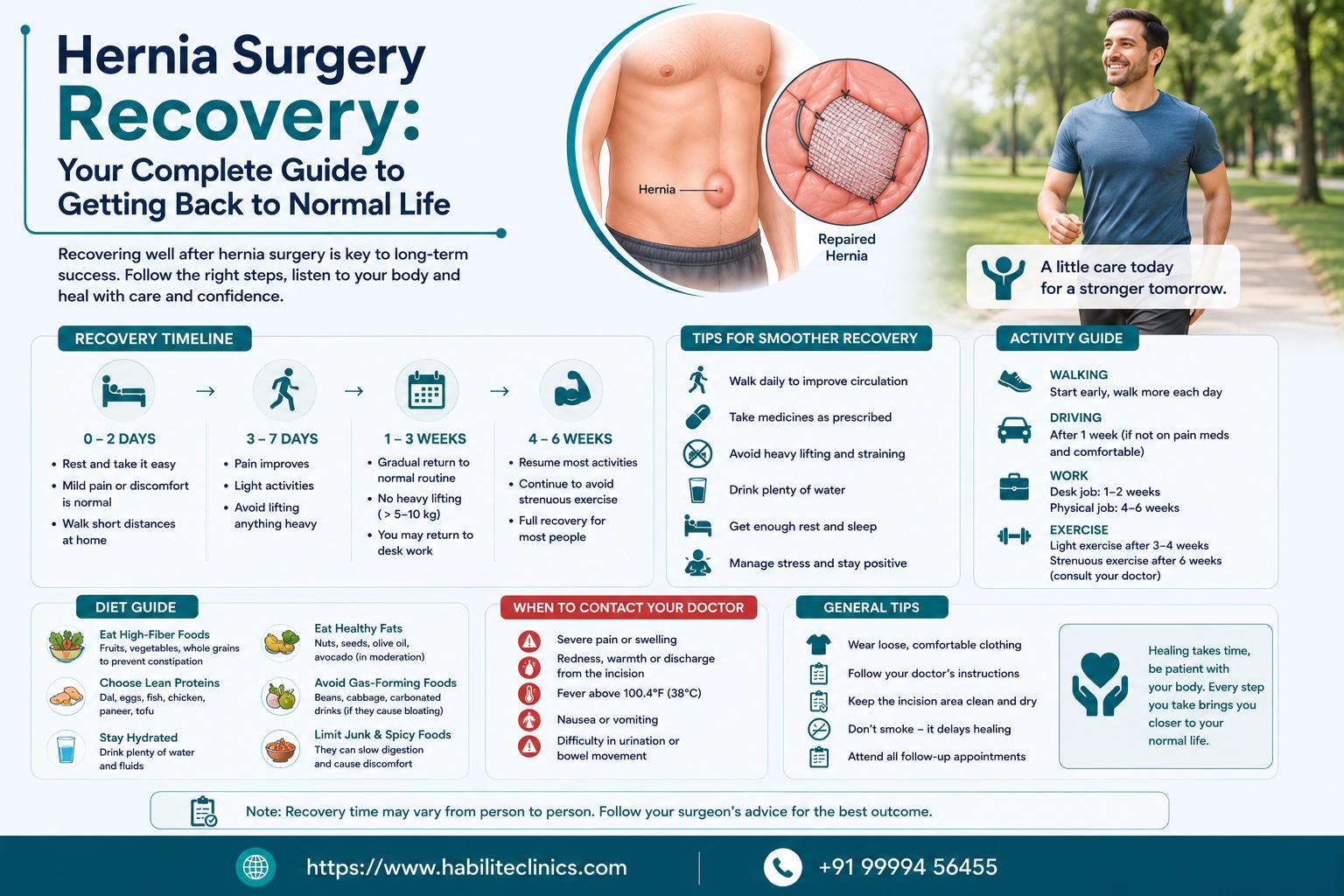
Hernia Surgery Recovery: Your Complete Guide to Getting Back to Normal Life
Recovery varies by surgery type: Laparoscopic hernia surgery recovery takes 1-2 weeks for light activities, while open surgery may need 4-6 weeks Early movement is essential: Walking within hours of surgery prevents blood clots and speeds healing. Complete bed rest is outdated and harmful You can eat normal food, use Indian toilets, and don't need months of rest after modern hernia surgery A protein-rich diet accelerates healing: Focus on eggs, dal, chicken, and fish to rebuild muscle strength after surgery Warning signs need immediate attention: Sudden severe pain, fever above 101°F, or inability to pass gas requires urgent medical care Return to work depends on your job: Desk jobs allow return in 1-2 weeks; manual labor jobs need 4-6 weeks recovery