Best Grade 2 Piles Treatment in Delhi
Did your doctor say you have Grade 2 piles? You may be worried. Does this mean surgery? Will it heal on its own? Take a breath. Grade 2 piles treatment works well for most people. Most patients get better without an operation.
At Habilite Clinics in Delhi, Dr. Kapil Agrawal sees patients with this condition every week. This stage is a turning point. Treated well, it rarely gets worse. Ignored, it can turn into Grade 3. At that point, the piles no longer go back in on their own.
Internationally Trained Expert
Discharge within 24 hours
Cashless Insurance Facility
Book Consultation
Schedule a consultation for Mini Gastric Bypass Surgery with Dr. Kapil Agrawal
What Is Grade 2 Piles?
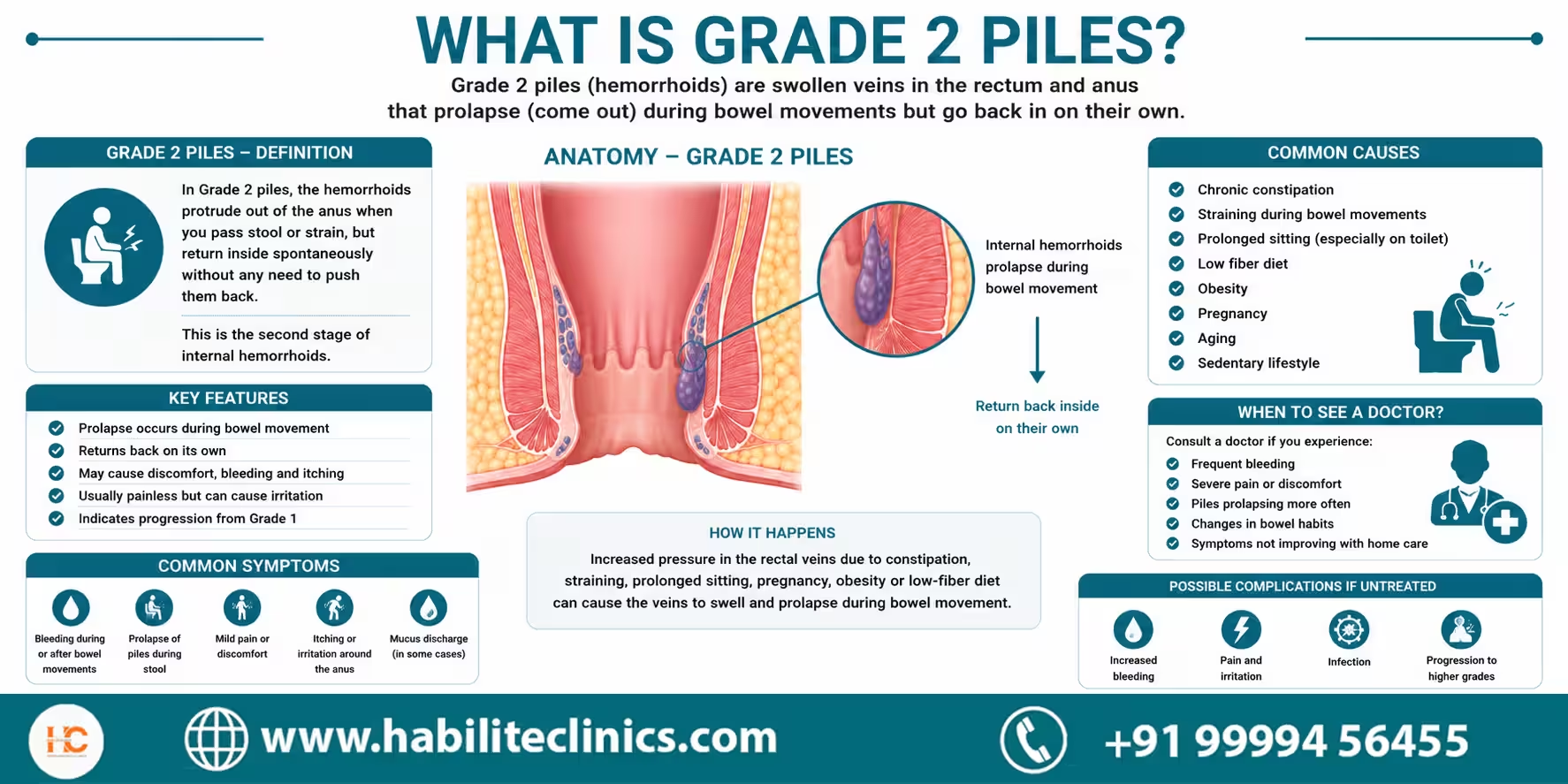
Piles are also called hemorrhoids. They are swollen veins inside or near the anus. Doctors grade piles from 1 to 4. The grade depends on how much they push out.
Grade 2 piles push out when you strain. This happens during a bowel movement. Then they slide back in on their own. You do not need to push them back with your finger.
This is the key difference from Grade 3. Grade 3 piles must be pushed back by hand. Grade 1 piles never come out at all.
Here is a simple way to see it:
- Grade 1 stays inside. It may bleed but never comes out.
- Grade 2 comes out, then goes back in by itself.
- Grade 3 comes out and needs a hand to push it back.
- Grade 4 stays out all the time. It cannot be pushed back. Read more about Grade 4 piles treatment if your condition has progressed.
Symptoms of Grade 2 Piles
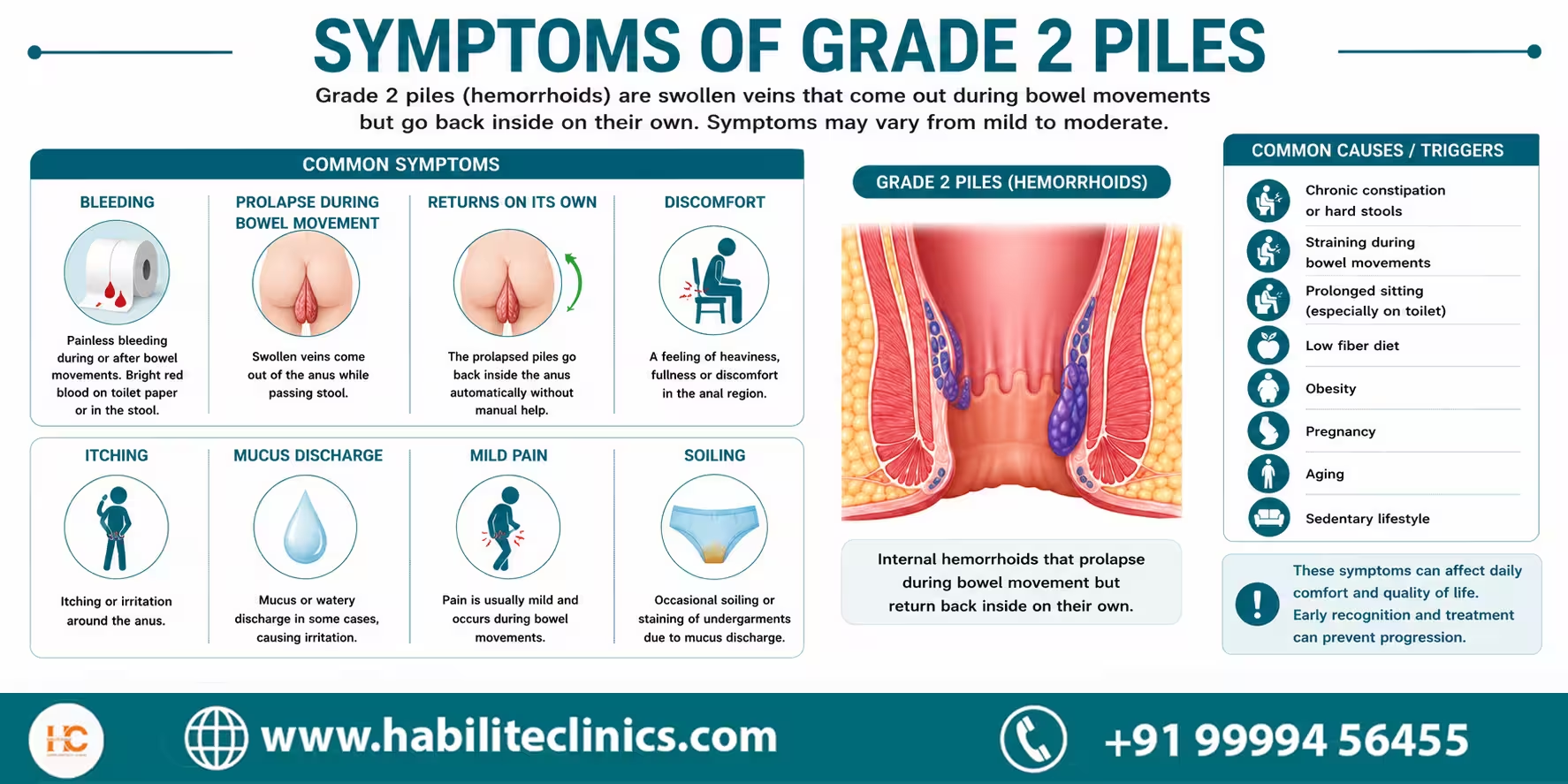
Grade 2 piles symptoms are easier to notice than Grade 1. Most patients see one or more of these signs:
- Bright red blood during a bowel movement
- A soft lump that comes out, then slides back in
- A heavy or sliding feeling near the anus
- Mucus that leaves the area feeling damp
- A sense that the bowel did not fully empty
- Mild itching, especially after sitting a long time
These signs can come and go. Many patients ignore them for months. The lump goes back in by itself, so it feels less urgent. This is why Grade 2 often gets missed.
Why Grade 2 Piles Develop
This stage rarely shows up overnight. It often grows from Grade 1 piles that were left alone. Daily habits can also add pressure on the anal veins:
- Long-term constipation or irregular motions
- Hard straining during a bowel movement
- Sitting on the toilet too long, often with a phone
- A diet low in fibre and water
- Long hours of sitting at a desk
- Pregnancy, which adds pressure on pelvic veins
Fixing these habits is part of the cure. It is not just prevention.
How Grade 2 Piles Is Diagnosed
Diagnosis starts with a short talk about your symptoms. Next comes a proctoscopy. This is a quick, painless look inside, using a small lighted tool. It takes only a few minutes. It confirms the grade of your piles.
Most patients do not need a colonoscopy. Dr. Agrawal asks for one only in some cases. This includes patients over 45. It also includes those with a family history of colon cancer. It includes anyone whose symptoms do not fit a normal piles pattern. This step matters. Rectal bleeding can sometimes come from other causes, not just piles.
Can Grade 2 Piles Be Cured?
Yes. Grade 2 piles can be cured in most patients. Surgery is often not needed at all. The American Society of Colon and Rectal Surgeons backs office-based care. It is the first choice for Grade 1 and Grade 2 hemorrhoids.
Surgery is kept for a small group. This includes patients whose piles do not improve with simple care, or whose bleeding will not stop.
"Grade 2 is the stage where I see the biggest gap. Patients who act early almost always skip surgery. Patients who wait often need more treatment later."
- Dr. Kapil Agrawal
How Dr. Kapil Agrawal Treats Grade 2 Piles
Treatment at Habilite Clinics follows clear steps. We do not jump straight to surgery. Each step is added only if the last one is not enough.
Step 1: Diet, Water, and Bowel Habits
This step is the foundation. Skip it, and other treatments work less well. Piles also tend to come back.
- Eat fibre-rich food every day — whole wheat roti, dal, bhindi, lauki, papaya, guava, and oats all help
- Drink at least 2.5 to 3 litres of water a day
- Do not sit too long on the toilet
- Cut back on tea, coffee, and fried, spicy food — these can make some patients strain more
- Stay active — long hours of sitting add pressure on the anal veins
Stay active — long hours of sitting add pressure on the anal veins. For the full list of foods to eat and avoid in piles, see our nutrition guide.
Dr. Agrawal's clinic tip: The 4-Minute Rule“I tell each Grade 2 patient to leave the toilet within 4 minutes. Leave the phone outside too. Sitting longer, especially while scrolling, adds pressure on the same veins we are trying to heal. This one change alone helps many patients within a few weeks.”
Step 2: Medicines
Medicines help control symptoms. They work while your habits are being fixed.
- Venotonic tablets improve vein strength
- Stool softeners cut down on straining
- Creams or suppositories give short-term relief from itching
- A mild anti-inflammatory tablet helps if there is swelling
These are used for a set time. They are not a long-term fix by themselves.
Step 3: Office-Based Procedures
Symptoms still there after diet and medicine? The next step is a simple, walk-in procedure. None of these need a hospital stay. None need general anesthesia.
- Rubber Band Ligation: a small band is placed at the base of the pile. This cuts off its blood flow. The pile shrinks and falls off within a week.
- Sclerotherapy: a solution is injected into the pile. It shrinks slowly over a few weeks.
- Infrared Coagulation: heat from a small device seals off the blood flow to the pile.
Most patients need one to three sessions. Sessions are spaced a few weeks apart. You can go back to work the same day.
— Dr. Kapil Agrawal“For Grade 2 piles that do not improve, I often start with banding or sclerotherapy. I bring up surgery only after that. These are walk-in, walk-out steps. For most patients, they are enough.”
Step 4: When Laser Surgery Becomes the Right Choice
A small group of Grade 2 patients need more than walk-in care. Dr. Agrawal suggests laser surgery in a few cases. This includes bleeding that continues despite banding or sclerotherapy. It also includes prolapse that keeps growing, or several piles present at once. It also applies when simple care was given a fair try, with no real relief.
Even here, laser surgery for Grade 2 piles is far gentler than open surgery.
Grade 2 Piles Laser Surgery: What to Expect
Laser surgery, also called laser hemorrhoidoplasty, uses a thin laser fibre. It is placed inside the pile tissue. The laser heat shrinks the swollen tissue from within. There is no cut on the skin. There is no cut on the anal lining.
There are no outside cuts or stitches. It is often a same-day procedure. Pain after surgery is less than with open surgery. Most patients return to normal activity within a week.
At Habilite Clinics, this surgery uses USFDA-approved laser machines. Dr. Agrawal has done this procedure several thousand times. That comes from his 23 plus years of practice.
Grade 2 Piles Treatment Cost in Delhi
Grade 2 piles treatment cost depends on the step you need. Most patients never reach the surgery step. This keeps the total cost lower than most people expect.
A consultation with a proctoscopy costs about 800 to 1,500 rupees. Rubber Band Ligation costs about 6,000 to 15,000 rupees per session. Sclerotherapy costs about the same, 6,000 to 15,000 rupees per session. Infrared Coagulation costs a little more, about 8,000 to 18,000 rupees per session. Laser surgery, as a full package, starts around 35,000 rupees.
These are rough ranges, not fixed prices. The real Grade 2 hemorrhoids treatment cost depends on a few things. It depends on how many piles you have. It depends on the number of sessions you need. It also depends on whether laser surgery is required. The hospital you pick can also change the final cost.
Walk-in procedures are often paid out of pocket. They do not need a hospital stay. Laser surgery is different. If it is advised, our partner hospitals can help with cashless insurance. This depends on your policy.
- A conservative-first philosophy: He doesn't push patients toward procedures or surgery when diet and medication can do the job. Many Grade 1 patients are reassured to find that "treatment" doesn't always mean "operation."
- Thorough diagnosis: Every patient gets a proper clinical examination to rule out other causes of bleeding before being labeled as "just piles."
- Practical, India-specific advice: Dietary recommendations are built around real Indian meals and routines, not generic Western diet charts.
- Access to advanced options when needed: If a patient's piles progress, Dr. Agrawal offers the full range of treatments — from sclerotherapy and banding to laser hemorrhoidoplasty and stapler procedures — at Habilite Clinics' two centers in Lajpat Nagar and Hauz Khas, South Delhi.
- Long-term focus: The goal is always to prevent recurrence and progression, not just treat the current symptom.
Laser surgery, as a full package, starts around 35,000 rupees. See our detailed piles laser surgery cost breakdown for a full cost comparison.
Mini Gastric Bypass Surgery Cost in Delhi
Get accurate cost estimate for your treatment
Grade 2 Piles Recovery Time
Grade 2 piles recovery time depends on the method used.
Diet and medicine bring relief gradually, with most patients feeling better within 2 to 4 weeks. Rubber Band Ligation causes mild pain for 2 to 3 days, with a same-day return to routine. Sclerotherapy involves little to no downtime, with mild fullness for a day in some cases. Infrared Coagulation has almost no downtime, with a same-day return to work. Laser surgery takes a bit longer: most patients return to desk work within 3 to 5 days, with normal activity following within a week.
Avoid heavy lifting during recovery. Avoid long sitting. Avoid constipation. This applies no matter which treatment you choose.
What Happens If Grade 2 Piles Is Left Untreated
Left untreated, this stage can turn into Grade 3. At that stage, the prolapse no longer slides back on its own. It must be pushed back by hand.
Ongoing bleeding can also lower your iron levels over time. This can leave you feeling tired. Early treatment avoids both problems.
Long-Term Prevention After Treatment
Treating it is only half the work. Keeping it from coming back depends on daily habits.
- Keep eating fibre-rich, home-style food — dal, vegetables, fruit, and whole grains
- Keep your toilet time short
- Drink enough water through the day
- Avoid long hours of sitting without a break
- Treat constipation early — do not wait it out
Patients who keep these habits have a low chance of the piles coming back. For more home prevention tips, see our dedicated guide.
When to See a Doctor
- See a doctor if bleeding is heavy or happens often
- See a doctor if a lump is growing in size
- See a doctor if pain comes along with bleeding — this may point to a fissure, not piles
- See a doctor if symptoms last more than two to three weeks, despite home care
Do not wait for piles to become Grade 3 or Grade 4. For milder bleeding episodes, you can also read our guide on how to manage piles bleeding at home.
Why Choose Dr. Kapil Agrawal for Grade 2 Piles Treatment
- 23+ years of surgical experience
- Works as a colorectal, laparoscopic, and bariatric surgeon
- MRCS from London and MMed from Singapore
- Over 7,000 minimally invasive procedures performed
- Senior Consultant at Apollo Hospitals, Delhi NCR
His style is simple: try the gentle option first. Surgery comes up only when walk-in care is not enough. When laser surgery is needed, it uses USFDA-approved tools. You can visit either clinic in South Delhi. Choose Lajpat Nagar or Hauz Khas for a direct, honest talk about your case. There is no third-party sales push. Where your policy allows, the team also helps with cashless insurance at partner hospitals.
Patients choose Dr. Agrawal for one reason. Not every case needs surgery. But each case needs an honest, expert opinion on whether it does.
Habilite Clinics' Free Post-operative Care
We provide comprehensive free post-operative care to ensure your smooth recovery and optimal results. Our dedicated team is committed to your well-being throughout your healing journey.
Comprehensive Care
Complete post-operative support and monitoring
Expert Guidance
24/7 access to our medical team
Dedicated Support
Personalized care coordinator for each patient
Regular Follow-ups
Scheduled check-ups to ensure optimal recovery
What's Included in Our Free Post-operative Care:
- ✓Regular follow-up consultations with Dr. Kapil Agrawal
- ✓24/7 emergency support and guidance
- ✓Nutritional counseling and diet plans
- ✓Wound care and dressing assistance
- ✓Medication management and adjustments
- ✓Progress monitoring and recovery assessment
Chat with Expert for Free
Get instant answers to your questions from our medical experts via WhatsApp
Frequently Asked Questions
Common questions about Grade 1 piles treatment
These are internal piles that bulge out during straining, then slide back in on their own. You do not need to push them back by hand.
Top symptoms include bleeding during a bowel movement. Another sign is a soft lump that comes and goes on its own. Other signs are mucus discharge and a feeling of incomplete emptying.
Yes. Grade 2 piles can be cured in most patients. This works through diet changes, medicines, and simple walk-in steps like banding or sclerotherapy. Surgery is often not needed.
Treatment follows four steps. Step one is diet and habit changes. Step two is medicine. Step three is a walk-in procedure, like banding or sclerotherapy. Step four, laser surgery, is used only if the first three steps do not work.
No. Most Grade 2 hemorrhoids respond well without surgery. Surgery is kept for the few cases where bleeding or prolapse continues despite walk-in care.
Walk-in steps, like banding, sclerotherapy, and infrared coagulation, often cost 6,000 to 18,000 rupees per session. Laser surgery, if needed, often starts around 35,000 rupees. The exact Grade 2 hemorrhoids treatment cost depends on your sessions and the method used.
Grade 2 piles recovery time is short for walk-in steps. Most patients return to work the same day. Laser surgery recovery takes about a week.
Grade 2 piles laser surgery is used when bleeding or prolapse continues. This applies despite banding, sclerotherapy, or medicine. It is also used when several piles need care at once.
Grade 1 piles stay inside and never come out. Grade 2 piles come out during straining, then go back in by themselves. Grade 3 piles come out and need a hand to push them back. Grade 4 piles stay out all the time and cannot be pushed back.
Untreated Grade 2 piles can turn into Grade 3. At that point, the prolapse no longer goes back on its own. Ongoing bleeding can also lower your iron levels over time.
Eat more fibre, such as dal, whole wheat roti, papaya, and green vegetables. Drink plenty of water. Cut back on fried, spicy food. Limit extra tea or coffee, since these can add to straining in some patients.
Yes, if the root causes are not fixed. This includes constipation, straining, long sitting, and low fibre intake. Patients who keep up these changes have a much lower chance of the piles coming back.
Most walk-in steps cause only mild pain for a day or two. This includes banding, sclerotherapy, and infrared coagulation. Laser surgery brings a bit more pain than walk-in care. It is still far less than open surgery.
See a doctor if bleeding is frequent or heavy. See a doctor if the prolapse is growing. See a doctor if pain comes with bleeding. See a doctor if symptoms last more than two to three weeks, despite home care.
Dr. Kapil Agrawal treats this condition at Habilite Clinics. Visit either the Lajpat Nagar or Hauz Khas clinic in South Delhi. He also consults at Apollo Hospitals, Delhi NCR. Call +91 99994 56455 or +91 99100 24564 to book a visit.