Inguinal Hernia Surgery in Delhi by Dr. Kapil Agrawal
If you have noticed a small bulge in your groin that becomes more obvious when you cough, lift something heavy, or stand for too long — and disappears when you lie down — there is a very good chance you are dealing with an inguinal hernia.
Choosing the right approach and the right surgeon, inguinal hernia surgery in Delhi is a same-day, minimally invasive procedure that gets you back to work in a week and back to the gym in under a month.
Dr. Kapil Agrawal, Senior Consultant Surgeon at Apollo Hospitals, Delhi NCR, has personally performed more than 5,000 inguinal hernia repairs — using open, laparoscopic (TEP, TAPP, eTEP), and robotic techniques. On this page, we will walk you through exactly what an inguinal hernia is, the modern options you have, what each one feels like to recover from, and how we decide together which one is right for you.
For a broader overview of all hernia types, surgical philosophy, and our complex hernia programme, please visit our main page on the best hernia surgeon in Delhi.
Book Consultation
Schedule a consultation for Inguinal Hernia Surgery with Dr. Kapil Agrawal
What Exactly Is an Inguinal Hernia?
An inguinal hernia happens when a portion of your intestine, fat, or tissue from inside your abdomen pushes through a weak spot in your inguinal canal — a narrow passage in the lower abdominal wall, just above your groin crease. In men, this canal carries the spermatic cord; in women, it carries the round ligament. Because this canal is naturally a weaker zone in the abdominal wall, it is also the most common site where hernias develop.
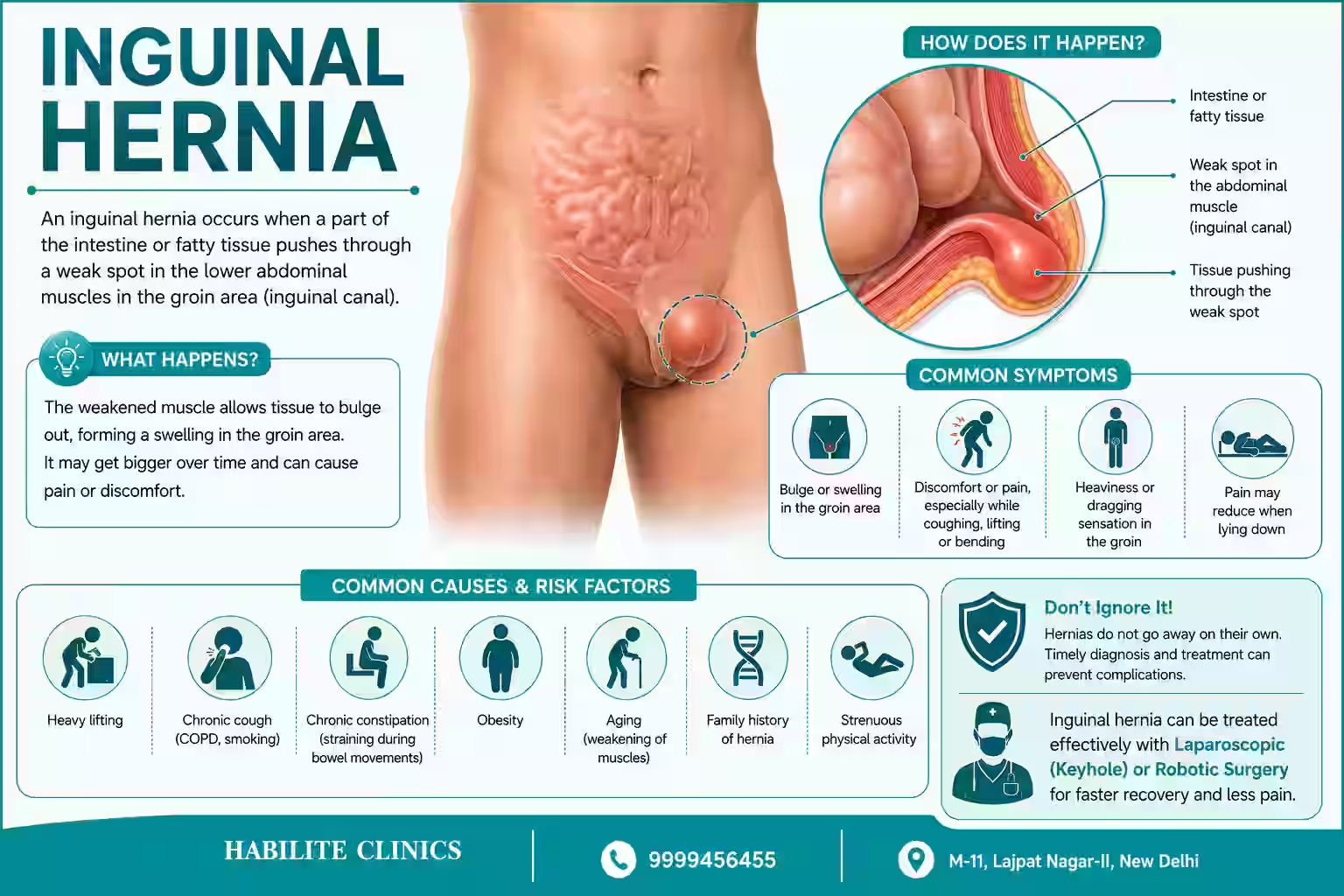
You will usually first notice an inguinal hernia as:
- A soft bulge in the groin or scrotum that you can sometimes push back in
- A pulling, heavy, or dragging sensation that gets worse by evening
- Discomfort while lifting weights, climbing stairs, coughing, or straining
- Occasional sharp pain after a long day on your feet
Many patients tell us they ignored the bulge for months — even years — because it did not hurt. We understand. But here is what you must know: an inguinal hernia never heals on its own, and the longer you wait, the larger and more complex the repair becomes.
For a detailed explanation of all hernia types, anatomy, and treatment philosophy, refer to our hernia complete guide.
Direct vs. Indirect Inguinal Hernia — Why It Matters to You
Not all inguinal hernias are the same. When you sit across us in consultation, the first thing we want to figure out is whether you have a direct or an indirect inguinal hernia — because the surgical approach can be subtly different.
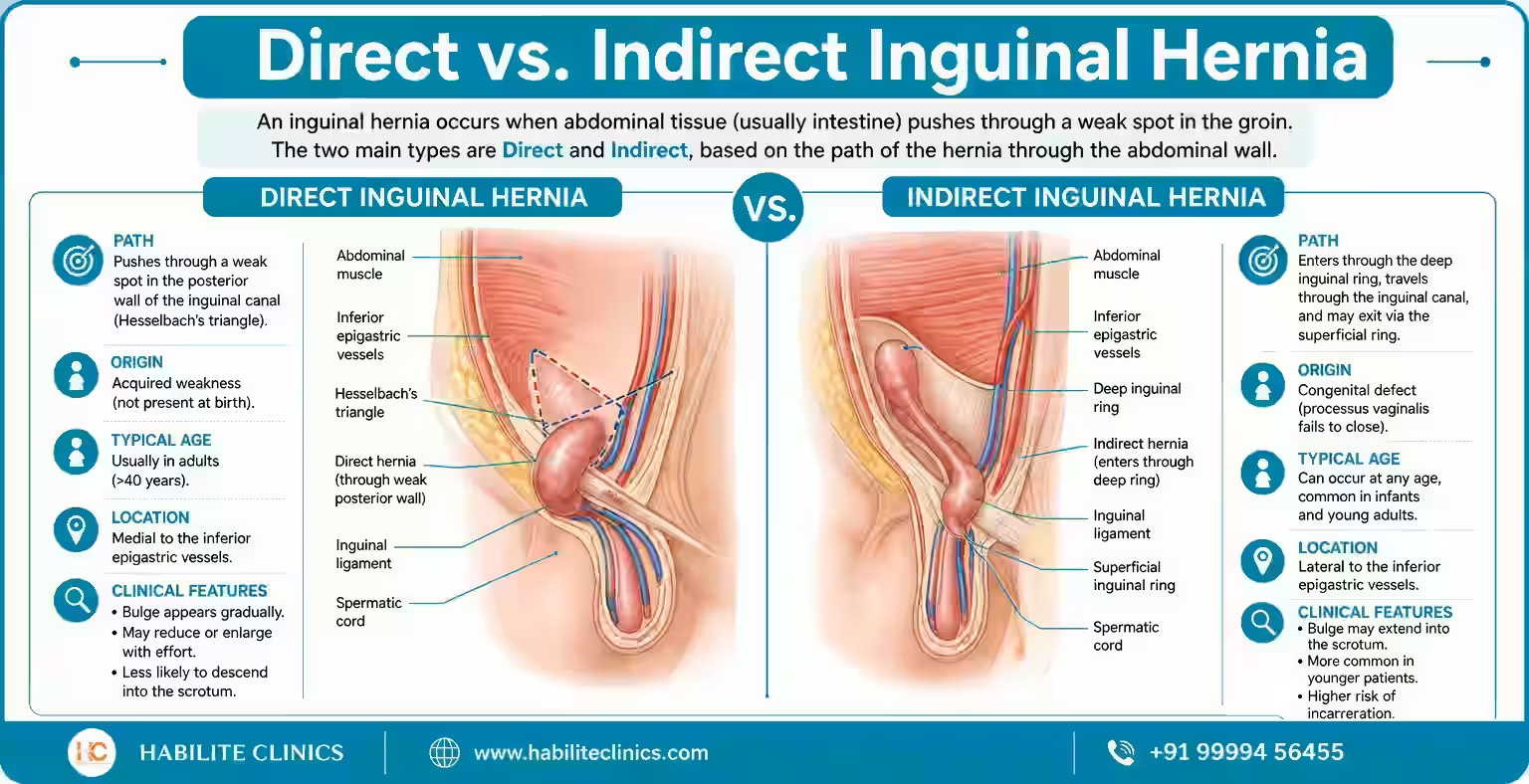
Indirect Inguinal Hernia
This is the more common type, especially in younger men. It happens when the hernia tissue travels through the deep inguinal ring — the same path the testicle once descended through during fetal development. An indirect hernia can extend all the way down into the scrotum.
Direct Inguinal Hernia
This type tends to occur in older men, typically after the age of 40, due to age-related weakening of the abdominal wall muscles. The bulge pushes directly through the back wall of the inguinal canal rather than through the deep ring.
Pantaloon Hernia
In some patients, both types coexist on the same side — we call this a pantaloon hernia. This is one reason why laparoscopic inguinal hernia repair is often superior: it allows me to view and reinforce both potential weak zones in a single operation.
Who Gets an Inguinal Hernia?
- You are a man between 30 and 70 years of age. This is the peak age range we see at our clinics in Lajpat Nagar and Hauz Khas.
- You lift heavy weights for work or fitness. Construction workers, delivery professionals, and serious gym-goers — especially those who deadlift or squat without proper bracing — show up regularly in our OPD.
- You have a chronic cough from smoking, asthma, or chronic bronchitis.
- You strain during bowel movements because of constipation or piles.
- You have an enlarged prostate and strain to urinate.
- You have had a previous abdominal surgery that may have weakened your inguinal floor.
- There is a family history of hernias — yes, the predisposition can be inherited.
- You are pregnant or have recently delivered, which raises intra-abdominal pressure.
If you recognise yourself in this list and you have noticed any groin discomfort, please do not put it off. A 15-minute clinical examination is all we need to confirm the diagnosis.
How We Diagnose Your Inguinal Hernia
In most cases, an experienced hernia surgeon can diagnose an inguinal hernia in a single clinical examination — no scans, no needles, no waiting for reports. I will ask you to stand, examine the groin, and ask you to cough — that simple action makes the bulge visible and confirms the diagnosis.
When the hernia is small, intermittent, or you have unusual groin pain without an obvious bulge, we may recommend:
- High-resolution groin ultrasound (USG) — quick, painless, and often confirms a hidden hernia
- Dynamic MRI — useful in athletes to differentiate true inguinal hernia from sportsman is hernia (athletic pubalgia)
- CT scan with Valsalva manoeuvre — for large, recurrent, or complex bilateral hernias where I need to map the anatomy before surgery
- Confused about your ultrasound report? You can share your ultrasound report on WhatsApp and our team will explain every finding to you in plain English.
Why You Should Not Delay Inguinal Hernia Surgery
Incarceration of the Bowel
Some of the toughest operations our team performs every month are not the first-time inguinal hernias — they are the ones that were ignored for 5, 10, or 15 years. Here is what happens when you wait:
- The hernia gets larger and may slide into the scrotum (inguino-scrotal hernia), which is a much bigger operation.
- The muscle around the defect weakens further, increasing the risk of recurrence even after surgery.
- The risk of incarceration rises — this is when the bowel gets stuck in the hernia sac and cannot be pushed back.
- The risk of strangulation rises — this is a true emergency where the trapped bowel loses its blood supply within hours and may need to be removed.
- A larger defect requires a larger mesh and a more complex repair, which raises both your cost and your recovery time.
The simple truth is this: early inguinal hernia surgery is easier, cheaper, safer, and gives you a far better long-term result than delayed surgery.
1. Laparoscopic Inguinal Hernia Repair (Keyhole Surgery)
For 80–85% of my patients, laparoscopic repair is the right choice. Through 3 tiny incisions of 5–10 mm near your navel, we use a high-definition camera and fine instruments to repair the hernia from behind the abdominal wall, and reinforce the entire groin floor with a precisely placed mesh.
Why patients prefer it:
- Minimal pain — most patients need only paracetamol after 48 hours
- Tiny scars that fade within months
- Same-day or 24-hour discharge
- Both sides repaired in one sitting (a huge advantage for bilateral inguinal hernia)
- Return to desk work in 5–7 days, full activity in 3–4 weeks
- Significantly lower wound infection rates than open surgery
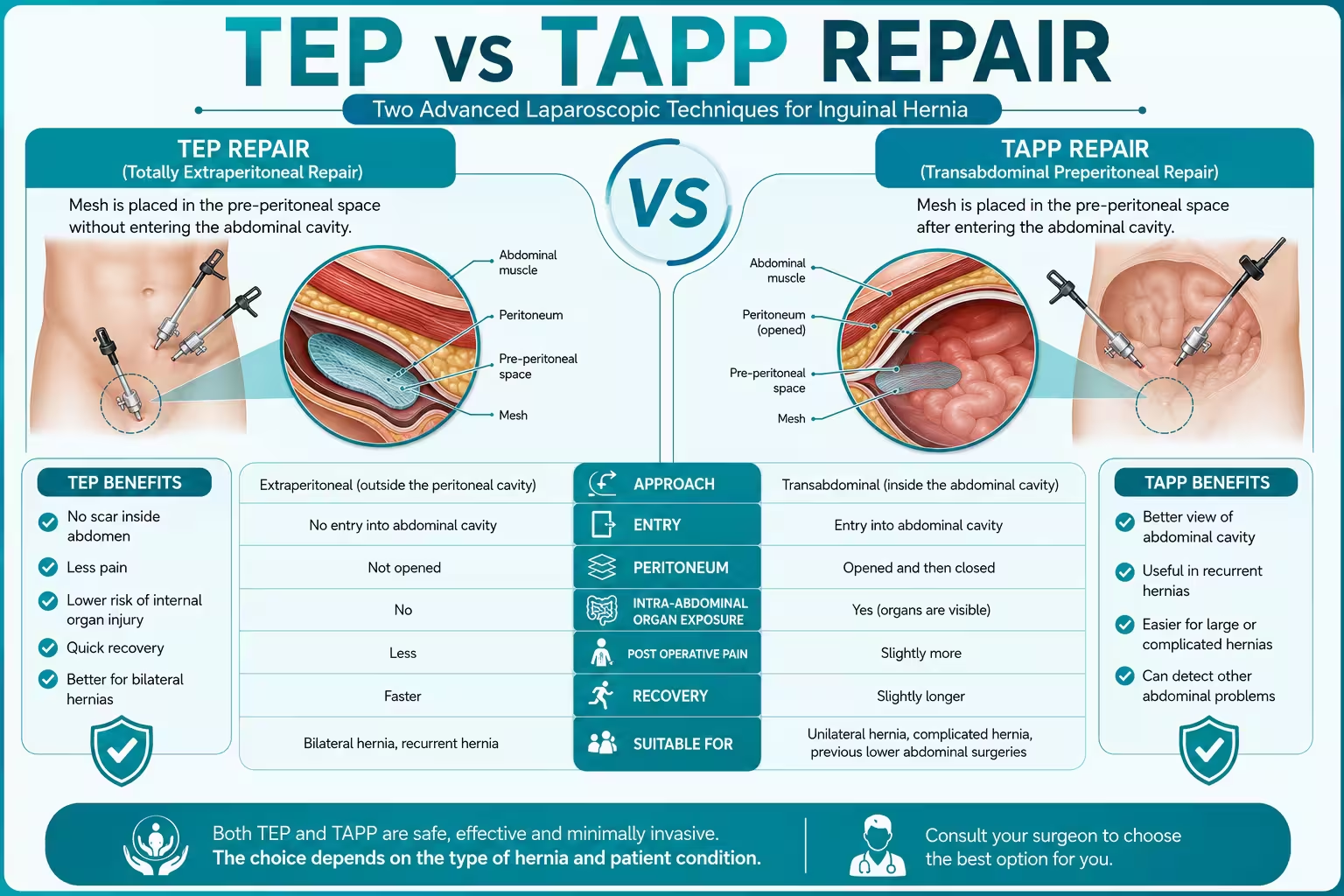
There are three technical variations of laparoscopic inguinal hernia repair, and I am trained in all of them:
TEP (Totally Extra-Peritoneal) Repair
In TEP, we work entirely outside the inner lining of your abdomen (the peritoneum). This is our first choice for small to medium, uncomplicated, primary inguinal hernias. There is no entry into the abdominal cavity at all, which means even faster recovery and almost zero risk to internal organs.
TAPP (Trans-Abdominal Pre-Peritoneal) Repair
In TAPP, we enter the abdominal cavity, lift a flap of peritoneum, place the mesh, and close the flap. we prefer TAPP for large, recurrent, or strangulated hernias, very obese patients, and cases where I need to inspect the opposite side or the bowel.
eTEP (Enhanced-View Totally Extra-Peritoneal) Repair
eTEP is the newest evolution of laparoscopic groin hernia repair. By repositioning the camera higher in the abdominal wall, we get a much wider working space and a panoramic view of both sides simultaneously. eTEP is excellent for bilateral inguinal hernias, large direct hernias, and selected recurrent cases. It has become my technique of choice for bilateral repair in the right candidate.
2. Robotic Inguinal Hernia Surgery
Robotic-assisted inguinal hernia repair takes laparoscopic surgery to its highest level of precision. From the robotic console, we control wristed instruments with a range of motion that exceeds the human hand, while viewing your groin anatomy in magnified 3D high-definition.
We recommend robotic inguinal hernia surgery specifically for:
- Recurrent inguinal hernias after a previous open or laparoscopic repair, where scarred anatomy demands precise dissection
- Very large or scrotal hernias where reduction and mesh placement are technically challenging
- Patients with previous lower abdominal surgery (prostate, bladder, urological)
- Selected complex bilateral cases
The recovery is identical to laparoscopic surgery — small incisions, same-day discharge, same return-to-work timeline. The advantage is on the table, in the precision of the dissection, not in the scars.
If you are weighing your options, our detailed comparison of robotic vs laparoscopic hernia surgery explains exactly when each approach is worth it
3. Open Inguinal Hernia Repair (Lichtenstein & Desarda)
Open repair is not "old-fashioned" — it is the right choice in specific situations. I use it when:
- You are unfit for general anaesthesia (severe heart or lung disease)
- You have a large, completely irreducible scrotal hernia where laparoscopic reduction is unsafe
- You have had multiple previous laparoscopic repairs that have failed
- You have a strong personal preference for non-mesh repair
Lichtenstein Tension-Free Mesh Repair
The world's most-performed open hernia operation. A 5–7 cm groin incision, the hernia is reduced, and a flat mesh is sutured tension-free over the defect. Excellent results, well-tolerated, and can be done under spinal or local anaesthesia.
Desarda Technique (Mesh-Free Repair)
For patients who absolutely do not want mesh — typically young men under 25, athletes, or those with religious or personal preferences — we offer the Desarda technique. In this approach, an undetached strip of your own external oblique aponeurosis is used to reinforce the groin, providing a tension-free repair without any synthetic material. The Desarda technique is one of the few mesh-free options with internationally published, validated outcomes.
Read more about non-mesh repair: Pediatric and young-adult inguinal hernia repair is also performed without mesh see our guide on hernia in children.
Mesh Selection for Your Inguinal Hernia Repair
Almost every modern inguinal hernia repair in adults uses a surgical mesh — a soft, flexible reinforcement that dramatically lowers recurrence rates from 15–20% (without mesh) to under 2% (with mesh). But not every mesh is right for every patient.
In my practice, I use only internationally validated, USFDA-approved meshes, and I select based on:
- Hernia size and type — small direct hernias do not need the same mesh as a large indirect scrotal hernia
- Your body weight and BMI — heavier patients benefit from a stronger mid-weight mesh
- Your activity level — athletes and manual workers need a mesh with the right mechanical profile
- Whether the mesh will sit pre-peritoneal or intra-peritoneal
You will always know exactly which mesh I am placing in you and why. We do not hide that information behind a hospital bill.
3D Mesh for Inguinal Hernia Repair — Is It Worth It?
You may have read about 3D mesh for inguinal hernia repair — an anatomically pre-shaped mesh that contours to the groin. It is comfortable, requires less fixation, and is well-tolerated. However, in published long-term data, 3D mesh does not significantly reduce recurrence compared to a well-placed flat mesh. I use 3D mesh selectively, not as a default upgrade.
Inguinal Hernia Surgery — Day of Surgery, Step by Step
You will arrive at the hospital in the morning, fasting since midnight. Here is exactly what happens next:
- Admission and pre-op (45 minutes): Vitals, IV line, anaesthesia consult, and meeting with the OT team.
- Anaesthesia (10 minutes): General anaesthesia for laparoscopic and robotic; spinal or local for selected open repairs.
- Surgery (45–90 minutes): Time depends on hernia size, side, technique, and whether it is unilateral or bilateral.
- Recovery (1–2 hours): You wake up in the recovery bay, comfortable and alert.
- Walking and discharge: Most non-insurance patients walk out the same day.
- Insurance/cashless cases are discharged within 24 hours.
You go home with a printed recovery blueprint, your medication list, my direct contact details, and a personal care coordinator who will WhatsApp you every day for the first week.
Recovery Timeline After Inguinal Hernia Surgery
| Time After Surgery | What You Can Do |
|---|---|
| 2 hours | Sit up, sip water, pass urine, walk to the bathroom |
| 24 hours | Discharge, light home meals, short walks at home |
| 48–72 hours | Resume your normal home diet, light activity, shower |
| Day 5–7 | Return to desk work, drive a car, light walking outdoors |
| Week 2–3 | Brisk walking, stationary cycling, light treadmill |
| Week 4 | Resume gym (lower-body only initially), running |
| Week 6 | Heavy lifting, deadlifts, squats, contact sports — full clearance |
For a week-by-week walkthrough of healing milestones and warning signs, read our complete guide to hernia surgery recovery.
Recovery & Aftercare
Recovery Time
Most patients can resume normal activities within 1-2 weeks after laparoscopic or robotic inguinal hernia repair. Discharge within 24 hours.
Follow-up Care
Structured follow-up visits and activity guidance help ensure complete recovery and prevent recurrence.
Inguinal Hernia Surgery Cost in Delhi
The cost of inguinal hernia surgery in Delhi depends on five things:
- The technique — open is the most economical, laparoscopic is mid-range, robotic is the highest
- Unilateral vs. bilateral — bilateral repair adds modestly, since both sides are done in one anaesthesia
- The mesh used — standard polypropylene vs. mid-weight composite vs. 3D anatomic
- The hospital category — NABH-accredited tertiary hospitals naturally cost more than smaller setups
- Your insurance coverage — cashless coverage typically covers most or all of the cost
Inguinal Hernia Surgery Cost in Delhi
Get accurate cost estimate for your treatment
Indicative price bands at our partner hospitals:
- Open Lichtenstein / Desarda repair: starting from ₹50,000
- Laparoscopic TEP / TAPP / eTEP repair: starting from ₹65,000 (unilateral)
- Bilateral laparoscopic repair: starting from ₹85,000
- Robotic inguinal hernia repair: starting from ₹2,50,000
We accept cashless insurance from all major Indian insurers, and we offer zero-interest EMI through our clinic partners. You will receive a transparent, fixed-price estimate before you commit — no hidden costs, no surprise bills on discharge day.
For a detailed breakdown, please read our complete guide: Cost of Hernia Surgery in Delhi .
Why Patients Choose Dr. Kapil Agrawal for Inguinal Hernia Surgery in Delhi
You have many surgeons to choose from in Delhi NCR. Here is what makes our practice different:
- Volume and specialisation — over 5,000 inguinal hernia repairs personally performed across open, laparoscopic, and robotic platforms
- All techniques under one surgeon — TEP, TAPP, eTEP, robotic, Lichtenstein, and Desarda. You will be matched to the right technique, not the only one your surgeon knows.
- Apollo Hospitals, Delhi NCR — Senior Consultant access at one of India is top hospital networks
- Same-day discharge protocols — designed for the working professional who cannot afford a 3-day hospital stay
- Free lifetime follow-up — Dr. Agrawal personally reviews every patient at 1 week, 1 month, 3 months, and beyond, at no additional cost
- Transparent, fixed-price packages — including pre-op tests, anaesthesia, mesh, surgery, and post-op care
- Cashless insurance and zero-interest EMI
- Two convenient South Delhi clinics — Lajpat Nagar and Hauz Khas, easily reachable from Defence Colony, GK, Saket, Green Park, Vasant Kunj, South Extension, and CR Park
Learn more about Dr. Agrawal's training, credentials, and surgical philosophy on the About Dr. Kapil Agrawal Page.
Habilite Clinics' Free Post-operative Care
We provide comprehensive free post-operative care to ensure your smooth recovery and optimal results. Our dedicated team is committed to your well-being throughout your healing journey.
Comprehensive Care
Complete post-operative support and monitoring
Expert Guidance
24/7 access to our medical team
Dedicated Support
Personalized care coordinator for each patient
Regular Follow-ups
Scheduled check-ups to ensure optimal recovery
What's Included in Our Free Post-operative Care:
- ✓Regular follow-up consultations with Dr. Kapil Agrawal
- ✓24/7 emergency support and guidance
- ✓Nutritional counseling and diet plans
- ✓Wound care and dressing assistance
- ✓Medication management and adjustments
- ✓Progress monitoring and recovery assessment
Frequently Asked Questions
Everything you need to know about inguinal hernia symptoms, treatment options, recovery timelines, and insurance assistance.
Modern laparoscopic inguinal hernia repair is usually minimally painful. Most patients describe it as soreness rather than severe pain and are off major pain medicines within 48-72 hours.
If you have a desk job, you can usually return in 5-7 days after laparoscopic or robotic repair. For physically demanding jobs, lifting is generally restricted for 4-6 weeks.
Walking and light cycling usually begin in week 2, treadmill/light cardio in week 3, and progressive weights around week 4. Heavy lifting and contact sports are typically resumed after week 6 once cleared by your surgeon.
Yes. One of the biggest benefits of laparoscopic and robotic surgery is bilateral repair in the same sitting through the same tiny incisions.
A properly performed inguinal hernia repair does not affect fertility or sexual function. Experienced surgeons carefully protect the spermatic cord structures during surgery.
Both are groin hernias, but they pass through different anatomical openings. Femoral hernias are more common in women and generally carry a higher risk of strangulation.
Yes, most major health insurance policies in India cover inguinal hernia surgery as a medically necessary procedure. Cashless options are available with major insurers.
The hernia usually becomes larger with time and the risk of incarceration or strangulation increases. Delayed surgery can mean higher complexity, longer recovery, and greater cost.
Yes, in selected patients. Mesh-free Desarda repair is an option for younger patients or those with strong preference against synthetic mesh, though mesh remains the gold standard for most adult hernias.
For straightforward first-time hernias, laparoscopic repair often gives comparable recovery and outcomes. Robotic surgery is most valuable in recurrent, very large, scrotal, or complex post-surgery cases.
A unilateral laparoscopic or robotic repair usually takes 45-60 minutes, while bilateral repairs often take 75-90 minutes. Total hospital stay for same-day discharge is typically around 6-8 hours.
Yes. Pediatric inguinal hernia follows a different protocol from adult hernia and is usually repaired without mesh using age-specific minimally invasive techniques.
Yes. Recurrent inguinal hernia can be repaired with a planned redo surgery. Technique selection is based on your previous operation and current anatomy, and robotic/laparoscopic approaches are often useful in recurrence.
Related Inguinal Hernia Blogs
Expert insights, tips, and guides about inguinal hernia
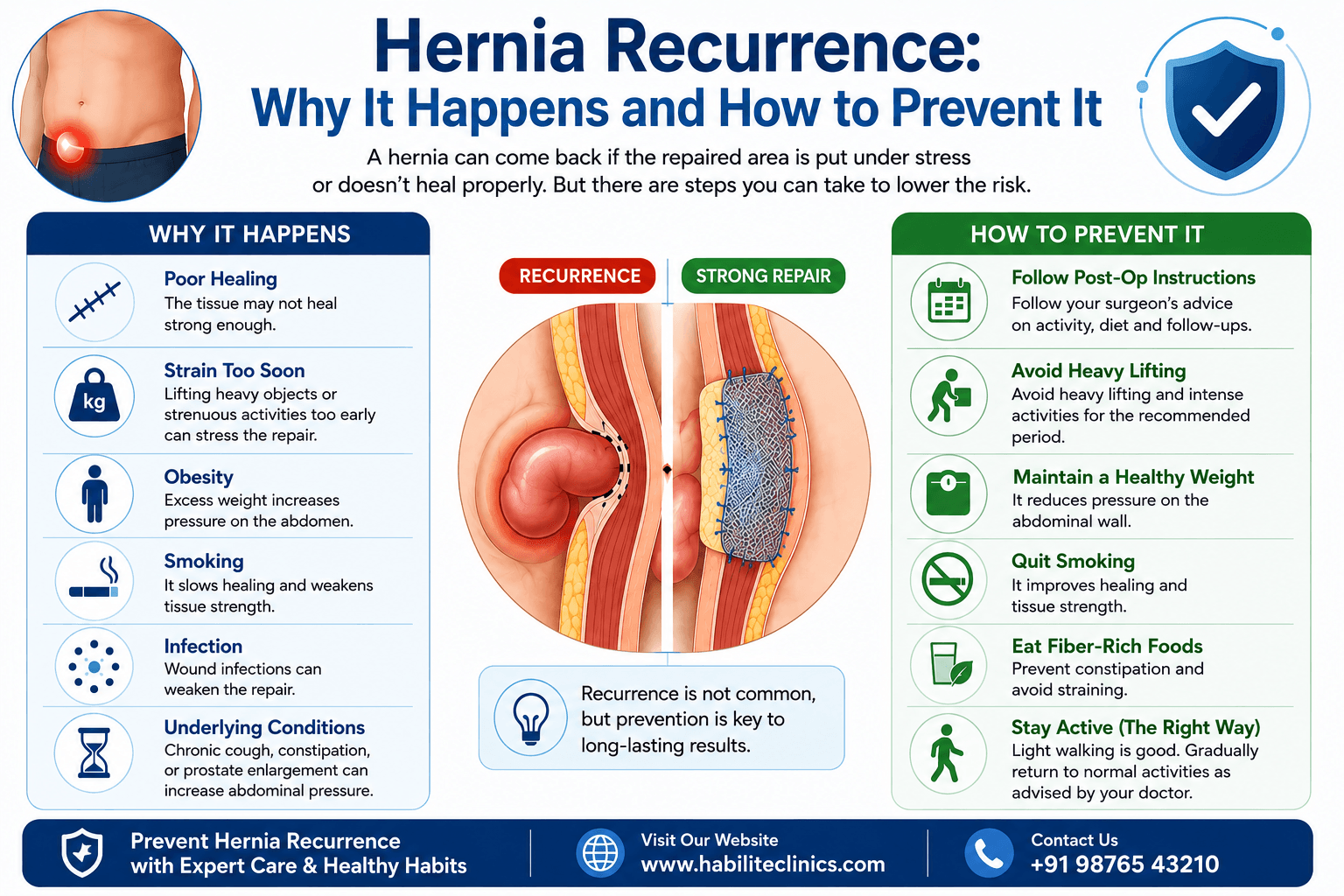
Hernia Recurrence: Why It Happens and How to Prevent It
You have been through a hernia surgery. The recovery was uncomfortable. You followed the doctor's advice. And now, months or even years later, you feel a familiar lump or twinge in exactly the same spot. A wave of worry washes over you.
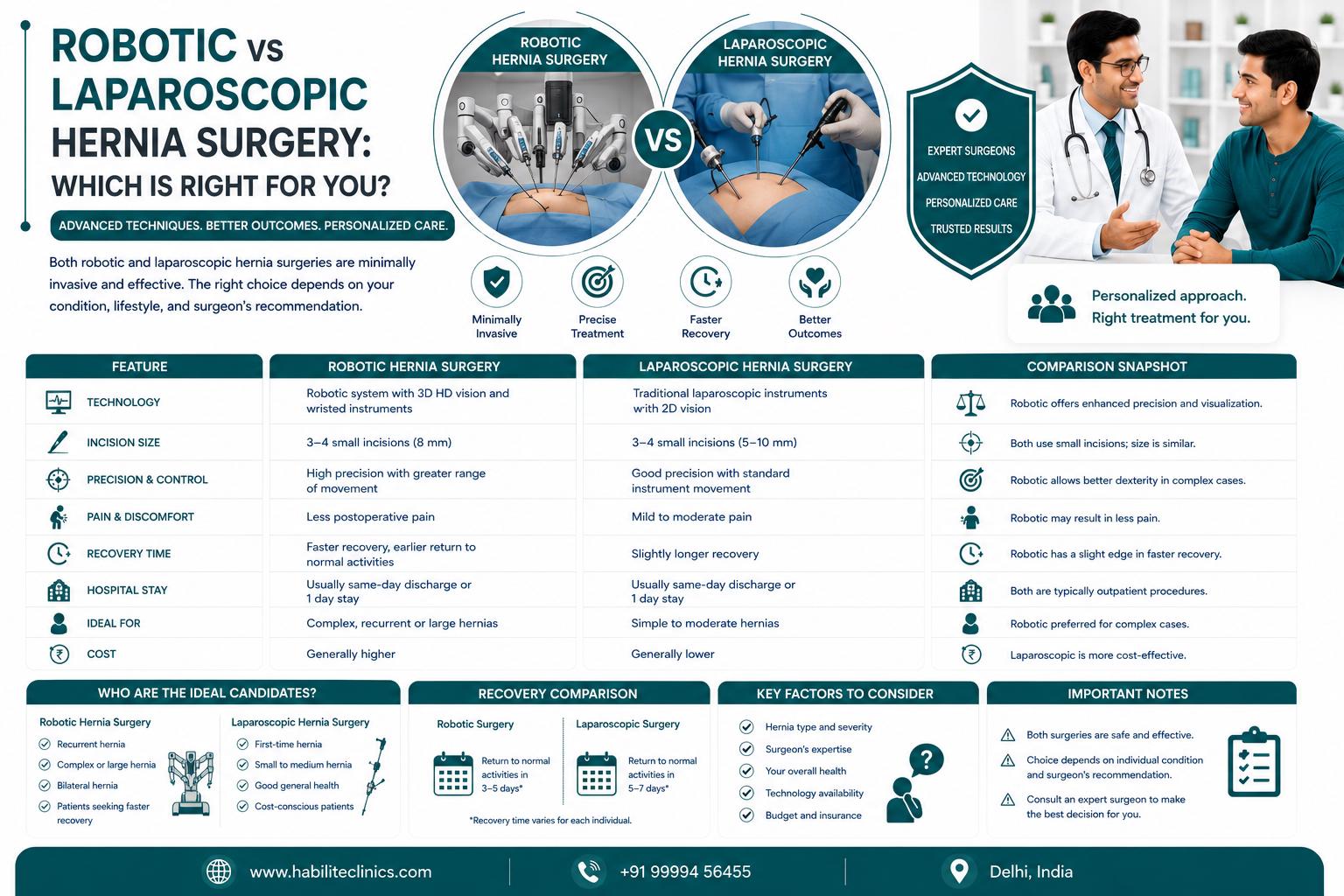
Robotic vs Laparoscopic Hernia Surgery: Which Is Right for You?
Both robotic and laparoscopic hernia surgeries are minimally invasive options with smaller cuts, less pain, and faster recovery than traditional open surgery. ✓ Robotic hernia surgery offers 3D high-definition vision, greater precision with 540-degree instrument rotation, and tremor filtration for complex cases. ✓ Laparoscopic surgery is more widely available, more affordable (₹40,000-50,000 less expensive), and equally effective for most standard hernias. ✓ Dr. Kapil Agrawal and our team at Habilite Clinics offer both techniques with 23+ years of surgical experience. ✓ The choice between robotic and laparoscopic depends on hernia type, complexity, prior surgeries, patient health, and cost considerations—not all patients need robotic surgery. ✓ Both procedures have been covered by health insurance in India since 2019 under IRDAI guidelines, making advanced minimally invasive surgery accessible to more patients.
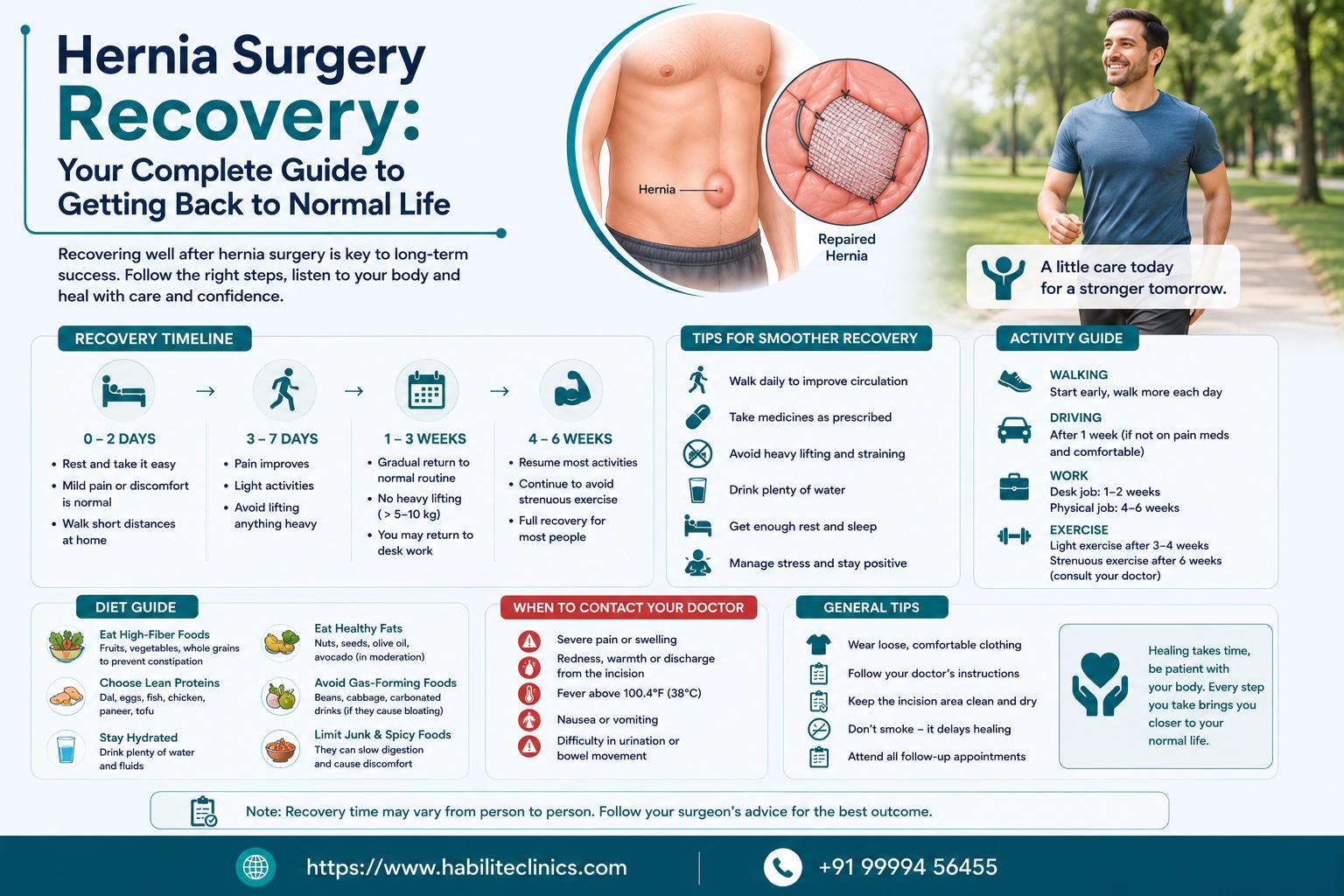
Hernia Surgery Recovery: Your Complete Guide to Getting Back to Normal Life
Recovery varies by surgery type: Laparoscopic hernia surgery recovery takes 1-2 weeks for light activities, while open surgery may need 4-6 weeks Early movement is essential: Walking within hours of surgery prevents blood clots and speeds healing. Complete bed rest is outdated and harmful You can eat normal food, use Indian toilets, and don't need months of rest after modern hernia surgery A protein-rich diet accelerates healing: Focus on eggs, dal, chicken, and fish to rebuild muscle strength after surgery Warning signs need immediate attention: Sudden severe pain, fever above 101°F, or inability to pass gas requires urgent medical care Return to work depends on your job: Desk jobs allow return in 1-2 weeks; manual labor jobs need 4-6 weeks recovery