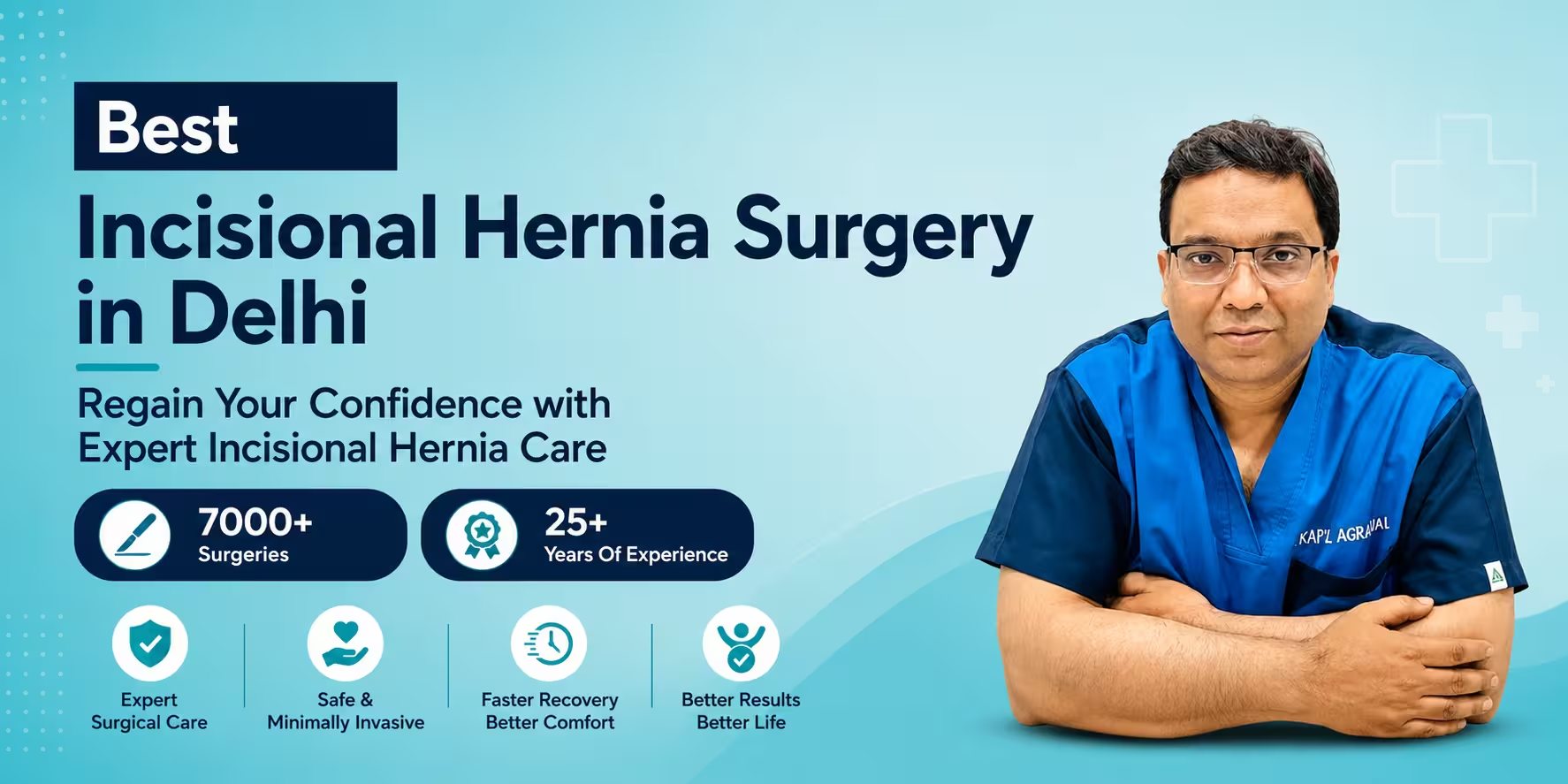
Incisional Hernia Surgery in Delhi - Laparoscopic & Robotic
You had surgery months or years ago. You recovered well, moved on with your life — and then one day, you noticed a soft bulge near your old scar. It may have appeared while coughing, straining, or simply getting up from bed. If this sounds familiar, you may be dealing with an incisional hernia. It's more common than most people realise, and the good news is: it's very treatable.
Dr. Kapil Agrawal, a senior laparoscopic and robotic surgeon with 23+ years of experience, offers specialised incisional hernia surgery in Delhi at Habilite Clinics — with a focus on permanent repair, low recurrence, and getting you back to your life quickly.
Book Consultation
Schedule a consultation for Incisional Hernia Surgery with Dr. Kapil Agrawal
What is an Incisional Hernia — and Why Did It Happen to You?
After any abdominal surgery — whether it was for a C-section, appendix removal, gallbladder surgery , or any other procedure — your surgeon closes your muscle wall with sutures. Most of the time, this heals well. But sometimes, the muscle wall doesn't fully heal, or the sutures gradually give way under pressure. Over time, a gap forms, and the tissue or intestine inside your abdomen can push through it — creating that soft, noticeable bulge at the scar site.
This is called an incisional hernia. It is not a failure on your part. It is a known complication of abdominal surgery that affects roughly 10–15% of patients at some point after their procedure.
What makes it more likely to happen:
- Surgeries involving long midline incisions (like open hysterectomy or bowel surgery)
- Infection at the wound site after the original surgery
- Straining too early during recovery — heavy lifting, chronic cough, constipation
- Obesity, which puts constant pressure on the abdominal wall
- Diabetes, smoking, or nutritional deficiencies that slow down healing
- Multiple previous surgeries at the same site
The bulge may start small and painless. But incisional hernias rarely stay that way. They tend to grow — slowly but steadily — and the complications they can cause are serious.
Symptoms of Incisional Hernia
Common Symptoms
Most patients with an incisional hernia describe one or more of the following:
- A bulge or swelling near an old surgical scar — especially noticeable when you stand up, cough, or strain
- Pain or discomfort at the site — a dragging, aching, or burning sensation that gets worse during activity
- A feeling of pressure or heaviness in your abdomen, particularly after meals or long periods of standing
- The bulge temporarily disappears when you lie flat, but returns when you get up
- Nausea or difficulty passing stools if the intestine is involved
Warning Signs
If any of the following occur, do not delay. Call us immediately or go to the nearest emergency room:
- The bulge becomes suddenly very painful, hard, or reddish
- You cannot push the bulge back in (when it was possible before)
- You feel nauseous, start vomiting, or notice your abdomen is swollen
- You haven't passed stools or gas for several hours alongside the above
These signs may indicate a strangulated incisional hernia — where the trapped tissue is losing its blood supply. This is a surgical emergency.
"The bulge was small and didn't bother me much for about two years. I thought I could manage. Then one evening it became extremely painful and hard — I ended up in emergency surgery that night. I wish I had gotten it checked earlier."
— Patient, Habilite Clinics (shared with consent)
How We Diagnose an Incisional Hernia at Habilite Clinics
Getting the right diagnosis is the first step to the right treatment. Dr. Kapil Agrawal takes a thorough, unhurried approach to every consultation. Here's what to expect:
Physical Examination
Dr. Agrawal will examine the bulge carefully — its size, location, consistency, and whether it can be gently reduced. He will ask you about your previous surgeries, when the bulge appeared, and what makes it better or worse.
Imaging (if needed)
For larger or complex hernias, or when the diagnosis is uncertain, an ultrasound or CT scan of the abdomen helps map the exact size, contents, and boundaries of the hernia. This is especially important when planning laparoscopic or robotic repair, where precise pre-operative information leads to better surgical decisions.
Medical and Surgical History Review
Understanding your previous surgery — what procedure was done, how long ago, how the wound healed, and any infections — helps predict the complexity of repair and allows us to plan the safest approach for you.
Incisional Hernia Treatment in Delhi
Important note first: Incisional hernias do not resolve on their own. Surgery is the only permanent treatment. Wearing a truss or belt may temporarily contain the bulge but does not fix the defect, and delays can increase the risk of complications. The sooner a straightforward hernia is repaired, the simpler and safer the surgery tends to be.
At Habilite Clinics, Dr. Kapil Agrawal offers three surgical approaches for incisional hernia repair. The choice depends on the size of your hernia, your medical history, body weight, and his assessment of what will give you the best long-term outcome.
1. Laparoscopic Incisional Hernia Repair (Keyhole Surgery)
This is the most commonly performed approach at Habilite Clinics for incisional hernias. Instead of reopening your old scar, Dr. Agrawal makes 2–3 small keyhole incisions, inserts a thin camera and instruments, and repairs the defect from the inside using a surgical mesh. The mesh reinforces the weakened abdominal wall and significantly reduces the chance of the hernia coming back.
Why patients prefer it:
- No large incision — the old scar is left undisturbed
- Less post-operative pain compared to open repair
- Lower risk of wound infection
- Most patients go home within 24 hours
- Return to light activity within 1–2 weeks
Laparoscopic incisional hernia repair in Delhi is particularly suitable for small to medium-sized hernias in patients who are otherwise fit for surgery.
2. Robotic-Assisted Incisional Hernia Repair
For larger defects, complex abdominal wall reconstructions, or cases where previous surgeries have left significant scarring, Dr. Agrawal recommends robotic-assisted repair. Using the da Vinci robotic system, this approach gives the surgeon 3D magnified vision and instruments that move with far greater range and precision than the human hand can achieve in a keyhole approach.
This is especially relevant for an advanced technique called eTEP (Enhanced-View Totally Extraperitoneal) repair, which allows reconstruction of the entire abdominal wall — restoring the muscles to their natural midline position rather than simply covering the gap with a mesh patch.
Ideal for:
- Large or recurrent incisional hernias
- Complex abdominal wall defects requiring component separation
- Patients who have had previous failed repairs
- Cases where minimising recurrence is the top priority
What patients experience:
- Smaller incisions even for large repairs
- Significantly less post-operative pain
- Faster return to normal activity
- Very low recurrence rates with experienced robotic surgery
3. Open Incisional Hernia Repair
This is the traditional approach — making an incision directly over the hernia, repairing the defect, and reinforcing it with mesh. While laparoscopic and robotic techniques are now preferred at Habilite Clinics, open repair remains an important option in specific situations:
- Very large hernias where the abdominal contents need to be carefully reduced
- Emergency surgery (strangulated hernia)
- Patients in whom a minimally invasive approach is not safe due to prior adhesions or medical conditions
Dr. Agrawal will always explain which approach he recommends for you and why — and will take the time to answer your questions before you make a decision.
Why Mesh Quality Matters in Incisional Hernia Repair
One question patients rarely ask — but should — is: what kind of mesh will be used?
Mesh is the central pillar of any incisional hernia repair. It reinforces the weakened abdominal wall and prevents the hernia from coming back. But not all mesh is the same. Mesh that is poorly positioned, incorrectly sized, or of substandard quality is one of the leading reasons hernias recur or patients experience chronic pain after surgery.
At Habilite Clinics, we use only internationally certified, high-quality surgical mesh — chosen specifically for the type, size, and location of your hernia. The mesh is carefully sized, placed, and secured to give you the strongest possible repair. This attention to detail is part of why our recurrence rates remain low.
What to Expect from Your Incisional Hernia Surgery at Habilite Clinics
Before Surgery
Once you decide to proceed, our team will guide you through:
- Pre-operative blood tests and imaging (if not already done)
- An anaesthesia consultation to assess your fitness for surgery
- Clear instructions on fasting, medications, and what to bring
- A walkthrough of what the day of surgery looks like, so there are no surprises
On the Day of Surgery
Most laparoscopic and robotic repairs are done under general anaesthesia and take 45–90 minutes depending on complexity. You will be monitored carefully throughout. Dr. Agrawal will update your family immediately after the procedure.
Recovery After Incisional Hernia Repair
For laparoscopic and robotic repair:
- Discharge: within 24 hours in most cases (same-day discharge for select patients)
- Return to desk work: 5–7 days
- Light walking: from day 1 after surgery
- Driving: after 7–10 days (once off pain medication)
- Full activity and exercise: after 4–6 weeks
For open repair:
- Hospital stay: 2–3 days
- Return to normal activity: 4–6 weeks
- No heavy lifting for at least 6 weeks
Post-operative care that's included (free of charge):
- Follow-up consultations with Dr. Kapil Agrawal
- 24/7 emergency helpline access
- Diet and nutrition guidance
- Wound care instructions
- Personalised advice on returning to activity
For complete guide on hernia treatment , read the following page
Incisional Hernia Surgery Cost in Delhi
The cost of incisional hernia surgery in Delhi depends on several factors — the size and complexity of the hernia, the surgical technique (laparoscopic, robotic, or open), the hospital where the surgery is performed, and whether you have health insurance.
At Habilite Clinics, surgery is performed at Apollo Hospitals, Delhi NCR — which means you have access to:
- Cashless processing for most major insurance providers (TPA empanelled)
- CGHS and ECHS empanelled rates
- Transparent pricing — you receive a cost estimate before you commit to anything
For a personalised cost estimate, please fill out the form on this page or call us. We will give you a clear picture without any surprises.
For detailed information regarding the cost of laproscopic and robotic hernia surgery in delhi, read the article - hernia surgery cost in delhi
Approximate range: ₹60,000 – ₹1,75,000 depending on complexity and approach. Robotic repair is priced higher but often covered under health insurance.
Incisional Hernia Surgery Cost in Delhi
Get accurate cost estimate for your treatment
Why Patients Choose Dr. Kapil Agrawal for Incisional Hernia Surgery in Delhi
Choosing a specialist for incisional hernia repair is not the same as choosing a general surgeon for a routine procedure. Incisional hernias — particularly large, recurrent, or complex ones — require a surgeon with specific training in abdominal wall reconstruction, not just general hernia surgery.
Here is why patients with incisional hernias specifically seek out Dr. Agrawal:
Deep experience with complex cases
Dr. Agrawal has personally performed over 7,000 hernia repairs including a significant volume of complex incisional and ventral hernia reconstructions. He is trained in advanced techniques including eTEP, TAR (Transversus Abdominis Release), and robotic component separation — skills that are relevant specifically for the difficult end of incisional hernia surgery.
Internationally trained and credentialled
MRCS (London) and MMed (Singapore) mean his surgical training has been evaluated against international standards — not just domestic ones. He stays current with global advances in hernia repair through CMEs and international surgical conferences.
Apollo Hospitals operating privileges
Surgery is performed at Apollo Hospitals, Delhi NCR — with full ICU backup, advanced anaesthesia, and monitoring for patients with complex medical backgrounds.
Honest, patient-first consultations
Dr. Agrawal will tell you clearly what surgery you need, why, and what the realistic outcomes are. If your hernia can safely be observed for now, he will say so. If it needs repair, he will explain exactly what that involves.
Habilite Clinics' Free Post-operative Care
We provide comprehensive free post-operative care to ensure your smooth recovery and optimal results. Our dedicated team is committed to your well-being throughout your healing journey.
Comprehensive Care
Complete post-operative support and monitoring
Expert Guidance
24/7 access to our medical team
Dedicated Support
Personalized care coordinator for each patient
Regular Follow-ups
Scheduled check-ups to ensure optimal recovery
What's Included in Our Free Post-operative Care:
- ✓Regular follow-up consultations with Dr. Kapil Agrawal
- ✓24/7 emergency support and guidance
- ✓Nutritional counseling and diet plans
- ✓Wound care and dressing assistance
- ✓Medication management and adjustments
- ✓Progress monitoring and recovery assessment
Chat with Expert for Free
Get instant answers to your questions from our medical experts via WhatsApp
Frequently Asked Questions About Incisional Hernia Surgery in Delhi
No. Once the muscle wall has a defect, it cannot close by itself. The hernia will either stay the same size or — more commonly — gradually enlarge over time. The only permanent treatment is surgical repair. Delaying treatment increases the risk of complications.
The most common sign is a soft bulge near a previous surgical scar — one that appears when you stand, cough, or strain, and may reduce when you lie down. It may or may not be painful. An examination by a surgeon, sometimes with an ultrasound, confirms the diagnosis.
For most patients with small to medium hernias, laparoscopic repair offers faster recovery, less pain, and a lower infection risk. For large or complex defects, robotic-assisted repair or a combination approach may give better long-term results. The best approach for you depends on your specific anatomy and history — Dr. Agrawal will guide you on this during your consultation.
With laparoscopic or robotic repair: most patients return to desk work in 5–7 days and are fully active within 4–6 weeks. Open repair requires a longer recovery of 4–6 weeks before returning to normal activity.
The cost typically ranges from ₹60,000 to ₹1,75,000 depending on the size of the hernia, the technique used, and your insurance coverage. Cashless insurance is available for empanelled providers at Apollo Hospitals.
Recurrence is possible, but it is significantly lower with mesh-based repair done by an experienced surgeon. Factors like obesity, smoking, and physical strain during recovery can increase the risk. Dr. Agrawal discusses lifestyle modifications and post-operative precautions to help keep your repair lasting for life.
Yes. Modern surgical meshes used in hernia repair are well-studied, biocompatible, and approved for use internationally. At Habilite Clinics, only certified, high-quality mesh is used — matched to the specific requirements of your repair.
Yes, this is very possible. Incisional hernias can appear months or even years after a C-section or any abdominal surgery. The Pfannenstiel scar (the horizontal scar from a C-section) is a common site for hernias in women. We see many patients with exactly this presentation at Habilite Clinics.
For laparoscopic and robotic repairs, most patients are discharged within 24 hours. In some cases — particularly for insured patients or those who prefer an overnight stay for comfort — a one-night admission is arranged. Open repair typically requires 2–3 days.
Small hernias may remain stable for years — but the risk of complications grows over time. A hernia can suddenly become incarcerated (stuck, unable to be pushed back), or worse, strangulated (blood supply cut off). Both are surgical emergencies. Early, planned repair is far safer than emergency surgery.
Related Incisional Hernia Blogs
Expert insights, tips, and guides about incisional hernia
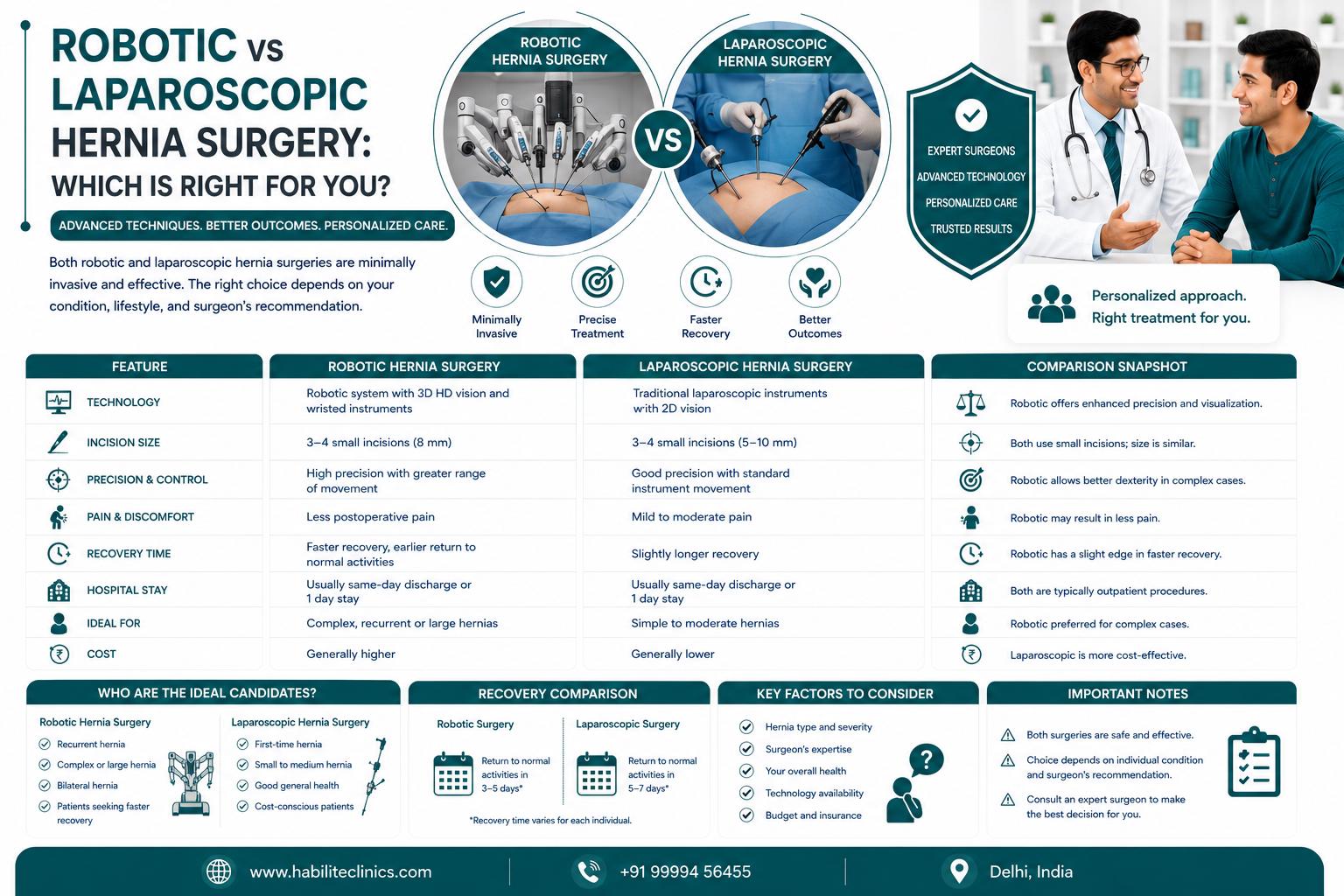
Robotic vs Laparoscopic Hernia Surgery: Which Is Right for You?
[object Object],[object Object],[object Object],[object Object],[object Object],[object Object]
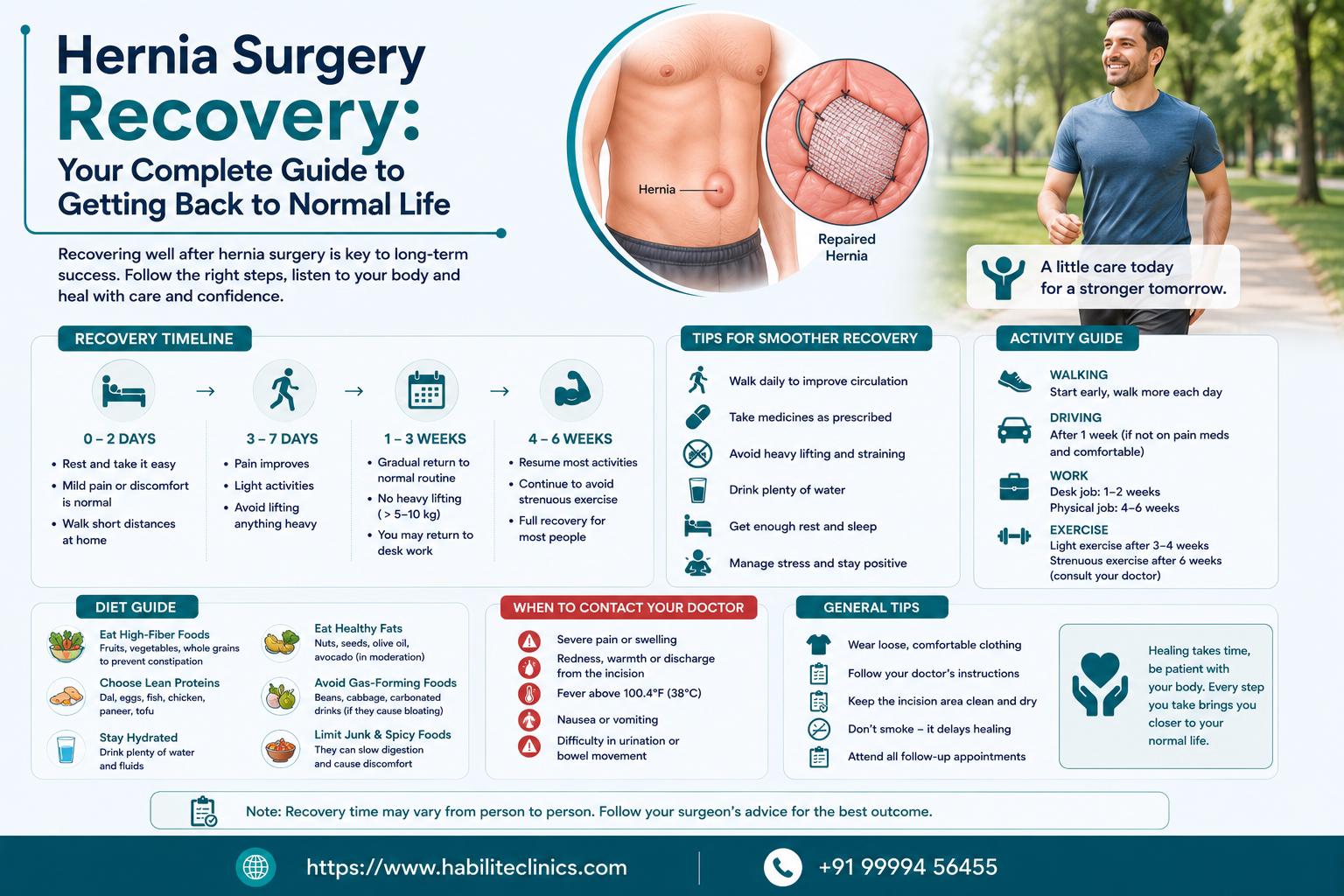
Hernia Surgery Recovery: Your Complete Guide to Getting Back to Normal Life
[object Object],[object Object],[object Object],[object Object],[object Object],[object Object]
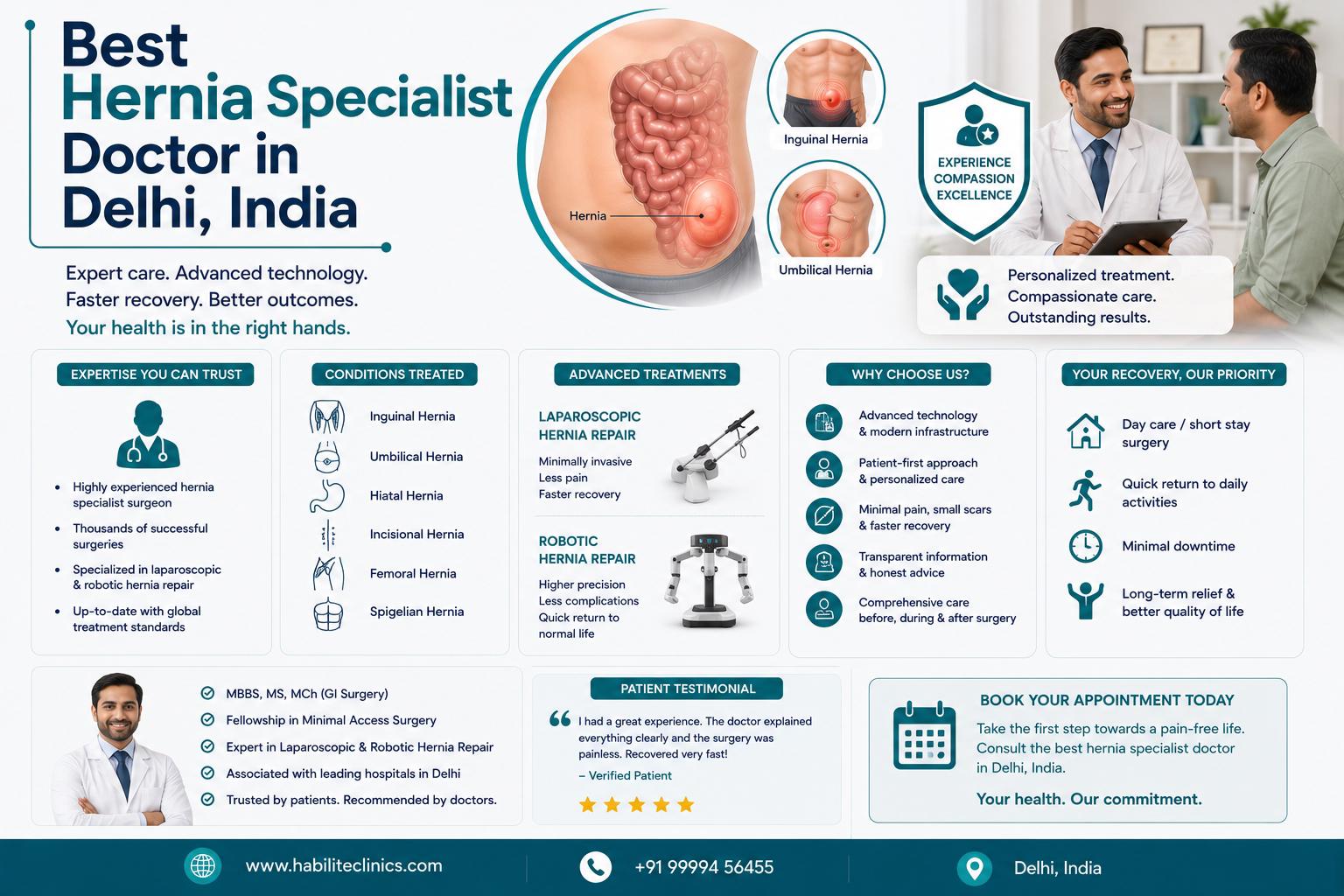
Best Hernia Specialist Doctor in Delhi, India
[object Object]