Best Revision Bariatric Surgery in Delhi
Did your first weight loss surgery not work out? You are not failing. The surgery may have failed you. This happens more than people think. Doctors worldwide are doing more revision bariatric surgeries each year. In the US, revision surgeries now make up almost one in six bariatric operations.
At Habilite Clinics in South Delhi, Dr. Kapil Agrawal has guided thousands of patients through weight loss. Some needed a second surgery to get there. He has over 23 years of experience and has done more than 7,000 small-cut surgeries. He knows revision surgery needs a different skill set than a first surgery.
This guide covers what revision bariatric surgery means, who needs it, what it costs in Delhi, the real risks, and the success rates you can expect. If you have been searching for revision bariatric surgery in Delhi, this page walks you through everything you need to know before you decide.
Expert Revision Surgery
Comprehensive Evaluation
Multi-Disciplinary Approach
Book Consultation
Schedule a consultation for Revision Bariatric Surgery with Dr. Kapil Agrawal
What Is Revision Bariatric Surgery?
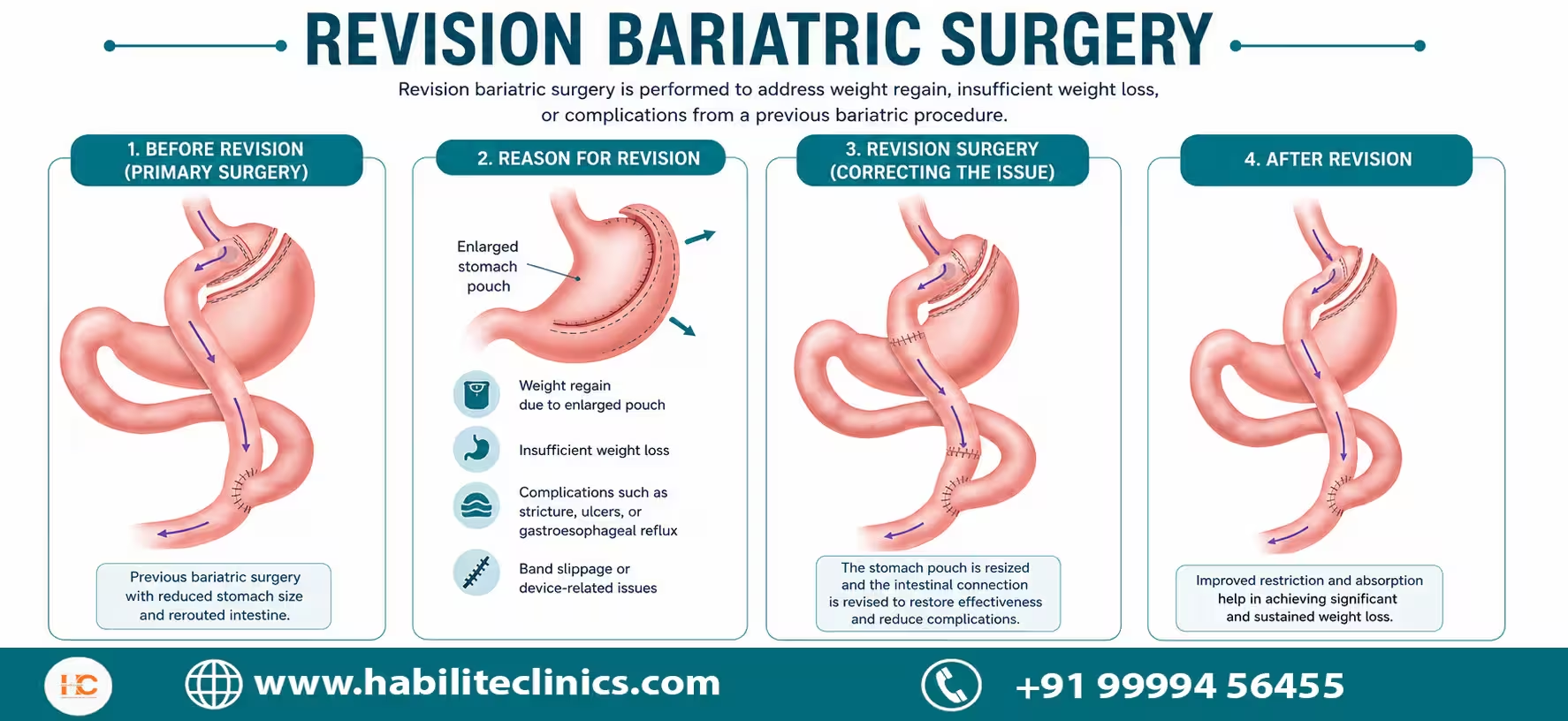
Revision bariatric surgery is a second surgery. It happens when an earlier weight loss surgery did not work as planned. Doctors sort these into three types.
The first is conversion. You change one surgery into another. A gastric sleeve can become a gastric bypass, for example. The second is correction. You fix a problem without changing the surgery type. A stretched pouch gets trimmed back down. The third is reversal. This undoes the first surgery and returns the stomach close to normal. This is rare. Doctors use it only for serious problems.
"Revision surgery is not about giving up. It is about giving your body a real chance to do what the first surgery was meant to do."
— Dr. Kapil Agrawal
Signs You May Need Revision Bariatric Surgery
Talk to a surgeon if any of these sound like you:
- You have regained more than 10 to 15% of the weight you lost.
- You lost less than half your excess weight within 18 months of surgery.
- You have bad acid reflux that medicine cannot fix.
- Your gastric band has slipped or eroded.
- Food gets stuck, or swallowing feels hard.
- You vomit often, or you cannot keep food down.
- Blood tests show low iron, B12, or calcium.
- A scan shows your pouch or sleeve has stretched out.
Even one of these is worth a check-up. Not every patient with these signs needs another surgery. Diet changes or medicine fix many problems. But you deserve a proper look, not months of guessing.
Why Does Bariatric Surgery Sometimes Stop Working?
Bariatric surgery is one of our best tools against morbid obesity. But no surgery is perfect.
- Sometimes the first pouch was made too large. A bigger pouch holds more food. More food means slower weight loss.
- Sometimes the surgery is not the problem at all. Old habits sneak back in. Portions grow again. Workouts stop. Over time, even a well-done surgery can lose the fight against daily habits.
- And sometimes, the wrong surgery was picked from the start. A patient with bad diabetes or reflux may have done better with a bypass instead of a sleeve.
"We see all three patterns in our clinic. The first step is always finding out why the surgery did not work. We figure that out before we even discuss a revision."
— Dr. Kapil Agrawal
How We Check You Before Revision Surgery
Before we recommend a revision, we run a full check-up. This often means an endoscopy, a small camera test that looks inside your stomach. We may also order a barium study, an X-ray test that tracks how food moves through your gut.
- Endoscopy to look inside the stomach and pouch
- Barium study to track how food moves through your gut
- Blood tests to check for low nutrients
- A full review with our nutritionist
- A mental health check, if stress eating played a role
We also weigh your case against the 2022 ASMBS and IFSO guidelines. These global standards use Asian-specific BMI cutoffs. That matters in India. Health risks from extra weight often show up at a lower BMI here than in Western countries. Only after this full picture do we sit down and talk. We discuss whether revision makes sense. And if it does, which type fits your case.
Types of Revision Bariatric Surgery We Perform
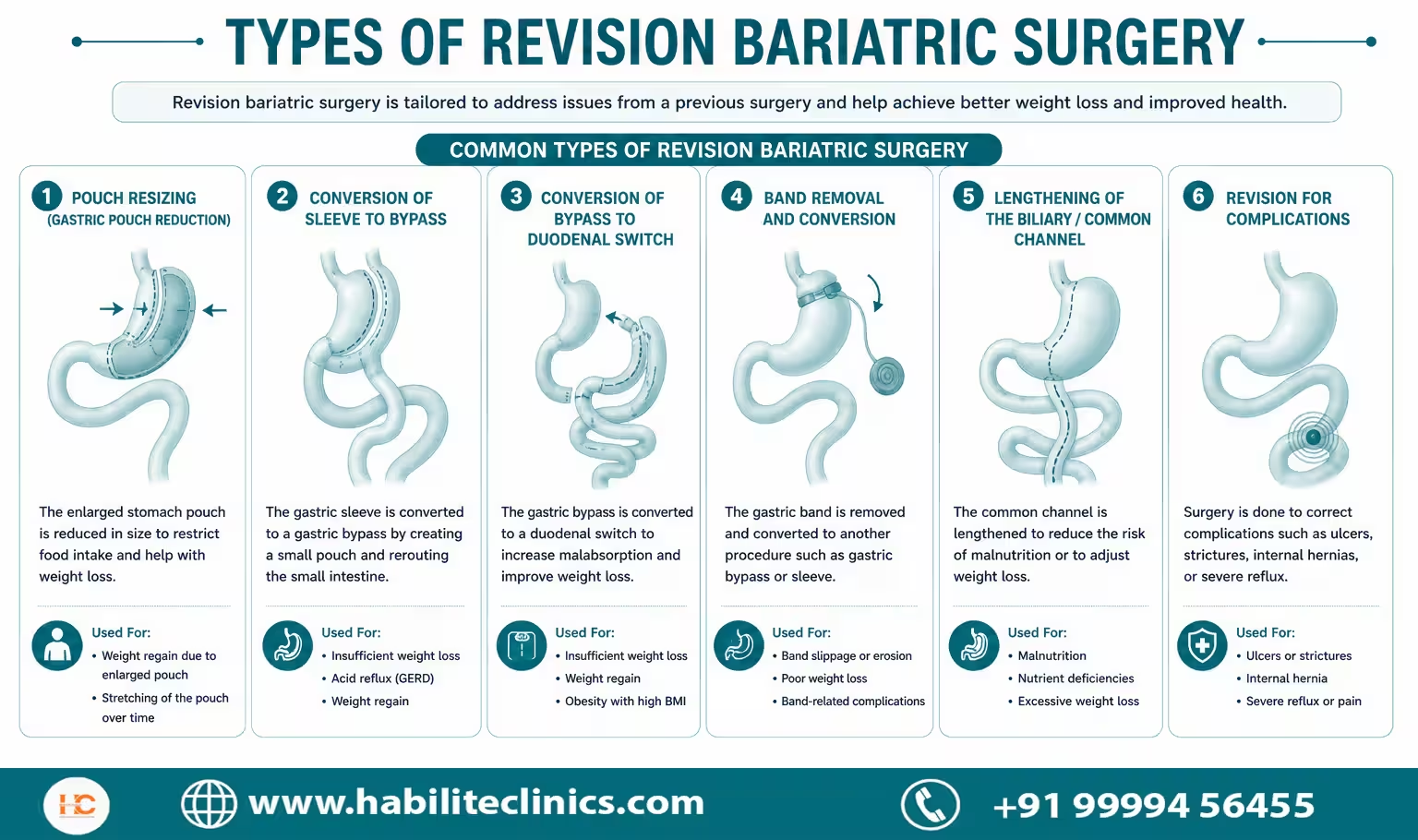
There is no single procedure that suits everyone. We match the method to your past surgery and your goals. Here are the main options we use.
If You Had Gastric Band Surgery
Bands have fallen out of favor. They often slip, erode, or just stop working. If this happened to you, we often remove the band first. Then, based on your case, we move to a sleeve or bypass. Sometimes in the same operation. Sometimes as a planned second step.
If You Had Sleeve Gastrectomy
A sleeve can stretch out over time, especially if old eating habits return. Based on your scans, we may redo the sleeve and trim it back to size in select cases. Or we convert it to a gastric bypass or a mini gastric bypass. For more complex cases, we may convert it to a duodenal switch or a SADI-S procedure. Research shows converting to a SADI-S or mini gastric bypass often leads to more weight loss than a standard bypass alone. Still, the right choice depends on your body, your health, and your goals.
If You Had Gastric Bypass
Sometimes your first pouch has stretched. Or the joint between the pouch and intestine has widened. We can resize the pouch. We can lengthen the bypassed part of your intestine. In some cases, we convert your surgery to a duodenal switch for extra weight loss.
What Sets Our Revision Approach Apart
Revision surgery is not a beginner's job. It needs a surgeon who has seen enough scar tissue to spot it before it surprises him in the operating room.
Full Check-Up First
No patient gets a second surgery without checks first — endoscopy, imaging, and a clear answer for why the first surgery fell short.
Multi-Disciplinary Team
Our team includes bariatric physicians, endocrinologists, nutritionists, and counselors. Weight regain rarely has one single cause.
Non-Surgical Options First
If diet changes or medical weight loss support can help without another operation, that is what we suggest.
Personalised Plans
There is no fixed package here. Your body, your past surgery, and your goals shape the plan — not a one-size-fits-all approach.
Success Rate of Revision Bariatric Surgery
What Counts as Success?
Doctors often call a revision a success if you lose at least half your excess weight. Research on gastric bypass revision patients found that about 6 in 10 hit this mark at one year. By three years, about 7 in 10 had reached it. Patients who convert from a sleeve to a bypass often lose 50 to 70% of their excess weight within 12 to 18 months.
Newer Revision Options
A 2025 study compared different revision paths after sleeve gastrectomy. Converting to a SADI-S or a mini gastric bypass led to more weight loss than converting to a standard bypass. But numbers only tell half the story.
Your result depends on three things: the surgery chosen for your case, the skill of your surgical team, and how closely you stick to your diet plan after. Surgery resets your body. What you do with that reset is still up to you.
What Is the Best Surgery for Your Revision?
There is no one-size-fits-all answer. For most uncomplicated cases after a sleeve, converting to a bypass or mini bypass often gives strong results. For a stretched bypass pouch, resizing may be enough. For band complications, removal with conversion is usually the path. Dr. Kapil Agrawal plans every case to the 2024 guidelines, then personalises.
Revision Bariatric Surgery Recovery Time
Recovery after a revision often takes a bit longer than after a first surgery. Most patients stay in hospital for 2 to 4 days. A first-time surgery often means just 1 to 2 days. Here is a typical timeline:
| Stage | What to expect |
|---|---|
| Hospital stay | Usually 2 to 4 nights. You start on clear liquids the day after surgery. |
| Week 1 | Clear liquids, then pureed food. Mild discomfort is normal. |
| Weeks 2–3 | Move to soft foods. Many desk-job patients return to work. |
| Weeks 4–6 | Gradually reintroduce solid foods. Light exercise resumes. |
| After 6 weeks | Heavy lifting and workouts resume once cleared at follow-up. |
We schedule check-ins at 1 week, 1 month, 3 months, 6 months, and then every 6 to 12 months. These are not optional extras. They help us catch small problems early, before they grow into bigger ones. You can also read more about life after bariatric surgery.
Life After Revision Surgery: Making It Last
A revision gives you a second chance. It does not promise a different outcome unless your habits change too.
- Our nutrition team builds your plan around foods you already eat — dal, paneer, eggs, lean meat, roti and rice in smaller amounts.
- Vegetables like lauki, bhindi, and palak add fiber without many calories.
- Fruits like guava and papaya are gentle on a small stomach.
- Sleep quality, stress levels, and the reason behind your eating all matter.
- Stress eating rarely fixes itself on its own. If it drove your weight regain before, it needs real support this time.
Protein is the priority at every stage. We also monitor your vitamins, including B12, iron, calcium and vitamin D, to keep your body well-nourished as the weight comes off.
Revision Bariatric Surgery Cost vs First-Time Surgery
When people search for revision bariatric surgery cost in Delhi, the numbers online vary a lot. Here is what we often see:
| Procedure | Typical cost range (Delhi) |
|---|---|
| Revision bariatric surgery | ₹3,50,000 to ₹6,50,000 |
| First-time bariatric surgery | ₹2,50,000 to ₹4,50,000 |
Why the gap? Revision surgery takes more time. Scar tissue makes the work harder. You may also need a longer hospital stay. Your exact cost depends on the type of revision, keyhole or robotic surgery, your room type, any extra health issues we manage, and tests and follow-up visits. Get a personal quote at your visit. Many health insurance policies cover revision surgery when medically indicated. Our team helps you understand your coverage and assists with the paperwork.
Are There Any Risks of Revision Bariatric Surgery?
Revision surgery is not as safe as your first surgery. It carries more risk. That is the truth. Scar tissue makes the body harder to work with. Surgery runs longer. Studies on revision patients show more bleeding, more leaks, and more repeat operations than after first-time surgery.
- Leaks at the staple line
- Bleeding
- Infection
- Low nutrient levels, mainly after surgeries like duodenal switch or SADI-S
- A longer recovery
- Rarely, the need for one more operation
"I tell each revision patient the same thing. I will not soften the risk to make you feel better. I will tell you the truth. Then I will use all my training to bring that risk down for you."
— Dr. Kapil Agrawal
Best Revision Bariatric Surgery in Delhi: Cost
Revision bariatric surgery in Delhi often costs ₹3,50,000 to ₹6,50,000, depending on the hospital, the surgeon's experience, the type of room, and the complexity of your case. For a detailed breakdown of every factor that affects pricing, see our complete guide to bariatric surgery cost in Delhi.
Many health insurance policies in India now cover bariatric surgery when it is medically indicated, including revision cases. Our team helps you understand your coverage and assists with the paperwork. During your consultation, we provide a clear, itemised estimate with no hidden charges.
Revision Bariatric Surgery Cost in Delhi
Get accurate cost estimate for your treatment
Why Choose Dr. Kapil Agrawal for Revision Bariatric Surgery in Delhi?
Choosing the right surgeon is the most important decision you will make on this journey. Here is why patients across Delhi NCR trust Dr. Kapil Agrawal and the team at Habilite Clinics:
- Senior Consultant Bariatric Surgeon at Apollo Hospitals, Delhi NCR, with 23+ years of surgical experience.
- Internationally trained: MBBS, MS (Surgery), MRCS (London) and MMed (Singapore).
- Over 7,000 minimally invasive and laparoscopic procedures performed.
- Runs a full check-up before recommending revision — endoscopy, imaging, and a clear answer for why the first surgery fell short.
- Works with a full team: bariatric physicians, endocrinologists, nutritionists, and counselors.
- Talks about non-surgical options first when they can help without another operation.
- Two convenient clinic locations in South Delhi – Lajpat Nagar and Hauz Khas.
If you have been searching for revision bariatric surgery near me, our two South Delhi clinics make expert bariatric care easy to reach from anywhere in Delhi NCR. From your first consultation to years after surgery, our promise is simple: honest advice, world-class surgical care and a team that walks the whole journey with you.
"Every patient who comes to me for a revision has already been through one surgery and one disappointment. My job is to make sure they do not have to go through a second one." — Dr. Kapil Agrawal. Ready to take the first step? Book a consultation with Dr. Kapil Agrawal at Habilite Clinics to find out whether revision surgery is right for you.
Recovery & Aftercare
Recovery Time
Most patients stay in hospital for 2 to 4 days after revision bariatric surgery. Full recovery typically takes 2 to 4 weeks with gradual return to normal activities. Heavy lifting needs 4 to 6 weeks of healing.
Follow-up Care
Regular follow-up appointments at 1 week, 1 month, 3 months, 6 months, and then every 6 to 12 months. Our multi-disciplinary team including bariatric physician, endocrinologist, nutritionists and psychologists help ensure optimal results.
Lifestyle Support
Our team provides comprehensive support including lifestyle modifications, healthy eating habits built around Indian meals, and physical activity guidance to help you achieve and maintain successful weight loss after revision.
Habilite Clinics' Free Post-operative Care
We provide comprehensive free post-operative care to ensure your smooth recovery and optimal results. Our dedicated team is committed to your well-being throughout your healing journey.
Comprehensive Care
Complete post-operative support and monitoring
Expert Guidance
24/7 access to our medical team
Dedicated Support
Personalized care coordinator for each patient
Regular Follow-ups
Scheduled check-ups to ensure optimal recovery
What's Included in Our Free Post-operative Care:
- ✓Regular follow-up consultations with Dr. Kapil Agrawal
- ✓24/7 emergency support and guidance
- ✓Nutritional counseling and diet plans
- ✓Wound care and dressing assistance
- ✓Medication management and adjustments
- ✓Progress monitoring and recovery assessment
Chat with Expert for Free
Get instant answers to your questions from our medical experts via WhatsApp
Contact Dr. Kapil Agrawal Today
Throughout every step of your bariatric surgery revision, our specialist team will be there to support you. We understand the emotional turmoil one has to undergo after a failed procedure. We are here to offer you hope with a safe, successful second surgery!
Book your appointment with Dr. Kapil Agrawal, one of the best bariatric surgeon in Delhi, India today to schedule your consultation.
You can contact us on:
+91-9910024564, +91-9999456455
Frequently Asked Questions
Common questions about revision bariatric surgery
It is a second weight loss surgery. Doctors use it when an earlier surgery did not work as planned. It may change your surgery type, fix a problem, or in rare cases, undo the first surgery.
Weight regain is the most common sign. Others include bad acid reflux, food getting stuck, or frequent vomiting. Low iron or B12 on a blood test is also a sign. A check-up will confirm if you need one.
Yes, it carries more risk than a first surgery. Scar tissue makes the work harder and slower. Studies show slightly higher rates of bleeding and leaks. Surgeon skill brings this risk down a great deal.
Most doctors call it a success if you lose at least half your extra weight. About 6 in 10 patients reach this mark in year one. By year three, about 7 in 10 get there.
It often costs between ₹3,50,000 and ₹6,50,000. The exact cost depends on your surgery type, your hospital stay, and any extra tests you need. Always ask for a clear quote at your visit.
Many Indian insurers cover it when there is a real medical need. Cosmetic cases are usually not covered. Rules differ by insurer and plan. Check your policy, or ask our team to help you read it.
Yes, in many cases. Some surgeons do this in one operation. Others remove the band first, then wait a while before the second surgery. Your case and your scans decide which path is safer.
Most people stay in hospital for 2 to 4 days. That is a bit longer than a first surgery. Light tasks return in 1 to 2 weeks. Heavy lifting and workouts need 4 to 6 weeks of healing.
There is no fixed wait time for everyone. It depends on why the first surgery did not work and how well your body has healed. Most surgeons wait at least 12 to 18 months unless it is urgent.
Yes. Our nutrition team will guide your meals before and after. You may need a short liquid diet right before surgery. This step shrinks your liver and makes the operation safer.
Yes, most revisions today use keyhole or robotic tools. Old scar tissue can make this part tricky. That is why you need a surgeon who has done many revisions, not just first-time surgeries.
Weight regain alone will not harm you overnight. But it often brings back diabetes, high blood pressure, and joint pain. Bad acid reflux can also hurt your food pipe over time if left alone.
Look for real, specific experience in revision cases, not just first-time surgery. Ask how many revisions the surgeon has done. Ask if they run full checks before they recommend surgery. A clear, honest answer about risk is a good sign.