Duodenojejunal Bypass Surgery in Delhi
If you have been living with type 2 diabetes for years, taking more and more medicines, and still watching your sugar levels swing every week, you are not alone. Many of our patients reach a point where tablets, insulin, and diet changes simply stop working the way they once did.
Duodenojejunal bypass surgery, often called DJB, is one of the newer metabolic procedures that can change the disease itself — not just control the numbers for a few months. Dr. Kapil Agrawal, Senior Consultant Laparoscopic, Robotic & Bariatric Surgeon at Apollo Hospitals, Delhi NCR, has performed more than 7,000 minimally invasive procedures over 23 years, including a growing number of metabolic operations like DJB.
Internationally Trained Expert
Discharge within 24 hours
Cashless Insurance Facility
Book Consultation
Schedule a consultation for Duodenal Jejunal Bypass Surgery with Dr. Kapil Agrawal
What Is Duodenojejunal Bypass Surgery?
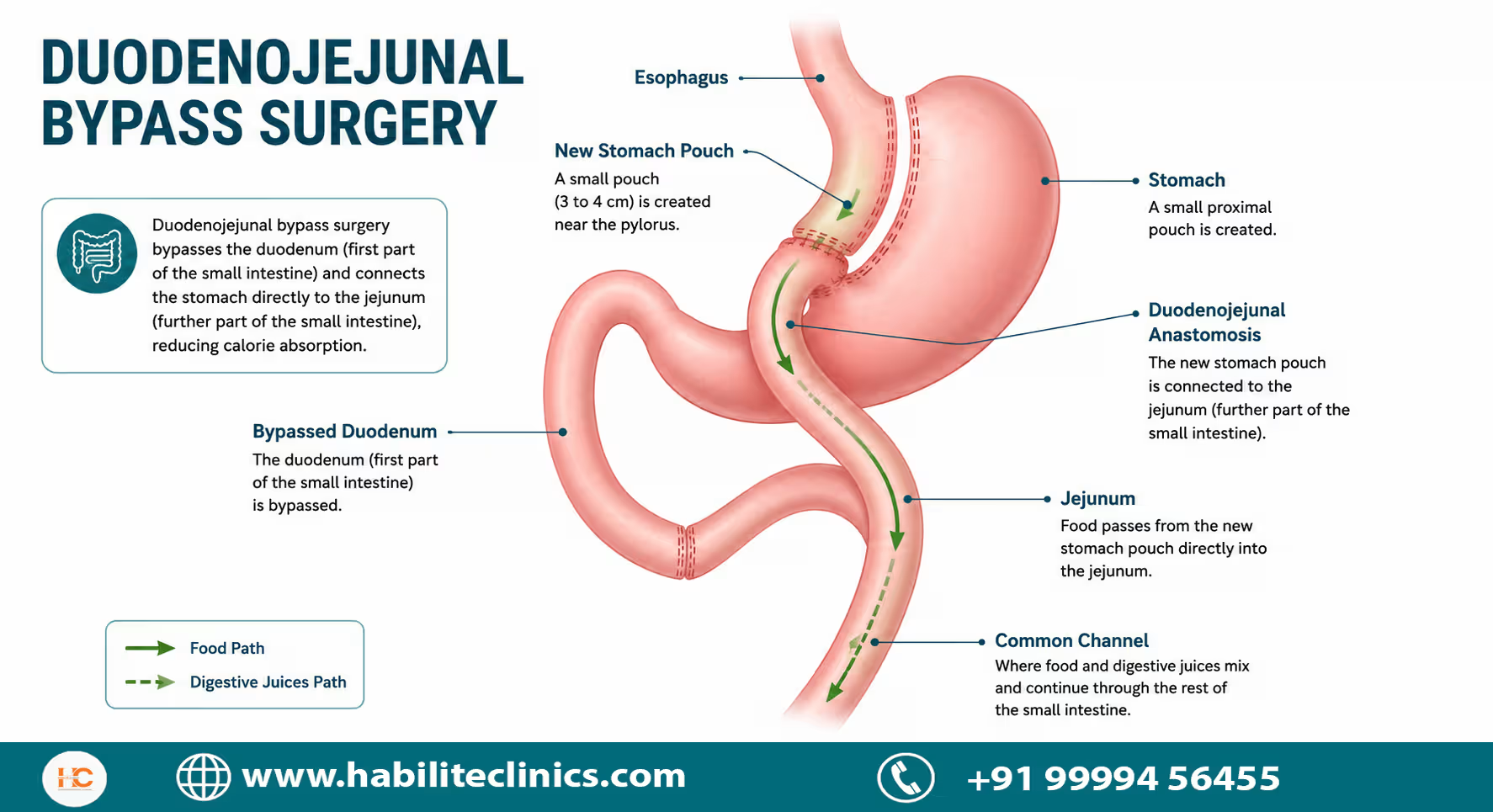
Duodenojejunal bypass is a metabolic operation that bypasses two parts of your small intestine: the duodenum (the very first segment, just after the stomach) and the proximal jejunum (the next stretch).
Here is the simple picture. Your stomach stays as it is. Food still enters it normally. But instead of travelling through the duodenum, the food is redirected lower down into the jejunum. The bypassed segment is not removed; it is simply taken out of the food path. Digestive juices from the liver and pancreas still mix with the food further along.
Because nothing is cut out of the stomach, DJB does not work mainly by making you eat less. It works by changing the hormonal signals that the small intestine sends to your pancreas, liver, and brain. This is why surgeons call it a metabolic procedure rather than a pure weight-loss procedure.
"DJB is one of the few operations where the main goal is the diabetes, not the weighing scale. Weight loss does happen, but the headline story is blood sugar control."
— Dr. Kapil Agrawal
How DJB Works: The Science in Plain Words
Your duodenum is more than just a tube. It is a busy hormone factory. When food touches its lining, it releases signals that tell the pancreas to make insulin, tell the liver to store or release sugar, and tell the brain whether you are full.
In long-standing type 2 diabetes, these signals get noisy and confused. The pancreas struggles. Insulin resistance climbs. By skipping the duodenum, DJB seems to reset many of these signals. Two hormones in particular, GLP-1 and GIP, start behaving more normally. Insulin sensitivity improves, often within days of the surgery, well before any meaningful weight loss has happened.
This rapid effect on sugar levels is one reason metabolic surgery is taken so seriously in modern diabetes care. Learn more about our surgery for diabetes programme.
Who Is Eligible for Duodenojejunal Bypass Surgery?
DJB is not for everyone with diabetes, and it is not the first step. It is offered when medicines and lifestyle changes are no longer enough, or when the disease is already starting to damage organs.
Based on the 2022 ASMBS/IFSO international guidelines, which use Asian-specific BMI cut-offs that are stricter than the older Western numbers, we generally consider DJB in the following situations:
- Adults with type 2 diabetes that is not controlled despite medicines, including insulin
- BMI between 27.5 and 35 for people of Asian and Indian origin
- Diabetes duration usually less than 10 to 12 years, where the pancreas still has reasonable insulin reserve
- HbA1c that stays above target despite three or more oral drugs, or above target on insulin
- Patients who want to reduce or come off insulin and tablets and are ready to commit to lifelong follow-up
DJB is generally not the right choice for patients with very high BMI who need significant weight loss, very long-standing diabetes with no remaining insulin reserve, type 1 diabetes, or active eating disorders. In those cases, sleeve gastrectomy, gastric bypass, or mini gastric bypass are usually better fits, and we will say so plainly.
Duodenojejunal Bypass vs Gastric Bypass: How Are They Different?
Patients often ask this question in the first ten minutes of a consultation. The short version: if your problem is mainly diabetes and your BMI is in the lower range, DJB earns its place. If your BMI is higher and you also need substantial weight loss, gastric bypass or sleeve are usually better answers.
| Feature | DJB | Roux-en-Y Gastric Bypass | Mini Gastric Bypass |
|---|---|---|---|
| Main goal | Diabetes control | Weight loss + diabetes control | Weight loss + diabetes control |
| Stomach changed? | No, kept whole | Yes, small pouch created | Yes, long narrow pouch |
| Intestine bypassed | Duodenum + proximal jejunum | Duodenum + jejunum | Longer segment of jejunum |
| Best BMI range (Asian) | 27.5 to 35 | Above 32.5 | Above 32.5 |
| Expected weight loss | Modest (10 to 15%) | Significant (25 to 35%) | Significant (25 to 35%) |
| Diabetes remission rate | Good in selected cases | Very high | Very high |
| Nutritional risk | Low to moderate | Moderate | Moderate to higher |
| Reversibility | Easier to reverse | Difficult | Possible but complex |
The Duodeno-Jejunal Bypass Procedure: Step by Step
The operation is done laparoscopically, through four or five small cuts of about 5 to 12 millimetres. There is no large open wound.
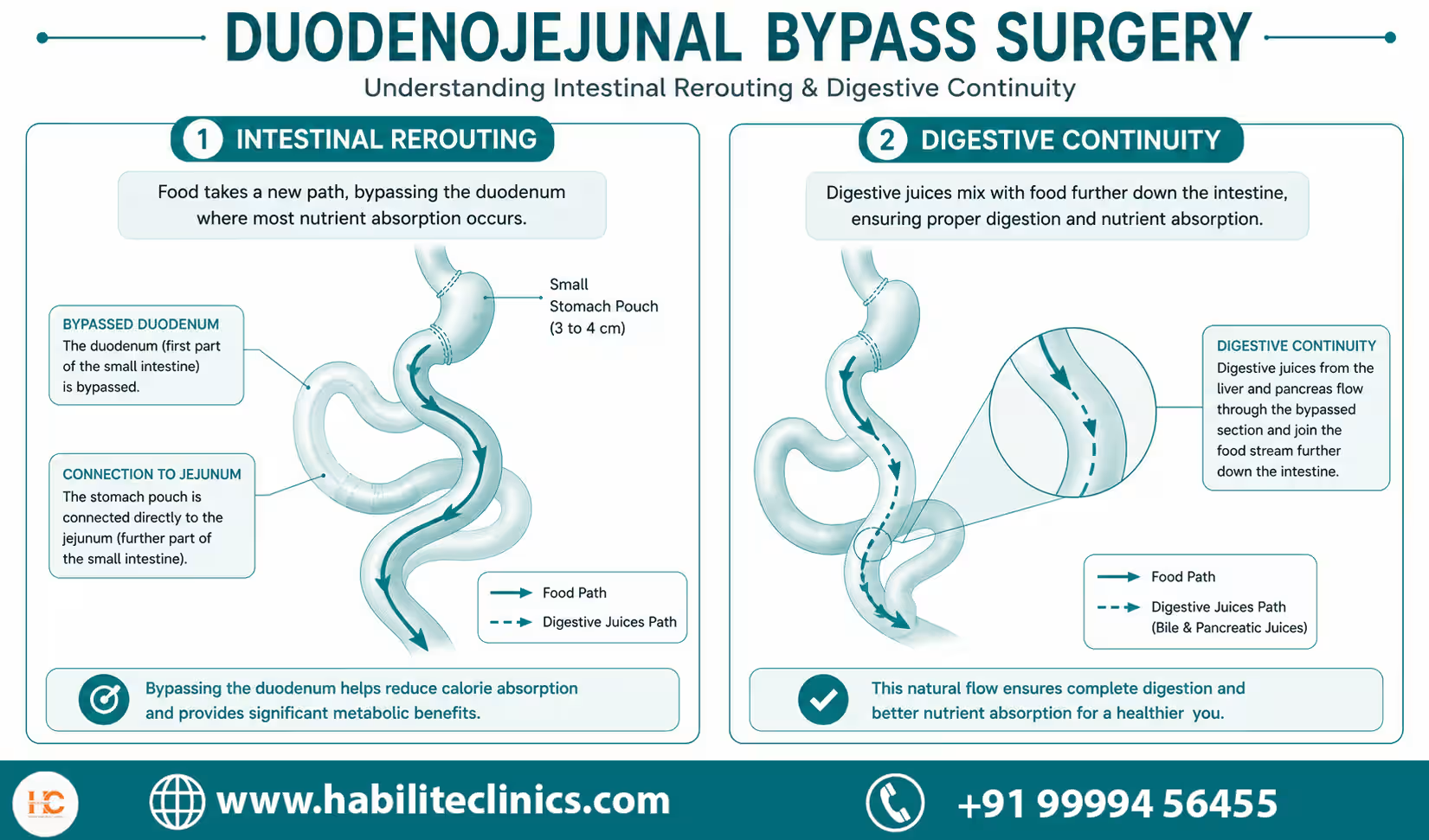
Intestinal Rerouting
Under general anaesthesia, the surgeon identifies the first part of the small intestine just below the stomach. The duodenum is divided just past the pylorus (the natural valve at the bottom of the stomach). The jejunum is brought up and joined directly to the stomach outlet.
Digestive Continuity
The bypassed segment of duodenum and upper jejunum is then reconnected further down, so digestive juices can still reach the food, just lower in the intestine. Total operating time is usually 90 to 150 minutes. Most patients are walking the same evening and discharged in 2 to 4 days.
Before Surgery: Getting You Ready
A safe metabolic operation begins weeks before you enter the operating room. Our pre-operative pathway usually includes:
- Detailed endocrine review of your diabetes history, C-peptide level and insulin reserve
- Cardiac evaluation, including ECG and echo if needed
- Liver and kidney function tests, complete blood count, thyroid profile
- Vitamin D, B12, iron, calcium and protein status
- Upper GI endoscopy to rule out ulcers or H. pylori infection
- Anaesthesia and dietitian consultation
If you are on insulin or strong oral drugs, we adjust the doses in the days before surgery to keep sugar levels stable. Smoking, if any, should stop at least 4 weeks earlier. If you are unsure whether you qualify, you can check your BMI using our Asian-Indian calculator before booking a consultation.
Recovery and Life After DJB
The first few days are about gentle movement, sips of water, and slowly building up to clear liquids. From the second week, soft foods like dal, curd, khichdi, soft idli and well-cooked vegetables come back. Solid food usually returns by week 4.
What surprises many patients is how soon the diabetes numbers start to change. A patient who came in on 60 units of insulin a day may be on 15 units within two weeks. Tablets often reduce in the same window. We do not stop medicines on our own; sugars are checked frequently and doses are tapered as the body responds.
Over the next 6 to 12 months, most patients lose 8 to 15 percent of their starting weight. The bigger win is metabolic: lower HbA1c, less insulin, better cholesterol, better blood pressure, and often less fatty liver on a scan.
Recovery Time
Most patients stay 2 to 4 nights in hospital. You can walk the same day, return to desk work in 2 to 3 weeks, and resume normal activities including light exercise in 4 to 6 weeks.
Follow-up Care
Structured check-ups at 3, 6 and 12 months and yearly thereafter. Lifelong multivitamin supplementation and metabolic labs are essential parts of long-term success.
Lifestyle Changes
Smaller portions with more focus on protein, daily multivitamins, and regular activity help maintain metabolic benefits and prevent nutritional deficiencies.
Duodenal Jejunal Bypass Surgery Cost in India
In Delhi NCR and most major Indian cities, the cost of duodenal jejunal bypass surgery typically falls in the range of ₹3,50,000 to ₹6,50,000 in a high-quality private hospital. The exact figure depends on several practical things:
- The hospital you choose and the type of room
- Whether the procedure is laparoscopic or robotic-assisted
- Pre-operative tests, especially cardiac, endocrine and nutritional work-up
- Anaesthesia time and consumables (staplers, energy devices)
- Length of hospital stay and any specific medical conditions that need extra care
Many insurance policies in India now cover metabolic and bariatric surgery when there is documented type 2 diabetes that is not controlled on medical treatment, provided the BMI and clinical criteria are met. Our team at Habilite Clinics helps patients with the insurance pre-authorisation paperwork at no extra charge.
"Treat the quoted price as a starting point, not a fixed bill. Ask for an itemised estimate. A good surgical team will give you one without hesitation."
— Dr. Kapil Agrawal
Duodenal Jejunal Bypass Surgery Cost in Delhi
Get accurate cost estimate for your treatment
Risks and Honest Trade-Offs
Every operation has risks and DJB is no exception. In experienced hands, serious complications are uncommon, but they exist and you deserve to know them:
- Bleeding or infection (less than 2 percent in most series)
- Leak from the new intestinal join (rare but serious)
- Internal hernia or bowel obstruction later in life
- Nutritional deficiencies, especially iron, B12, calcium and vitamin D
- Low blood sugar episodes if diabetes medicines are not adjusted fast enough
- Less weight loss than gastric bypass or sleeve, which can disappoint patients who expected dramatic figures
Lifelong follow-up, basic blood tests once or twice a year, and daily multivitamin supplements are part of the deal. No metabolic operation is a "fix and forget" solution.
DJB for Obesity Treatment: Where It Fits
DJB on its own is not the strongest weight-loss procedure. Patients with a BMI above 35 who want substantial weight reduction along with diabetes control usually do better with sleeve gastrectomy, gastric bypass, or mini gastric bypass. In some patients, surgeons combine DJB with a sleeve gastrectomy (a procedure called SADI-S or a sleeve-plus-DJB), which gives both strong weight loss and powerful diabetes effects. We discuss this option case by case.
For someone with a BMI of 28, an HbA1c of 9 percent on insulin, fatty liver, and a strong family history of diabetes, DJB alone is often a good middle ground. The decision is never one-size-fits-all.
How We Decide What Is Right for You
In our clinic, the first consultation is rarely about scheduling surgery. It is about asking the right questions. How long have you had diabetes? What medicines have you tried? What is your C-peptide reading? Is your pancreas still producing insulin? What is your BMI by Asian standards, not Western? Do you have fatty liver, sleep apnoea, joint problems, fertility concerns?
Only after this picture is clear do we talk about whether DJB, sleeve, gastric bypass, mini gastric bypass, or simply better medical therapy is the most honest recommendation. Our job is not to sell an operation. Our job is to help you choose the option you would still be glad you chose, five years from now.
Why Choose Dr. Kapil Agrawal for Duodenojejunal Bypass Surgery
Metabolic surgery rewards experience. The operation itself is technically demanding, and the decision-making around who needs which procedure is even more so. Here is what our patients tell us makes a difference:
- 23+ years of dedicated minimally invasive surgical practice
- 7,000+ laparoscopic and robotic procedures performed
- MRCS (London) and MMed (Singapore) qualifications, with international training in advanced metabolic and bariatric surgery
- Senior Consultant role at Apollo Hospitals, Delhi NCR, one of India's most respected tertiary centres
- Founder of Habilite Clinics, with day-care surgical facilities at Lajpat Nagar and Hauz Khas in South Delhi
- Use of Asian-specific BMI thresholds (2022 ASMBS/IFSO guidelines) rather than outdated Western cut-offs
- Multidisciplinary team that includes endocrinologists, dietitians, anaesthetists and psychologists
- Long-term follow-up programme with structured check-ups at 3, 6 and 12 months and yearly thereafter
- Transparent, itemised cost estimates and direct help with insurance pre-authorisation
If you are weighing up duodenojejunal bypass surgery, we are happy to give you a clear, unhurried opinion in person or on video, even if the final answer is that another procedure (or no surgery at all) is the better path.
Habilite Clinics' Free Post-operative Care
We provide comprehensive free post-operative care to ensure your smooth recovery and optimal results. Our dedicated team is committed to your well-being throughout your healing journey.
Comprehensive Care
Complete post-operative support and monitoring
Expert Guidance
24/7 access to our medical team
Dedicated Support
Personalized care coordinator for each patient
Regular Follow-ups
Scheduled check-ups to ensure optimal recovery
What's Included in Our Free Post-operative Care:
- ✓Regular follow-up consultations with Dr. Kapil Agrawal
- ✓24/7 emergency support and guidance
- ✓Nutritional counseling and diet plans
- ✓Wound care and dressing assistance
- ✓Medication management and adjustments
- ✓Progress monitoring and recovery assessment
Chat with Expert for Free
Get instant answers to your questions from our medical experts via WhatsApp
Learn More about Your Weight Loss Options at Habilite Clinics
Depending on your specific needs and lifestyle, Dr. Kapil Agrawal will help you decide the weight loss treatment most likely to work best for you. Contact our team of weight loss specialists today to learn more about the affordable, safe, and effective weight loss treatment options, including duodenojejunal bypass surgery for type 2 diabetes. For a deeper understanding of how excess weight affects your health, read our obesity – a complete guide.
You can contact us on:
+91-9910024564, +91-9999456455
Frequently Asked Questions
Common questions about duodenojejunal bypass surgery
Duodenal jejunal bypass is a keyhole operation that reroutes the first part of the small intestine so food skips the duodenum and upper jejunum. The stomach is left whole. It is mainly done to control type 2 diabetes by changing the hormonal signals from the gut, with some weight loss as a bonus.
No. Gastric bypass changes both the stomach and the intestine, while DJB only changes the intestine. Gastric bypass usually gives more weight loss; DJB focuses more on diabetes control in patients with lower BMI.
Adults with type 2 diabetes that is not controlled on medicines or insulin, usually with a BMI between 27.5 and 35 by Asian standards, diabetes duration under about 10 to 12 years, and a pancreas that still makes some insulin. Final eligibility is decided after blood tests, C-peptide, and a full clinical review.
In Delhi NCR, DJB typically costs between ₹3,50,000 and ₹6,50,000 at a good private hospital. The exact price depends on hospital category, room type, robotic vs laparoscopic approach, and pre-operative work-up. Many insurance plans cover the procedure for documented uncontrolled type 2 diabetes.
Many patients see a major drop in HbA1c and can stop or sharply reduce their medicines, sometimes within weeks. Full remission is most likely when diabetes is less than 10 years old and the pancreas still has good reserve. In long-standing diabetes, the goal shifts to better control with fewer medicines rather than full cure.
Most patients stay 2 to 4 nights in hospital. You can walk the same day, return to desk work in 2 to 3 weeks, and resume normal activities including light exercise in 4 to 6 weeks. Heavy lifting is avoided for about 6 weeks.
Recovery starts with clear liquids, then moves to dal water, soups, curd and soft khichdi in the first 2 weeks. Soft cooked foods like idli, paneer, well-cooked vegetables and fruits are added by week 3. By week 4 to 5, you are usually back to a normal Indian diet, with smaller portions and more focus on protein.
DJB is generally more reversible than a full gastric bypass because the stomach is untouched. The intestinal joins can be reconnected if there is a strong medical reason, although in practice this is rarely needed.
The main risks include bleeding, infection, leak from the new intestinal join, internal hernia, and long-term nutritional deficiencies like low iron, B12, calcium and vitamin D. Serious complications are uncommon in experienced centres, and daily multivitamins plus yearly blood tests keep most issues away.
Yes. A daily multivitamin with iron, B12, calcium and vitamin D is recommended for life. The doses we prescribe are modest compared with gastric bypass, but skipping them over years can cause anaemia or bone problems.
Yes. The procedure can be performed using standard laparoscopy or with robotic assistance. Robotic surgery offers a steadier view and finer control in selected complex cases. The choice depends on your anatomy, previous surgeries and overall plan, and the cost difference is discussed openly during planning.
DJB alone changes only the intestine. SADI-S (and sleeve plus DJB) combines a sleeve gastrectomy with a duodenal switch-style intestinal bypass, giving stronger weight loss along with metabolic benefits. We consider combined procedures for patients with higher BMI who also need substantial weight reduction.
Insulin sensitivity often improves within a few days, even before meaningful weight loss. Many patients reduce their insulin or oral drugs in the first 2 to 4 weeks. The full metabolic benefit unfolds over 6 to 12 months.
Most patients lose around 8 to 15 percent of their starting body weight over the first year. This is less than gastric bypass or sleeve gastrectomy. If significant weight loss is one of your main goals, another procedure may suit you better, and we will say so honestly.
You can book an in-person consultation at Apollo Hospitals or at our Habilite Clinics in Lajpat Nagar or Hauz Khas in South Delhi. Video consultations are available for patients outside Delhi NCR. Bring your recent HbA1c, fasting and post-meal sugars, list of medicines, and any previous reports to make the first visit productive.